
Ingerd Skow Hofgaard
Forsker
Biografi
Forfattere
Anne-Grete Roer Hjelkrem Heidi Udnes Aamot Guro Brodal Einar Strand Torfinn Torp Simon G. Edwards Ruth Dill-Macky Ingerd Skow HofgaardSammendrag
Det er ikke registrert sammendrag
Forfattere
Anne-Grete Roer Hjelkrem Torfinn Torp Guro Brodal Heidi Udnes Aamot Einar Strand Berit Nordskog Ruth Dill-Macky Simon G. Edwards Ingerd Skow HofgaardSammendrag
Det er ikke registrert sammendrag
Forfattere
Matias Pasquali Marco Beyer Antonio Logrieco Kris Audenaert Virgilio Balmas Ryan Basler Anne-Laure Boutigny Jana Chrpova Elzbieta Czembor Tatiana Gagkaeva María T. González-Jaén Ingerd Skow Hofgaard Nagehan D. Köycü Lucien Hoffmann Jelena Lević Patricia Marin Thomas Miedaner Quirico Migheli Antonio Moretti Marina E. H. Müller Françoise Munaut Päivi Parikka Marine Pallez-Barthel Jonathan Piec Jonathan Scauflaire Barbara Scherm Slavica Stanković Ulf Thrane Silvio Uhlig Adriaan Vanheule Tapani Yli-Mattila Susanne VogelgsangSammendrag
Det er ikke registrert sammendrag
Forfattere
Ingerd Skow Hofgaard Heidi Udnes Aamot Torfinn Torp M. Jestoi V.M.T. Lattanzio Sonja Klemsdal C. Waalwijk T. van der Lee Guro BrodalSammendrag
During the last ten years, Norwegian cereal grain industry has experienced large challenges due to Fusarium spp. and Fusarium mycotoxin contamination of small-grained cereals. To prevent severely contaminated grain lots from entering the grain supply chain, it is important to establish surveys for the most prevalent Fusarium spp. and mycotoxins. The objective of our study was to quantify and calculate the associations between Fusarium spp. and mycotoxins prevalent in oats and spring wheat. In a 6-year period from 2004-2009, 178 grain samples of spring wheat and 289 samples of oats were collected from farmers’ fields in South East Norway. The grains were analysed for 18 different Fusarium-mycotoxins by liquid chromatography – mass spectrometry. Generally, the median mycotoxin levels were higher than reported in Norwegian studies covering previous years. The DNA content of Fusarium graminearum, Fusarium culmorum, Fusarium langsethiae, Fusarium poae and Fusarium avenaceum were determined by quantitative PCR. We identified F. graminearum as the main deoxynivalenol (DON) producer in oats and spring wheat, and F. langsethiae as the main HT-2 and T-2-toxins producer in oats. No association was observed between quantity of F. graminearum DNA and quantity of F. langsethiae DNA nor for their respective mycotoxins, in oats. F. avenaceum was one of the most prevalent Fusarium species in both oats and spring wheat. The following ranking of Fusarium species was made based on the DNA concentrations of the Fusarium spp. analysed in this survey (from high to low): F. graminearum = F. langsethiae = F. avenaceum > F. poae > F. culmorum (oats); F. graminearum = F. avenaceum > F. culmorum > F. poae = F. langsethiae (spring wheat). Our results are in agreement with recently published data indicating a shift in the relative prevalence of Fusarium species towards more F. graminearum versus F. culmorum in Norwegian oats and spring wheat.
Forfattere
Ingerd Skow Hofgaard Till Seehusen Heidi Udnes Aamot Hugh Riley Jafar Razzaghian Vinh Hong Le Anne-Grete Roer Hjelkrem Ruth Dill-Macky Guro BrodalSammendrag
Det er ikke registrert sammendrag
Sammendrag
Web-based decision support systems (DSSs) are essential tools for precision crop protection, guiding farmers and advisors in implementing need-based control measures against pests, diseases, and weeds. These systems rely heavily on weather-driven models, where data accuracy and availability are critical. Leaf wetness is a key factor for infection and reproduction of many fungal plant pathogens, making it an important input in DSSs. However, the availability of leaf wetness data from weather services is variable, leading to the development of numerous estimation models without a universally accepted standard model. This study aimed to develop a robust mathematical model for estimating leaf wetness across diverse European climate zones and to integrate the model for enabling real-time leaf wetness estimates as inputs to web based DSSs. Hourly weather data, including leaf wetness, temperature, precipitation, relative humidity and wind speed were collected from automatic weather stations. Training data came from five Norwegian sites, while testing data covered 17 locations across Europe. Five machine learning based models (decision tree (DT), random forest, K-Nearest neighbour, multi-layer perception, long short-term memory (LSTM)) were trained and their performance compared with five existing empirical models (RH87, RH90, extRH, DPD, CART/SLD) from the literature. LSTM and DT achieved best performance, demonstrating strong robustness across climate zones. The LSTM model, required fewer data inputs and well suited for time-series data, was integrated into a Flask-based service for automatic use in forecasting models within the web-based IPM Decisions DSS platform, thereby enhancing the precision of this DSS.
Forfattere
Ingerd Skow HofgaardSammendrag
Prosjektet Gene2Bread skal utvikle kunnskap som kan bidra til å øke selvforsyningsgraden av mathvete i Norge. Stabil og tilfredsstillende kvalitet av norsk hvete er avgjørende for industrien for å bruke mer norsk mathvete. Glutenproteiner er en av de viktigste komponentene som påvirker bakekvaliteten. Et foregående prosjekt antydet at sopparten Microdochium nivale kan skille ut proteaser. Hvete som er angrepet av denne soppen kan derfor ha redusert glutenkvalitet. Arbeidspakke 3 i Gene2Bread-prosjektet skal kartlegge resistens mot M. nivale og videre eventuelle forskjeller i toleranse mot proteaser i ulike mathvetesorter. Det er gjennomført veksthusforsøk hvor fire mathvetesorter smittes med M. nivale i vinter-vår 2024/25 og 2026/27.
Forfattere
Wiktoria Kaczmarek-Derda Trygve S. Aamlid Ingerd Skow Hofgaard Tatsiana Espevig Khaled Murad Agha Anette Sundbye Zahra Bitarafan Kirsten Tørresen Heidi Udnes Aamot Andrea Ficke Gunda Thöming Annette Folkedal Schjøll Håvard Eikemo Anne Muola Therese With Berge Belachew Asalf Tadesse Jorunn Børve Arne Stensvand Nina Trandem Gunnhild Jaastad Bjørn Arild Hatteland Katherine Ann Gredvig Nielsen Nina Johansen Charles Kwadha Inger Sundheim Fløistad Martin Pettersson Zhibo Hamborg Carl Jonas Jorge Spetz Dag-Ragnar Blystad Özgün Candan Onarman Umu Marit Skuterud Vennatrø Jan Philip Øyen Solveig Haukeland Tor-Einar Skog Roger Holten Anne Straumfors Valborg Kvakkestad Line Ulberg Tveiten Ingrid FlatlandSammendrag
I Jordbruksoppgjøret 2025 (Prp. 149 S (2024 – 2025)) ble det enighet om at kunnskapsstatus og -behov innen plantehelseområdet fra 2019 måtte oppdateres. Det er gjort i form av denne rapporten. Den bestilte utredningen er avgrenset til skadegjørere og planteverntiltak som er relevante for jord- og hagebruk. Utredingen tar for seg kunnskap, prosjekter og kunnskapshull siden 2019 og fram til i dag (2026). Kapittel 1 omtaler metodebruk og plantevern i et beredskapsperspektiv. Kapittel 2.1-2.8 omhandler status for utfordringer med skadegjørere og tilgang til planteverntiltak for alle aktuelle plantekulturer for ugras, skadedyr og sopp. Kapittel 2.9 gir en oversikt over godkjente og utgåtte plantevernmidler siden 2019. Kapittel 2.10 omhandler skadegjørere hvor kjemiske plantevernmidler er i begrenset bruk. Det vil si virus, bakterier og nematoder. Kapittel 3 tar for seg ny teknologi og innovative metoder for integrert plantevern og faktorer som påvirker bruken av disse. Kapittel 4 omhandler miljø- og helseeffekter knyttet til bruk av kjemiske plantevernmidler, hvilke plantekulturer som utgjør størst risiko for negative miljøeffekter og faktorer som reduserer helserisikoen. Kapittel 5 tar for seg næringens behov og utviklingstrekk knyttet til kunnskap, rådgivning og tiltak. Dette kapittelet ser også på årsaker til eventuelle endringer i bruk av og behov for plantevernmidler som følge av for eksempel miljøkrav.
Divisjon for bioteknologi og plantehelse
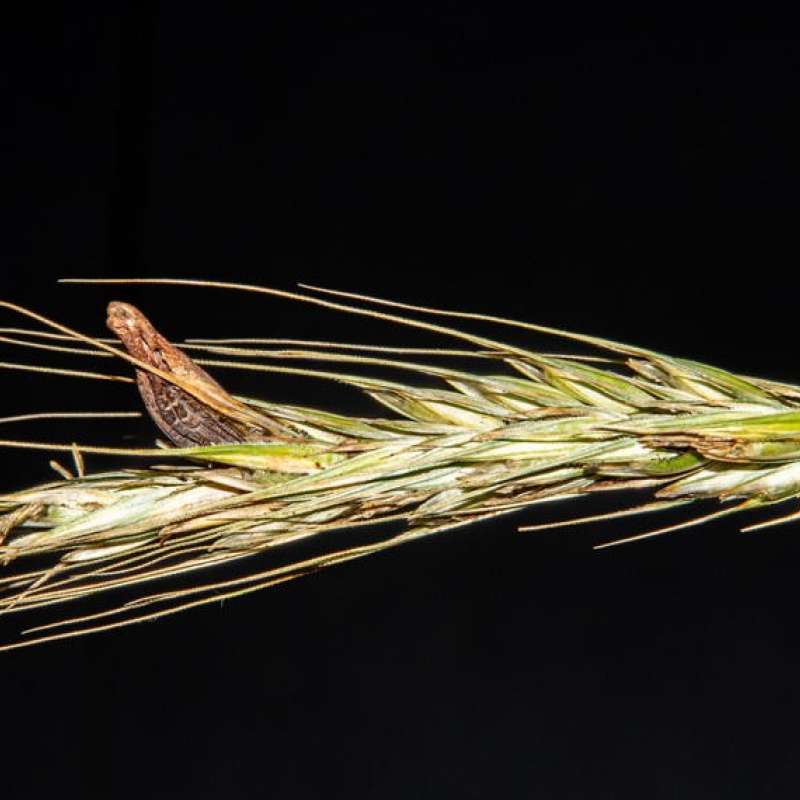
Meldrøye - Har en gammel folkefiende fortsatt betydning i norsk korn? - Forekomst av meldrøye og risikofaktorer
Meldrøye er en soppsjukdom i korn (rug er mest utsatt) og gras. Symptomer på sjukdommen er hornforma hvileknoller (sklerotier) som vokser fram i akset i stedet for frø. Sklerotiene inneholder giftige alkaloider, og kan derfor utgjøre en helserisiko for beitedyr.
Divisjon for bioteknologi og plantehelse
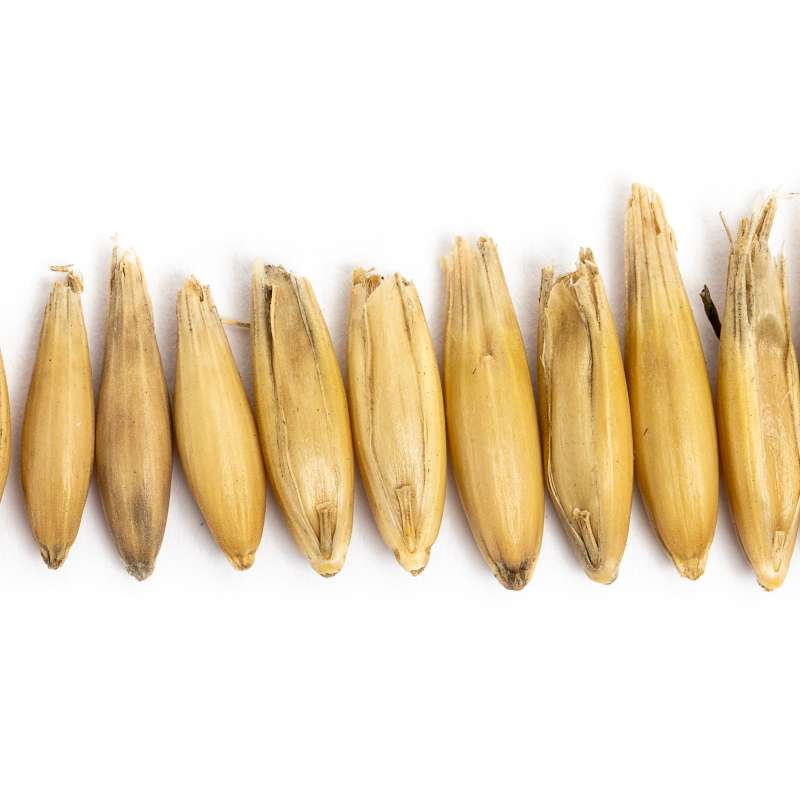
Diversity Oats - A more sustainable Norwegian oat industry by increased genetic diversity and diversified food products
Divisjon for bioteknologi og plantehelse
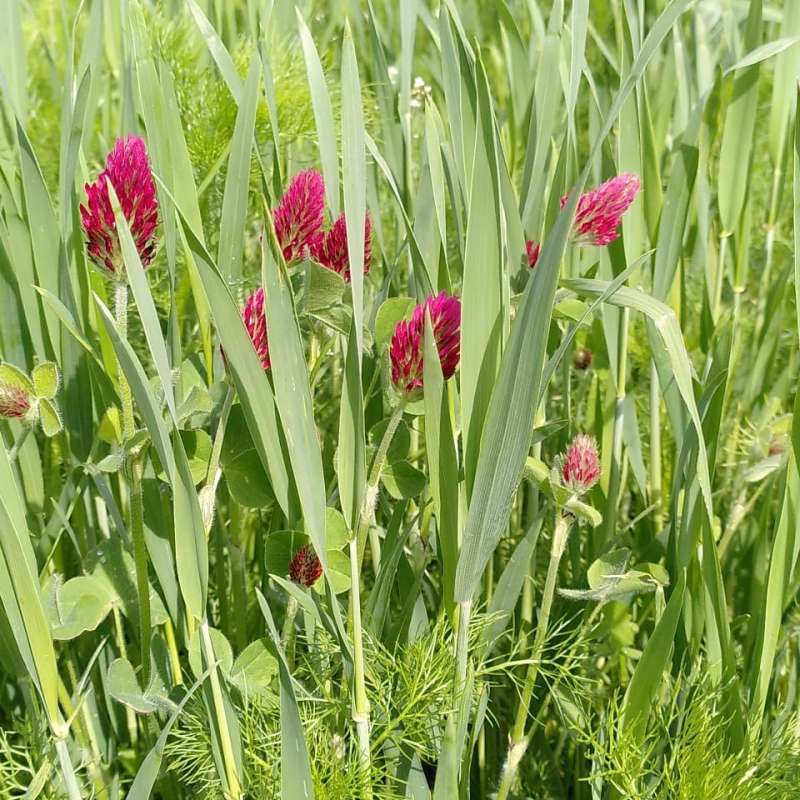
REKORN: Can regenerative cultivation methods contribute to reduce the risk of fungal diseases in cereals?
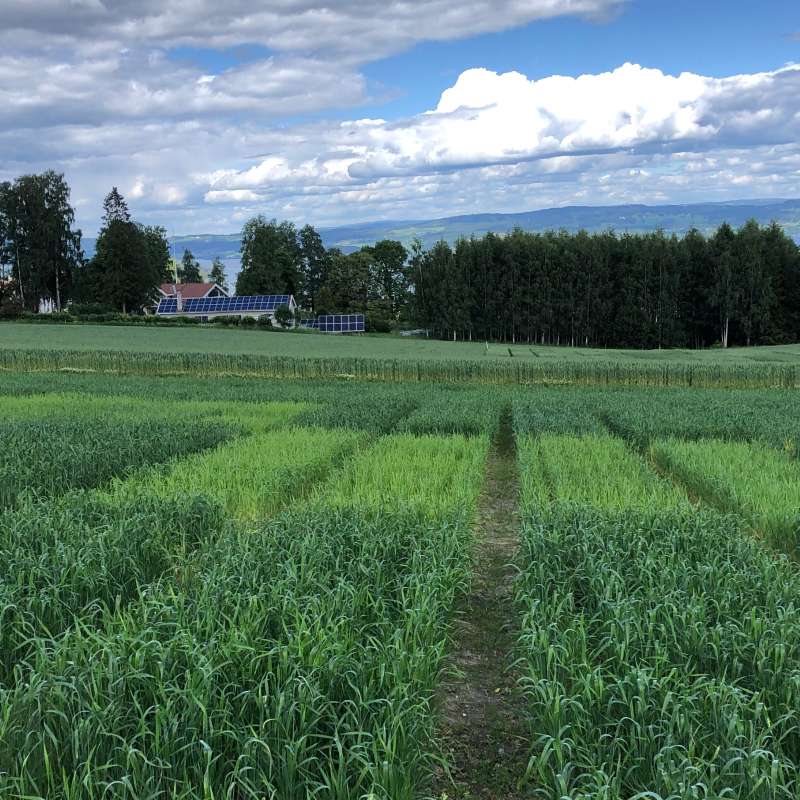
Regenerative agriculture is referred to as a bridge between organic and conventional agriculture and has received increased attention in recent years. Regenerative agriculture focuses on soil health and cultivation measures that can stimulate soil life and plant growth. An improvement in soil health is visualized, among other things, in increased carbon storage in the soil, limited soil compaction and increased microbiological diversity. The methods used to improve soil health within cereal cultivation may include crop rotation, reduced tillage, intercropping, use of catch crops and surface composting where plant residues are mixed into the top-soil layer.
Divisjon for bioteknologi og plantehelse
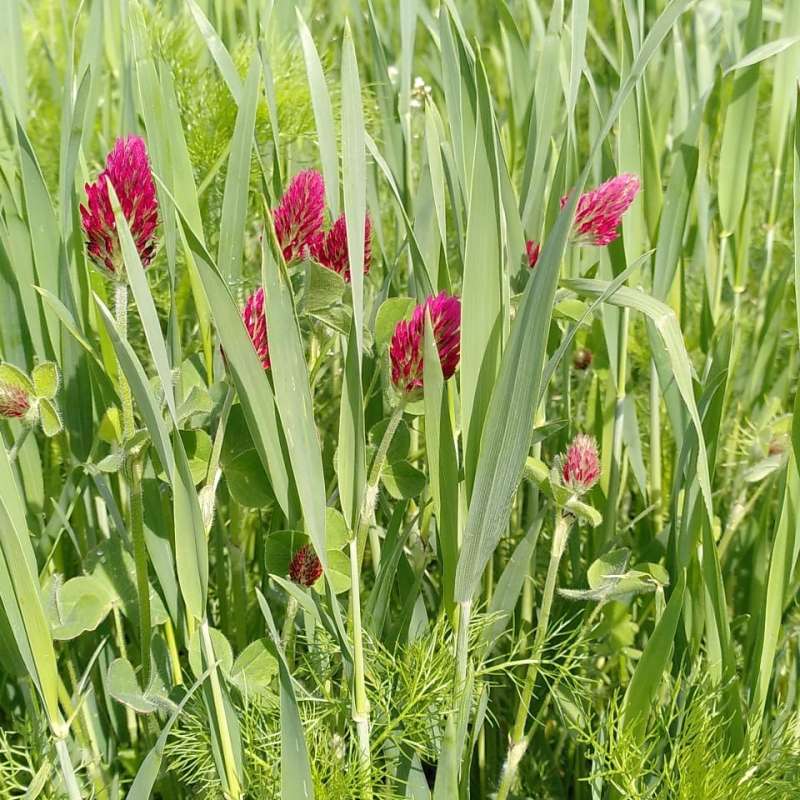
REKORN: Kan regenerative dyrkingsmetoder bidra til å redusere risiko for soppsjukdommer i korn?
I prosjektet «REKORN» ønsker vi å sammenlikne plantehelsa i korn fra skifter dyrket med ulike dyrkingsmetoder som benyttes innen regenerativt landbruk. Gjennom REKORN ønsker vi å utvikle kunnskap om sammenhengen mellom jordhelse og plantehelse.
Divisjon for matproduksjon og samfunn
Gene2Bread: Building knowledge and exploiting technology to achieve high wheat self-sufficiency in Norway
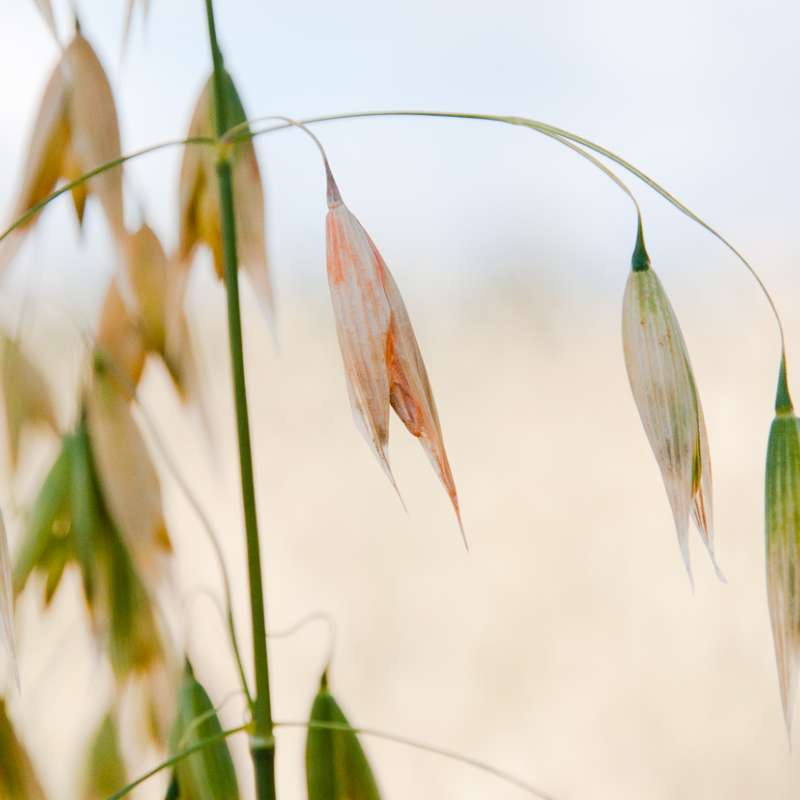
The project aims to increase Norway’s self-sufficiency in milling wheat by gaining knowledge to improve wheat quality and increase its utilisation. Adequate protein content and a stable quality between seasons and within a season are prerequisites to increasing the share of Norwegian wheat in the flour blend.
Divisjon for bioteknologi og plantehelse
Kunnskap om faktorer som påvirker utvikling av sopp og soppgifter
Prosjektet skal identifisere faktorer som påvirker innhold av soppgifter eller andre naturlig dannede uønskede stoffer i planter, og utvikle kunnskap som kan bidra til å redusere forekomsten av slike gifter.