
Maskinlæring og kunstig intelligens
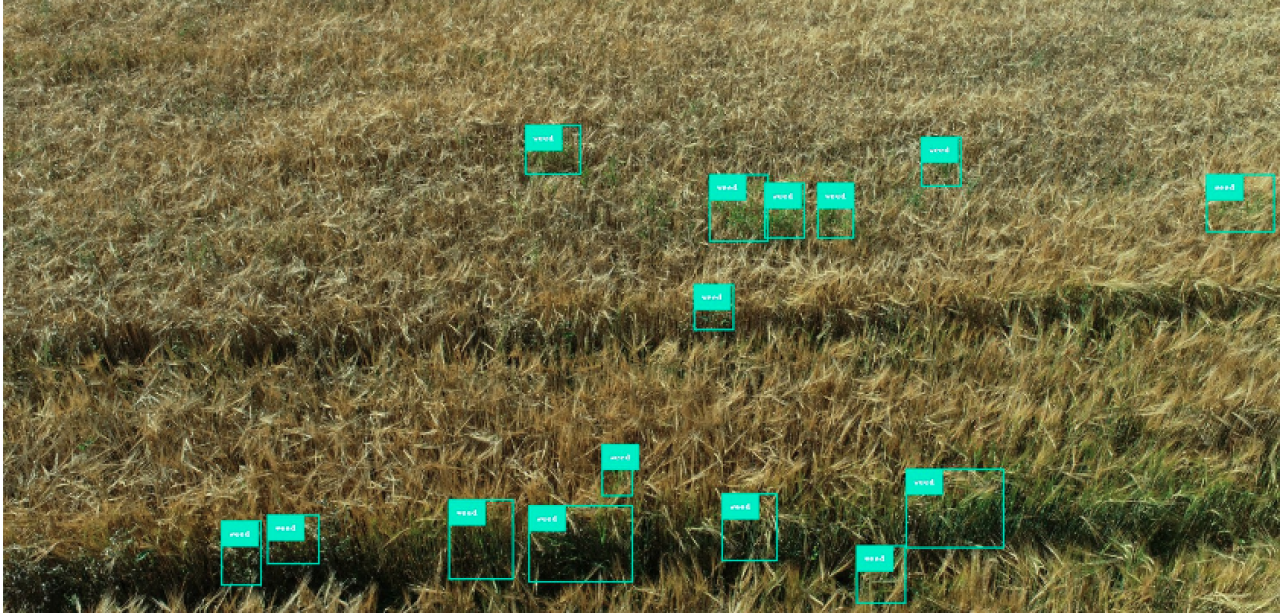
Kunstig intelligens kan brukes til å gjenkjenne forskjellige typer ugras i åkeren.
Foto: Jiangsan Zhao, NIBIO
Maskinlæring og kunstig intelligens gir oss nye muligheter for å analysere data og forstå og optimalisere planteproduksjonen. Analyse av blant annet spektrale bildedata kan gi oss detaljert innsikt i vekstforhold og plantehelse med høy romlig oppløsning og god nøyaktighet.
Teknologi for effektiv innsamling av store mengder data i kombinasjon med maskinlæring og kunstig intelligens gir oss muligheter til å hente ut mye informasjon som kan brukes til å optimalisere ulike deler av jordbruket.
Ved Avdeling landbruksteknologi og Senter for presisjonsjordbruk jobber vi først og fremst med data fra bildedannende sensorer som gir oss spektrale data i ulike deler av det elektromagnetiske spekteret. Dette bruker vi til å lage modeller for å for eksempel estimere avlingsmengde, avlingskvalitet, gjødslingsbehov, gjenkjenning av ugras og telling av bær.
Fordi resultatet av en modell ikke blir bedre enn kvaliteten på dataene som puttes inn i den, jobber vi for best mulig datakvalitet og høyest mulig kvalitet i våre analyser, både gjennom rutiner for gjennomføring av feltforsøk, datainnhenting og databehandling i forkant av modellering.
Vi ser at modeller ofte må justeres for å ta hensyn til spesifikke geografiske og klimatiske forhold, og jobber for at gode modeller tilpasset norske forhold skal kunne brukes av norske gårdbrukere.
Gjennom blant annet prosjektet PRESIS og COPERNICUS jobber vi med å lage en digital infrastruktur som gjør slike modeller tilgjengelig for alle norske gårdbrukere som ønsker.
KONTAKTPERSON
Jiangsan Zhao
Forsker
-
Divisjon for matproduksjon og samfunn
(+47) 413 23 321 jiangsan.zhao@nibio.no Kontorsted: Apelsvoll

Jakob Geipel
Forsker
-
Divisjon for matproduksjon og samfunn
(+47) 915 66 289 jakob.geipel@nibio.no Kontorsted: Apelsvoll
KONTAKTPERSON
Jiangsan Zhao
Forsker
-
Divisjon for matproduksjon og samfunn
(+47) 413 23 321 jiangsan.zhao@nibio.no Kontorsted: Apelsvoll
Jakob Geipel
Forsker
-
Divisjon for matproduksjon og samfunn
(+47) 915 66 289 jakob.geipel@nibio.no Kontorsted: Apelsvoll
Publikasjoner
Sammendrag
Det er ikke registrert sammendrag
Sammendrag
Interpreting multi-component 1H NMR spectra is difficult due to peak overlap, concentration variability, and low-abundance signals. We cast mixture identification as a single-pass multi-label task. A compact CNN–Transformer (“Hybrid”) model was trained end-to-end on domain-informed and realistically simulated spectra derived from a 13-component flavor library; the model requires no real mixtures for training. On 16 real formulations, the Hybrid attains micro-F1 = 0.990 and exact-match (subset) accuracy = 0.875, outperforming CNN-only and Transformer-only ablations, while remaining efficient (~0.47 M parameters; ~0.68 ms on GPU, V100). The approach supports abstention and shows robustness to simulated outsiders. Although the evaluation set was small, and the macro-ECE (per-class, 15 bins) was inflated by sparse classes (≈0.70), the micro-averaged Brier is low (0.0179), and temperature scaling had negligible effect (T ≈ 1.0), indicating the good overall probability quality. The pipeline is readily extensible to larger libraries and adjacent applications in food authenticity and targeted metabolomics. Classical chemometric baselines trained on simulation failed to transfer to real measurements (subset accuracy 0.00), while the Hybrid model maintained strong performance.
Sammendrag
Det er ikke registrert sammendrag
Sammendrag
Raman spectroscopy is a powerful and non-invasive analytical method for determining the chemical composition and molecular structure of a wide range of materials, including complex biological tissues. However, the captured signals typically suffer from interferences manifested as noise and baseline, which need to be removed for successful data analysis. Effective baseline correction is critical in quantitative analysis, as it may impact peak signature derivation. Current baseline correction methods can be labor-intensive and may require extensive parameter adjustment depending on the input spectrum characteristics. In contrast, deep learning-based baseline correction models trained across various materials, offer a promising and more versatile alternative. This study reports an approach to manually identify the ground-truth baselines for eight different biological materials through extensively tuning the parameters of three classical baseline correction methods, Modified Multi- Polynomial Fit (Modpoly), Improved Modified Multi-Polynomial Fitting (IModpoly), and Adaptive Iteratively Reweighted Penalized Least Squares (airPLS), and combining the outputs to best fit the training data. We designed a one-dimensional Transformer (1dTrans) tailored to fit Raman spectral data for estimating their baselines, and evaluated its performance against convolutional neural network (CNN), ResUNet, and three aforementioned parametric methods. The 1dTrans model achieved lower mean absolute error (MAE) and spectral angle mapper (SAM) scores when compared to the other methods in both development and evaluation of the manually labeled original raw Raman spectra, highlighting the effectiveness of the method in Raman spectra pre-processing.
Sammendrag
Soil management is important for sustainable agriculture, playing a vital role in food production and maintaining ecological functions in the agroecosystem. Effective soil management depends on highly accurate soil property estimation. Machine learning (ML) is an effective tool for data mining, selection of key soil properties, modeling the non-linear relationship between different soil properties. Through coupling with spectral imaging, ML algorithms have been extensively used to estimate physical, chemical, and biological properties quickly and accurately for more effective soil management. Most of the soil properties are estimated by either near infrared (NIR), Vis-NIR, or mid-infrared (MIR) in combination with different ML algorithms. Spectroscopy is widely used in estimation of chemical properties of soil samples. Spectral imaging from both UAV and satellite platforms should be taken to improve the spatial resolution of different soil properties. Spectral image super-resolution should be taken to generate spectral images in high spatial, spectral, and temporal resolutions; more advanced algorithms, especially deep learning (DL) should be taken for soil properties’ estimation based on the generated ‘super’ images. Using hyperspectral modeling, soil water content, soil organic matter, total N, total K, total P, clay and sand were found to be successfully predicted. Generally, MIR produced better predictions than Vis-NIR, but Vis-NIR outperformed MIR for a number of properties. An advantage of Vis-NIR is instrument portability although a new range of MIR portable devices is becoming available. In-field predictions for water, total organic C, extractable phosphorus, and total N appear similar to laboratory methods, but there are issues regarding, for example, sample heterogeneity, moisture content, and surface roughness. More precise and detailed soil property estimation will facilitate future soil management.
Sammendrag
Weeds affect crop yield and quality due to competition for resources. In order to reduce the risk of yield losses due to weeds, herbicides or non-chemical measures are applied. Weeds, especially creeping perennial species, are generally distributed in patches within arable fields. Hence, instead of applying control measures uniformly, precision weeding or site-specific weed management (SSWM) is highly recommended. Unmanned aerial vehicle (UAV) imaging is known for wide area coverage and flexible operation frequency, making it a potential solution to generate weed maps at a reasonable cost. Efficient weed mapping algorithms need to be developed together with UAV imagery to facilitate SSWM. Different machine learning (ML) approaches have been developed for image-based weed mapping, either classical ML models or the more up-to-date deep learning (DL) models taking full advantage of parallel computation on a GPU (graphics processing unit). Attention-based transformer DL models, which have seen a recent boom, are expected to overtake classical convolutional neural network (CNN) DL models. This inspired us to develop a transformer DL model for segmenting weeds, cereal crops, and ‘other’ in low-resolution RGB UAV imagery (about 33 mm ground sampling distance, g.s.d.) captured after the cereal crop had turned yellow. Images were acquired during three years in 15 fields with three cereal species (Triticum aestivum, Hordeum vulgare, and Avena sativa) and various weed flora dominated by creeping perennials (mainly Cirsium arvense and Elymus repens). The performance of our transformer model, 1Dtransformer, was evaluated through comparison with a classical DL model, 1DCNN, and two classical ML methods, i.e., random forest (RF) and k-nearest neighbor (KNN). The transformer model showed the best performance with an overall accuracy of 98.694% on pixels set aside for validation. It also agreed best and relatively well with ground reference data on total weed coverage, R2 = 0.598. In this study, we showed the outstanding performance and robustness of a 1Dtransformer model for weed mapping based on UAV imagery for the first time. The model can be used to obtain weed maps in cereals fields known to be infested by perennial weeds. These maps can be used as basis for the generation of prescription maps for SSWM, either pre-harvest, post-harvest, or in the next crop, by applying herbicides or non-chemical measures.
Forfattere
Jiangsan ZhaoSammendrag
Det er ikke registrert sammendrag
Forfattere
Jiangsan ZhaoSammendrag
Det er ikke registrert sammendrag
Sammendrag
Det er ikke registrert sammendrag
Forfattere
Jiangsan Zhao Dmitry Kechasov Boris Rewald Gernot Bodner Michel Verheul Nicholas Clarke Jihong Liu ClarkeSammendrag
Det er ikke registrert sammendrag
Prosjekter

Divisjon for matproduksjon og samfunn
PRESIS
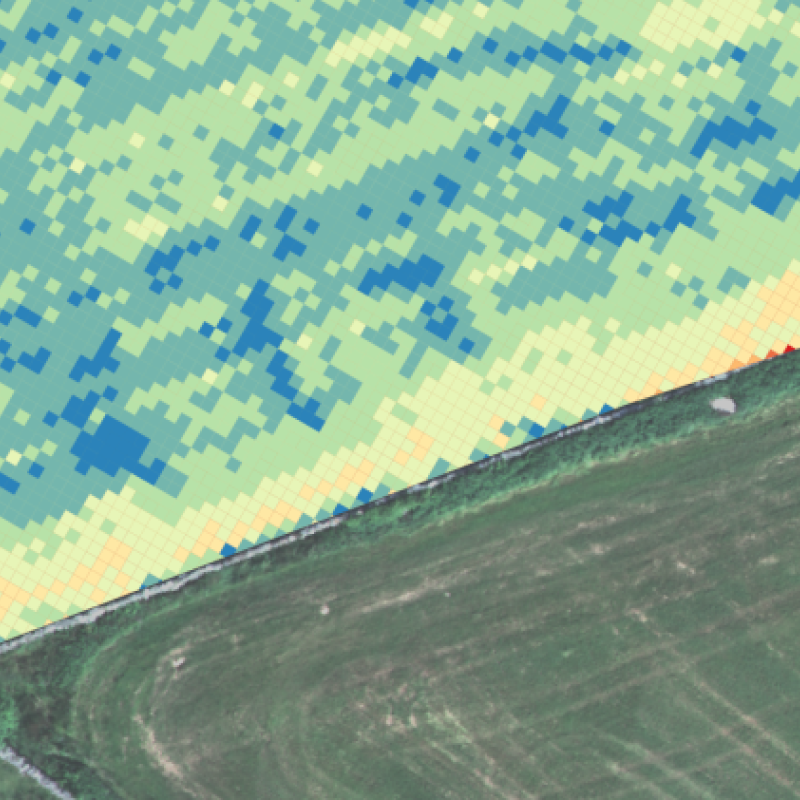
I PRESIS, et seksårig samarbeidsprosjekt, jobbet NIBIO med å videreutvikle droneforskning for å fremme presisjonsjordbruk i Norge. Prosjektet leverer forskningsbaserte løsninger i praksis til gårdene gjennom en ny smart farming tjeneste: PRESISnet.
Divisjon for matproduksjon og samfunn
COPERNICUS - Jordbruk
Formålet med prosjektet er å ta i bruk satellitt-data fra Copernicus programmet for å utvikle rutiner og verktøy rettet inn mot jordbruksfaglige problemstillinger, og gjennom dette bidra med informasjon og råd til relevante aktører (bønder, rådgivere, jordbruksnæringa, kommuner, politikere og utdanningsinstitusjoner). Prosjektet skal dermed bidra til å forbedre dagens dyrkningspraksis, som gjennom en bedre utnyttelse av innsatsfaktorer som gjødsel og fôr også bidrar til å redusere klimaavtrykket til det norske jordbruket.
Divisjon for matproduksjon og samfunn
TEKNOPOTET - Ny teknologi for økt presisjon i produksjon og lagring av små matpoteter
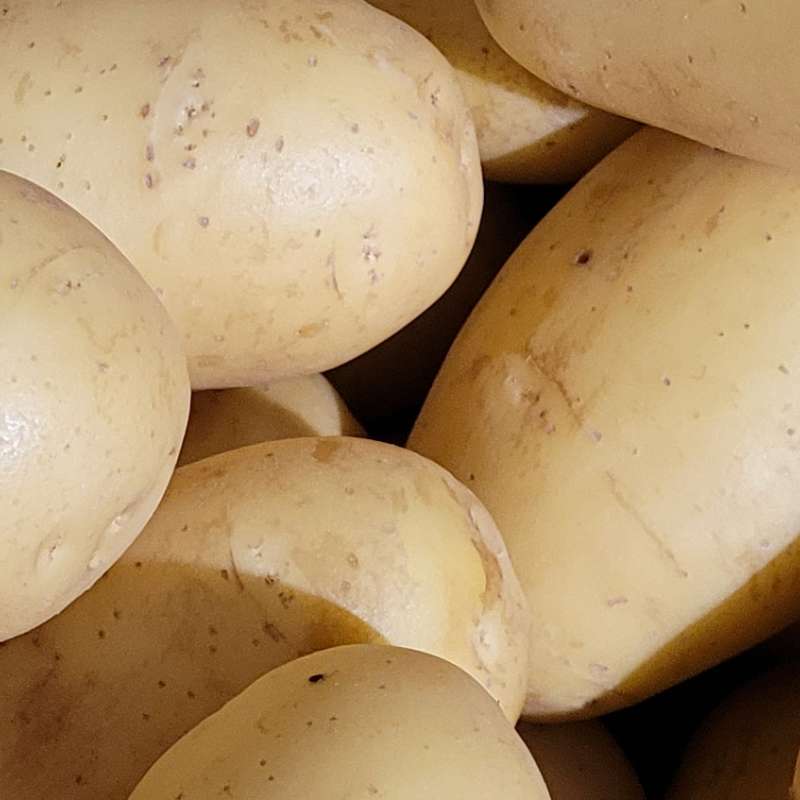
Forbruket av matpoteter er i senere tid dreid mot en økt andel små matpoteter, såkalt delikatessepoteter. Hovedmålet for prosjektet er å utvikle ny kunnskap, teknologi og verktøy for økt presisjon i dyrking og lagring av slike småpoteter. Formålet er at markedet for småpoteter i størst mulig grad skal kunne dekkes av norske småpoteter med rett kvalitet. For at produksjonen skal være lønnsom må antall knoller per plante økes, knollene må ha rett størrelse og være mest mulig jevnstore, og lagringsstrategiene må tilpasses poteter som er små og pakkes tettere i kassene.
Divisjon for matproduksjon og samfunn
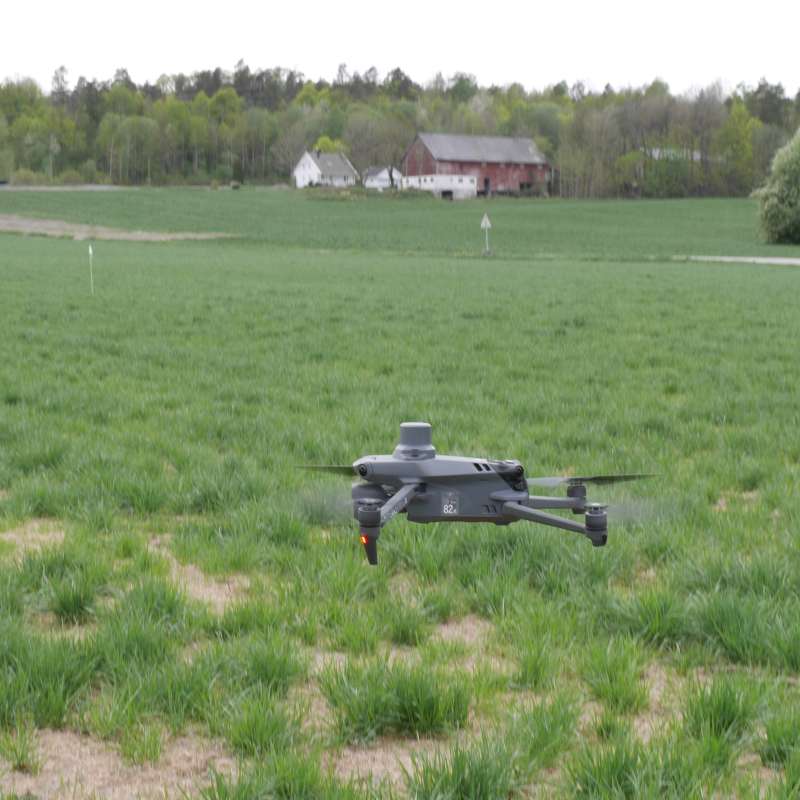
Presis gjødsling og vekstregulering av norske grasfrøenger ved hjelp av sensorteknologi (SmartSeed)
Divisjon for matproduksjon og samfunn
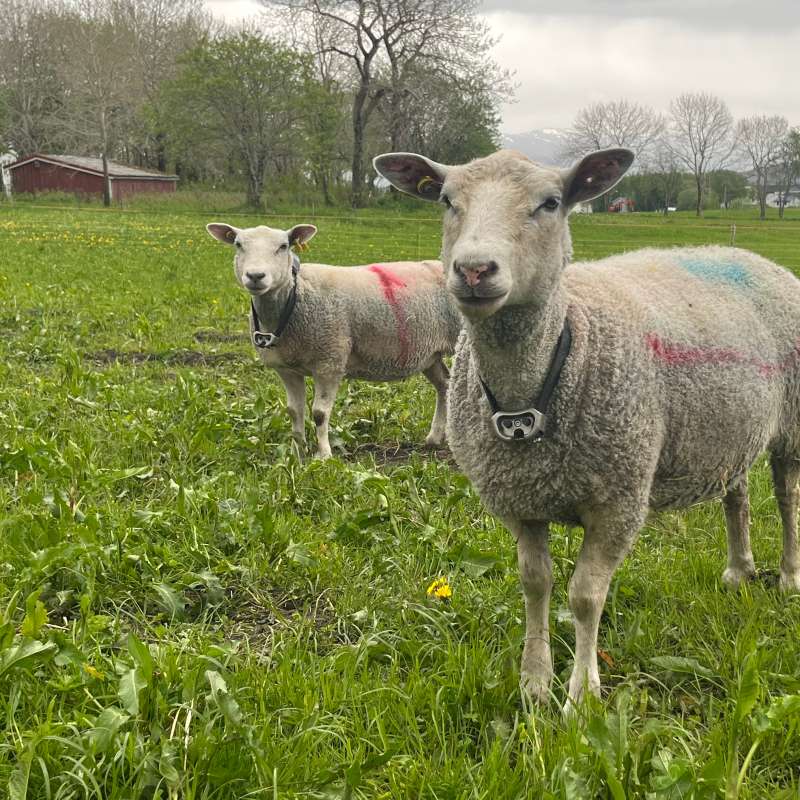
Techgraze – Forbedret beitepraksis i Norge med bruk av avansert teknologi
Redusert beitetrykk og nedleggelse av gårdsbruk har ført til uønskede økologiske og sosioøkonomiske konsekvenser. TechGraze-prosjektet tar sikte på å møte disse utfordringene ved å integrere Virtual Fencing (VF) og Remote Sensing (RS)-teknologier for å forbedre beitebasert husdyrforvaltning.
Divisjon for matproduksjon og samfunn
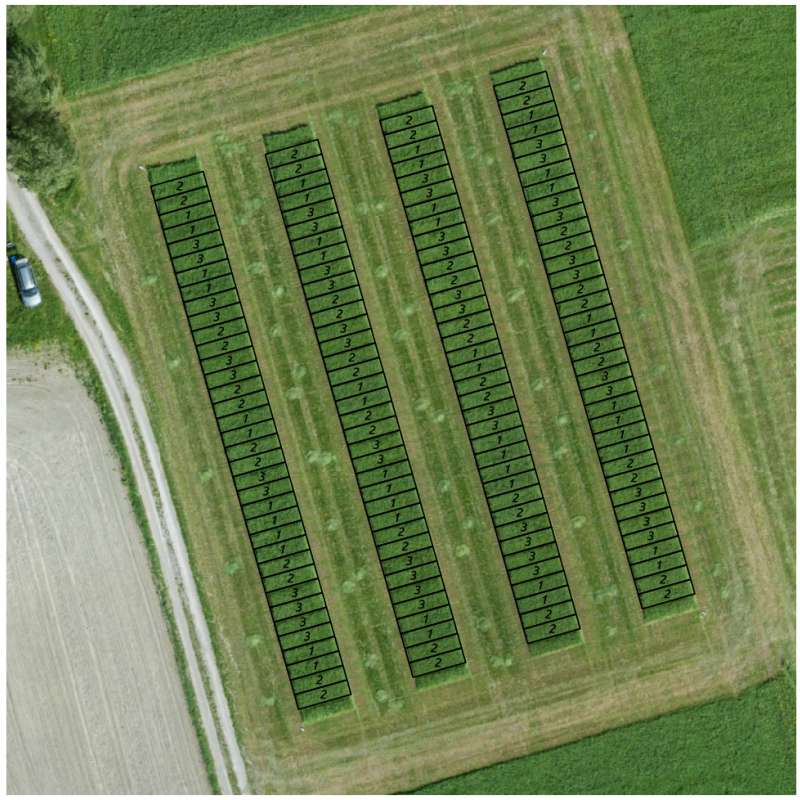
IMPRESS
IMPRESS - Økt presisjon og målretting i gjødsling og avlingsfremmende tiltak i grovfôrproduksjonen Hovedmålet med prosjektet er å heve avling og kvalitet i norsk grovfôrproduksjon gjennom å utvikle og tilpasse presisjonsteknologi, modeller og tiltak for stedsspesifikk bruk av innsatsfaktorer, og for identifikasjon og forbedring av lavtytende områder i enga
Divisjon for matproduksjon og samfunn
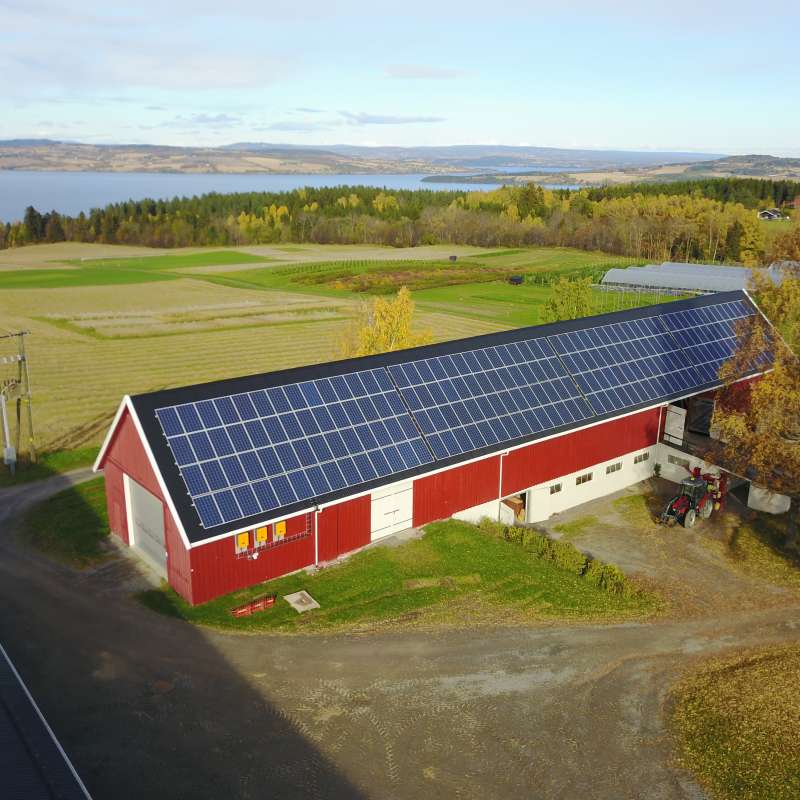
SolarFarm
SolarFarm - En systemstudie av hvordan solstrøm produsert på gårdsnivå kan drive elektriske og delvis selvstyrte farkoster i et presisjonsjordbruk med reduserte utslipp av klimagasser