Landbruksteknologi

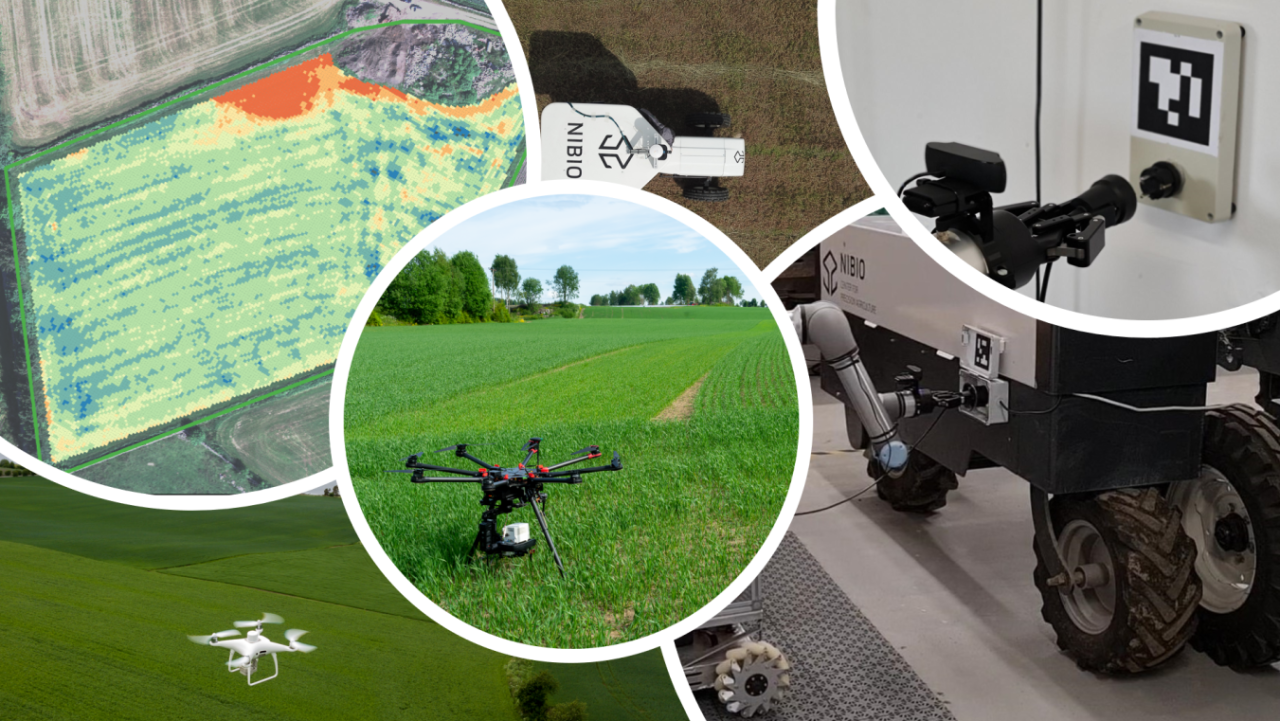
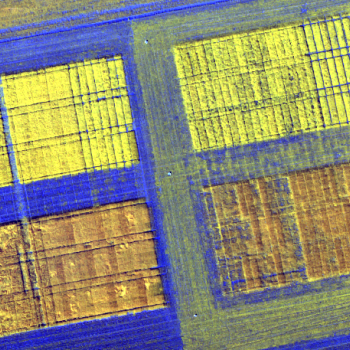
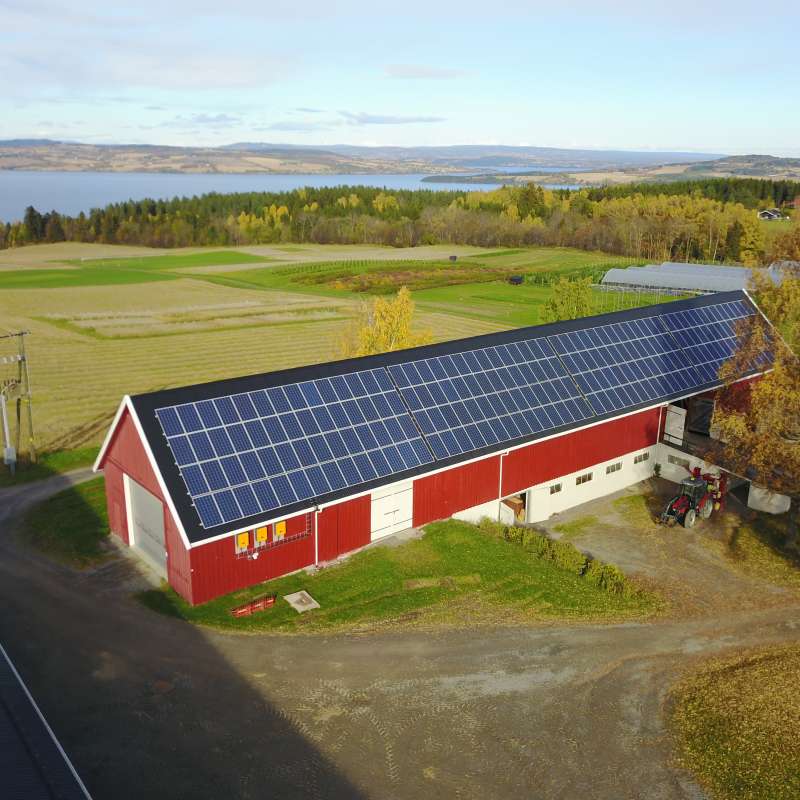
NIBIO er langt framme i forskningen på teknologisk utvikling i jordbruket. Hovedfokuset i denne forskningen er presisjonsjordbruk, som handler om å bruke ny teknologi til å tilpasse behandlingen av jord og vekst etter behov, men vi jobber også med andre områder innen landbruksteknologi.

landbruksteknologi
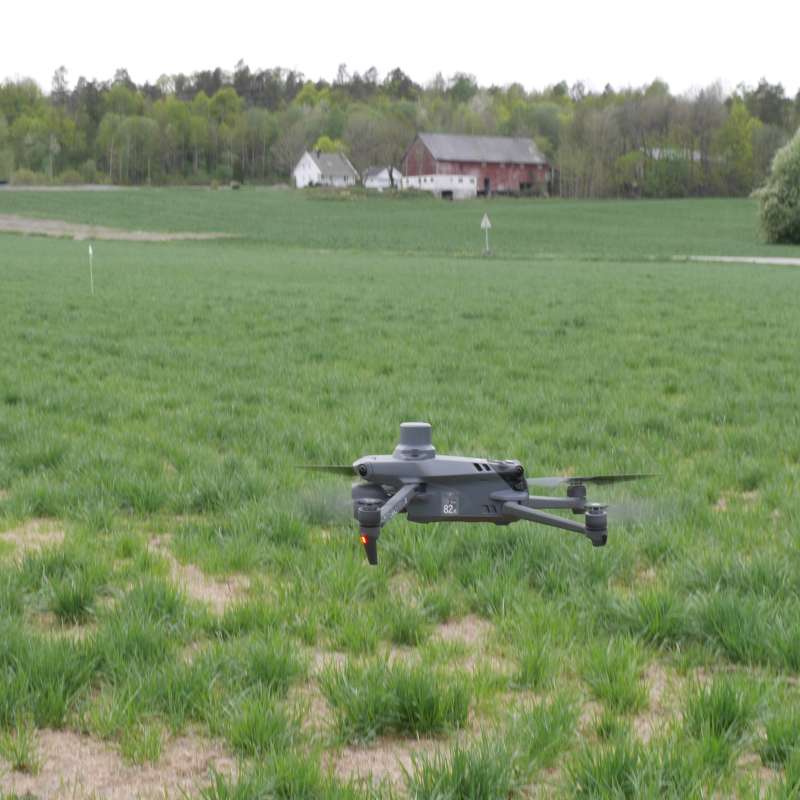
FoU ved Avdeling landbruksteknologi, Foto: NIBIO


Moderne teknologi bidrar til økt effektivitet, bedre ressursutnyttelse og mer bærekraftig matproduksjon. Svært mange forskjellige typer teknologi er involvert når vi snakker om teknologi i landbruket. I NIBIO jobber vi innen flere teknologiområder, og jobber for utvikling på noen områder mens vi på andre områder har fokus på best mulig benyttelse av ulike teknologier i norsk jordbruk. En integrert del av vårt arbeid med teknologi i landbruket er vårt Senter for presisjonsjordbruk som er lokalisert på Apelsvoll i Østre Toten kommune.


Maskiner, utstyr og redskap

Landbruket er avhengig av maskiner som traktorer og redskaper for jordarbeiding, feltetablering, plantevern, gjødsling og innhøsting. Utviklingen i dag innebærer også automatisering av selve traktoren til å bli en autonom redskapsbærer og spesialiserte, autonome roboter som utfører spesifikke oppgaver. Smarte maskiner med GNSS og sensorer kan bidra til å spare tid, drivstoff og ressurser.


Sensorikk

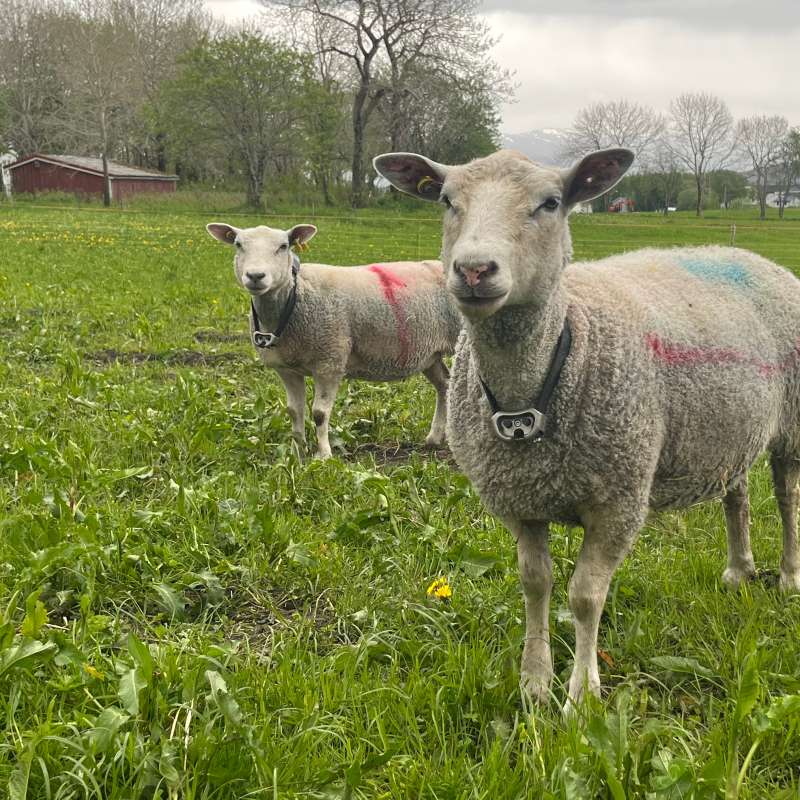
Forskjellige typer sensorer kan gi informasjon om jordfuktighet, temperatur, plantebestand og plantehelse. Slike sensorer kan være montert på forskjellige typer plattformer avhengig av bruk. Noen typer settes direkte i jorda, mens andre sensorer til andre formål vil gi best utnytte når de er plassert på en drone eller en satellitt. I NIBIO jobber vi i hovedsak ikke med utvikling av selve sensoren men hvordan en sensor eller en kombinasjon av sensorer kan benyttes til ulike formål.


Teknologi for presisjonsjordbruk

Presisjonsjordbruk er en produksjonsstrategi i landbruket som bygger på innsamling, bearbeiding og analyse av temporale, romlige og individspesifikke data. Disse kombineres med annen kunnskap om produksjonssystemet for å tilpasse tiltak til den identifiserte variasjonen og oppnå bedre ressursutnyttelse, produktivitet, kvalitet, lønnsomhet og bærekraft (Definisjon fra International Society of Precision Agriculture). Effektivt presisjonsjordbruk forutsetter god teknologi på mange forskjellige områder innen landbruket. I NIBIO jobber vi med å gjøre det enklere å få til presisjonsjordbruk under norske forhold. Det vi jobber med her har vi samlet i vårt Senter for Presisjonsjordbruk, som du kan lese mer om ved å følge lenken lenger ned på siden.


Kunstig intelligens, digitalisering og beslutningsstøtte

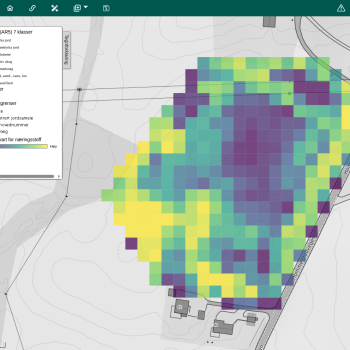
Digitalisering muliggjør innsamling, analyse og bruk av store mengder data til å bedre beslutningene i jordbruket. Riktig bruk av disse metodene kan føre til økt effektivitet og lavere miljøbelastning i jordbruket. Vi jobber for at norske gårdbrukere skal kunne dra nytte av disse systemene, og vi jobber også med å utvikle egne digitale tjenester basert på omfattende datainnhenting fra de norske jordbruksregionene og kunstig intelligens for å bygge robuste og nyttige modeller som kan bedre bondens beslutningsgrunnlag og gi direkte input til presisjonsjordbruket i form av for eksempel tildelingsfiler.


Systemer for dyrking i regulert klima

Innendørs dyrking og dyrking i tuneller gjør det mulig å utvide sesongen for frukt, bær og grønt. Systemer som hydroponi og vertikalt landbruk gir interessante muligheter også i Norge. 

Publikasjoner

Sammendrag

Interpreting multi-component 1H NMR spectra is difficult due to peak overlap, concentration variability, and low-abundance signals. We cast mixture identification as a single-pass multi-label task. A compact CNN–Transformer (“Hybrid”) model was trained end-to-end on domain-informed and realistically simulated spectra derived from a 13-component flavor library; the model requires no real mixtures for training. On 16 real formulations, the Hybrid attains micro-F1 = 0.990 and exact-match (subset) accuracy = 0.875, outperforming CNN-only and Transformer-only ablations, while remaining efficient (~0.47 M parameters; ~0.68 ms on GPU, V100). The approach supports abstention and shows robustness to simulated outsiders. Although the evaluation set was small, and the macro-ECE (per-class, 15 bins) was inflated by sparse classes (≈0.70), the micro-averaged Brier is low (0.0179), and temperature scaling had negligible effect (T ≈ 1.0), indicating the good overall probability quality. The pipeline is readily extensible to larger libraries and adjacent applications in food authenticity and targeted metabolomics. Classical chemometric baselines trained on simulation failed to transfer to real measurements (subset accuracy 0.00), while the Hybrid model maintained strong performance.

Sammendrag

Raman spectroscopy is a powerful and non-invasive analytical method for determining the chemical composition and molecular structure of a wide range of materials, including complex biological tissues. However, the captured signals typically suffer from interferences manifested as noise and baseline, which need to be removed for successful data analysis. Effective baseline correction is critical in quantitative analysis, as it may impact peak signature derivation. Current baseline correction methods can be labor-intensive and may require extensive parameter adjustment depending on the input spectrum characteristics. In contrast, deep learning-based baseline correction models trained across various materials, offer a promising and more versatile alternative. This study reports an approach to manually identify the ground-truth baselines for eight different biological materials through extensively tuning the parameters of three classical baseline correction methods, Modified Multi- Polynomial Fit (Modpoly), Improved Modified Multi-Polynomial Fitting (IModpoly), and Adaptive Iteratively Reweighted Penalized Least Squares (airPLS), and combining the outputs to best fit the training data. We designed a one-dimensional Transformer (1dTrans) tailored to fit Raman spectral data for estimating their baselines, and evaluated its performance against convolutional neural network (CNN), ResUNet, and three aforementioned parametric methods. The 1dTrans model achieved lower mean absolute error (MAE) and spectral angle mapper (SAM) scores when compared to the other methods in both development and evaluation of the manually labeled original raw Raman spectra, highlighting the effectiveness of the method in Raman spectra pre-processing.

Sammendrag

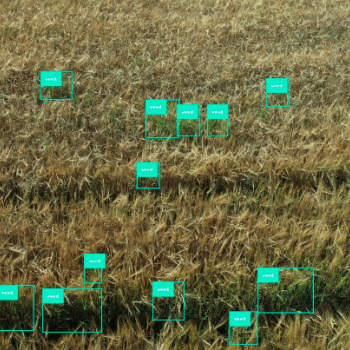
Weeds affect crop yield and quality due to competition for resources. In order to reduce the risk of yield losses due to weeds, herbicides or non-chemical measures are applied. Weeds, especially creeping perennial species, are generally distributed in patches within arable fields. Hence, instead of applying control measures uniformly, precision weeding or site-specific weed management (SSWM) is highly recommended. Unmanned aerial vehicle (UAV) imaging is known for wide area coverage and flexible operation frequency, making it a potential solution to generate weed maps at a reasonable cost. Efficient weed mapping algorithms need to be developed together with UAV imagery to facilitate SSWM. Different machine learning (ML) approaches have been developed for image-based weed mapping, either classical ML models or the more up-to-date deep learning (DL) models taking full advantage of parallel computation on a GPU (graphics processing unit). Attention-based transformer DL models, which have seen a recent boom, are expected to overtake classical convolutional neural network (CNN) DL models. This inspired us to develop a transformer DL model for segmenting weeds, cereal crops, and ‘other’ in low-resolution RGB UAV imagery (about 33 mm ground sampling distance, g.s.d.) captured after the cereal crop had turned yellow. Images were acquired during three years in 15 fields with three cereal species (Triticum aestivum, Hordeum vulgare, and Avena sativa) and various weed flora dominated by creeping perennials (mainly Cirsium arvense and Elymus repens). The performance of our transformer model, 1Dtransformer, was evaluated through comparison with a classical DL model, 1DCNN, and two classical ML methods, i.e., random forest (RF) and k-nearest neighbor (KNN). The transformer model showed the best performance with an overall accuracy of 98.694% on pixels set aside for validation. It also agreed best and relatively well with ground reference data on total weed coverage, R2 = 0.598. In this study, we showed the outstanding performance and robustness of a 1Dtransformer model for weed mapping based on UAV imagery for the first time. The model can be used to obtain weed maps in cereals fields known to be infested by perennial weeds. These maps can be used as basis for the generation of prescription maps for SSWM, either pre-harvest, post-harvest, or in the next crop, by applying herbicides or non-chemical measures.

Til dokument

Sammendrag

Soil management is important for sustainable agriculture, playing a vital role in food production and maintaining ecological functions in the agroecosystem. Effective soil management depends on highly accurate soil property estimation. Machine learning (ML) is an effective tool for data mining, selection of key soil properties, modeling the non-linear relationship between different soil properties. Through coupling with spectral imaging, ML algorithms have been extensively used to estimate physical, chemical, and biological properties quickly and accurately for more effective soil management. Most of the soil properties are estimated by either near infrared (NIR), Vis-NIR, or mid-infrared (MIR) in combination with different ML algorithms. Spectroscopy is widely used in estimation of chemical properties of soil samples. Spectral imaging from both UAV and satellite platforms should be taken to improve the spatial resolution of different soil properties. Spectral image super-resolution should be taken to generate spectral images in high spatial, spectral, and temporal resolutions; more advanced algorithms, especially deep learning (DL) should be taken for soil properties’ estimation based on the generated ‘super’ images. Using hyperspectral modeling, soil water content, soil organic matter, total N, total K, total P, clay and sand were found to be successfully predicted. Generally, MIR produced better predictions than Vis-NIR, but Vis-NIR outperformed MIR for a number of properties. An advantage of Vis-NIR is instrument portability although a new range of MIR portable devices is becoming available. In-field predictions for water, total organic C, extractable phosphorus, and total N appear similar to laboratory methods, but there are issues regarding, for example, sample heterogeneity, moisture content, and surface roughness. More precise and detailed soil property estimation will facilitate future soil management.

Til dokument

Sammendrag

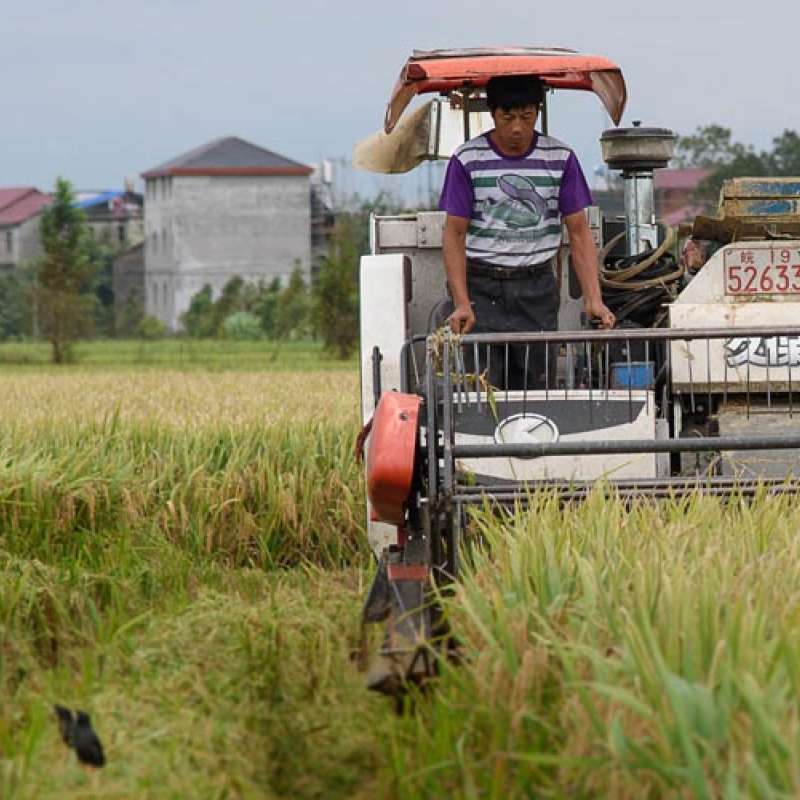
This chapter describes the work performed within the Sinograin II project on implementation of new precision nitrogen management technologies in three regions of North China. Each of the analyzed regions represents a different crop and scale of a farming system: large-scale rice farming system in Heilongjiang province, medium-scale maize farming system in Jilin province, and small-scale wheat farming system in the North China Plain. A village was selected in each region to represent the agricultural practices and current nutrient and crop management strategies of the tested region. Moreover, the initial regional optimum crop management, the current agricultural extension, as well as the precision nitrogen technologies implemented in the respective regions are described. During the course of the project, a number of novel tools and strategies for precision nitrogen management were developed for the respective regions and published in scientific papers. This chapter reviews and discusses the selected findings and indicates directions of the upcoming research.

Sammendrag

Wood modification using polyesterification of sorbitol and citric acid is a novel environmentally friendly strategy for wood protection improving its dimensional stability and acts against fungal deterioration. Inelastic Raman scattering is sensitive to the molecules of high polarizability and both lignocellulose and aliphatic esters formed during the treatment are polar. Therefore, in the present study, the quality control of the treatment using a handheld Raman spectrometer equipped with 830 nm laser is suggested as a rapid and reliable approach. Raman spectra from six wood modification levels (resulting in different weight percent gain, WPG) of three different wood species (Silver birch, Scots pine and Norway spruce) as well as three sample preparation strategies (intact, sanded and milled wood samples) were collected, and further analyzed using a chemometric method. Best performing models based on Powered Partial Least Squares Regression predicted the WPG level at R2 = 0.85, 0.95 and 0.98 for birch, pine and spruce, respectively. In addition, a clear separation between hard and soft wood species was also captured. Especially for softwood species, the sample preparation method affected the model accuracy, revealing the best performance in milled material. It is concluded that by using handheld Raman spectrometer it is possible to perform accurate quality control of wood modified by polyesterification of citric acid and sorbitol.

Sammendrag

This paper describes a tool that enables farmers to time harvests and target nitrogen (N) inputs in their forage production, according to the prevailing yield potential. Based on an existing grass growth model for forage yield estimation, a more detailed process-based model was developed, including a new nitrogen module. The model was tested using data from an experiment conducted in a grassland-rich region in central Norway and showed promising accuracy with estimated root mean square error (RMSE) of 50 and 130 g m-2 for dry matter yield in the trial. Three parameters were detected as highly sensitive to model output: initial value of organic N in the soil, fraction of humus in the initial organic N in the soil, and fraction of decomposed N mineralized. By varying these parameters within a range from 0.5 to 1.5 of their respective initial value, most of the within-field variation was captured. In a future step, remotely sensed information on model output will be included, and in-season model correction will be performed through re-calibration of the highly sensitive parameters.

Sammendrag

Grassland farmers face ever increasing demands on their production systems and the quality of their grassland yields. Estimating pasture quality using traditional field methods is limited as it is time consuming and costly, and requires some destructive sampling. The field of remote sensing offers alternative tools and techniques to overcome some of the limitations and thereby help farmers to receive spatial continuous and near real-time information about grassland quality parameters. This review gives an overview about recent developments in the remote sensing-based estimation of three aspects of grassland quality: feed quality, biological nitrogen fixation by legumes, and the identification of unwanted plant species.

Sammendrag

Today’s modern precision agriculture applications have a huge demand for data with high spatial and temporal resolution. This leads to the need of unmanned aerial vehicles (UAV) as sensor platforms providing both, easy use and a high area coverage. This study shows the successful development of a prototype hybrid UAV for practical applications in precision agriculture. The UAV consists of an off-the-shelf fixed-wing fuselage, which has been enhanced with multi-rotor functionality. It was programmed to perform pre-defined waypoint missions completely autonomously, including vertical take-off, horizontal flight, and vertical landing. The UAV was tested for its return-to-home (RTH) accuracy, power consumption and general flight performance at different wind speeds. The RTH accuracy was 43.7 cm in average, with a root-mean-square error of 39.9 cm. The power consumption raised with an increase in wind speed. An extrapolation of the analysed power consumption to conditions without wind resulted in an estimated 40 km travel range, when we assumed a 25 % safety margin of remaining battery capacity. This translates to a maximal area coverage of 300 ha for a scenario with 18 m/s airspeed, 50 minutes flight time, 120 m AGL altitude, and a desired 70 % of image side-lap and 85 % forward-lap. The ground sample distance with an in-built RGB camera was 3.5 cm, which we consider sufficient for farm-scale mapping missions for most precision agriculture applications.

Sammendrag

In this study, we investigated the potential of airborne imaging spectroscopy for in-season grassland yield estimation. We utilized an unmanned aerial vehicle and a hyperspectral imager to measure radiation, ranging from 455 to 780 nm. Initially, we assessed the spectral signature of five typical grassland species by principal component analysis, and identified a distinct reflectance difference, especially between the erectophil grasses and the planophil clover leaves. Then, we analyzed the reflectance of a typical Norwegian sward composition at different harvest dates. In order to estimate yields (dry matter, DM), several powered partial least squares (PPLS) regression and linear regression (LR) models were fitted to the reflectance data and prediction performance of these models were compared with that of simple LR models, based on selected vegetation indices and plant height. We achieved the highest prediction accuracies by means of PPLS, with relative errors of prediction from 9.1 to 11.8% (329 to 487 kg DM ha−1) for the individual harvest dates and 14.3% (558 kg DM ha−1) for a generalized model.

Prosjekter

Screenshot from 2024-11-27 19-01-01

Divisjon for matproduksjon og samfunn

COPERNICUS - Jordbruk


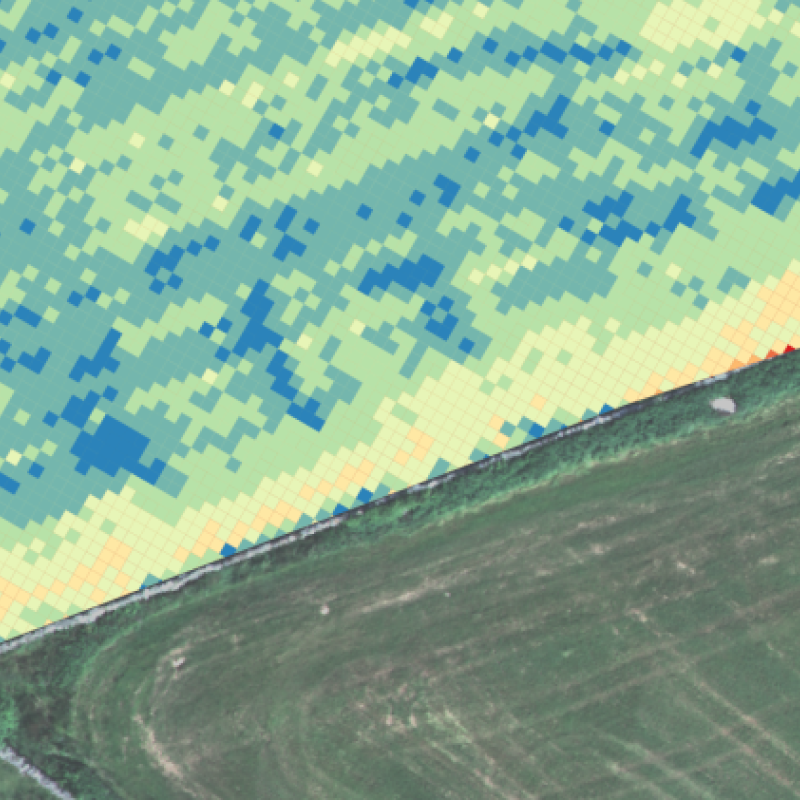
Formålet med prosjektet er å ta i bruk satellitt-data fra Copernicus programmet for å utvikle rutiner og verktøy rettet inn mot jordbruksfaglige problemstillinger, og gjennom dette bidra med informasjon og råd til relevante aktører (bønder, rådgivere, jordbruksnæringa, kommuner, politikere og utdanningsinstitusjoner). Prosjektet skal dermed bidra til å forbedre dagens dyrkningspraksis, som gjennom en bedre utnyttelse av innsatsfaktorer som gjødsel og fôr også bidrar til å redusere klimaavtrykket til det norske jordbruket.

Aktiv Sist oppdatert: 09.01.2025
Slutt: des 2027
Start: apr 2022
Schematic illustration-SinoGrain III 050523

Divisjon for miljø og naturressurser

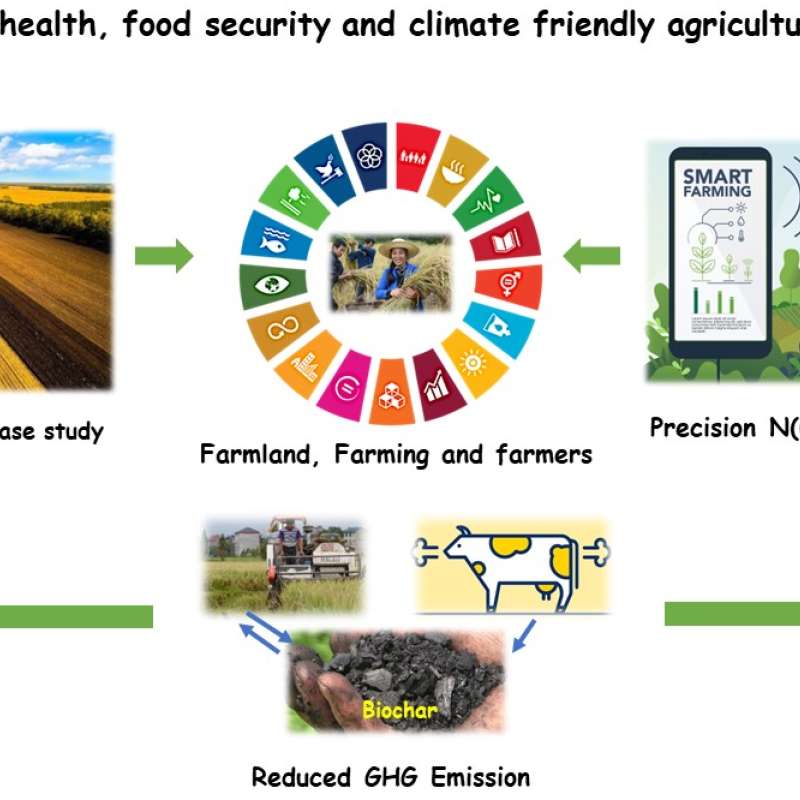
Sinograin III: Smart agricultural technology and waste-made biochar for food security, reduction of greenhouse gas (GHG) emission, and bio-and circular economy


The Sinograin III project’s overall objective is to contribute to the UN SDGs by widely implementing precision agriculture technologies and application of “waste-to-value” biochar products to achieve sustainable food production with minimized GHG emission, improve soil fertility and promote green growth/zero waste in modern agriculture in China.

Aktiv Sist oppdatert: 24.09.2024
Slutt: okt 2027
Start: sep 2023
20220610_132125

Divisjon for matproduksjon og samfunn

TEKNOPOTET - Ny teknologi for økt presisjon i produksjon og lagring av små matpoteter


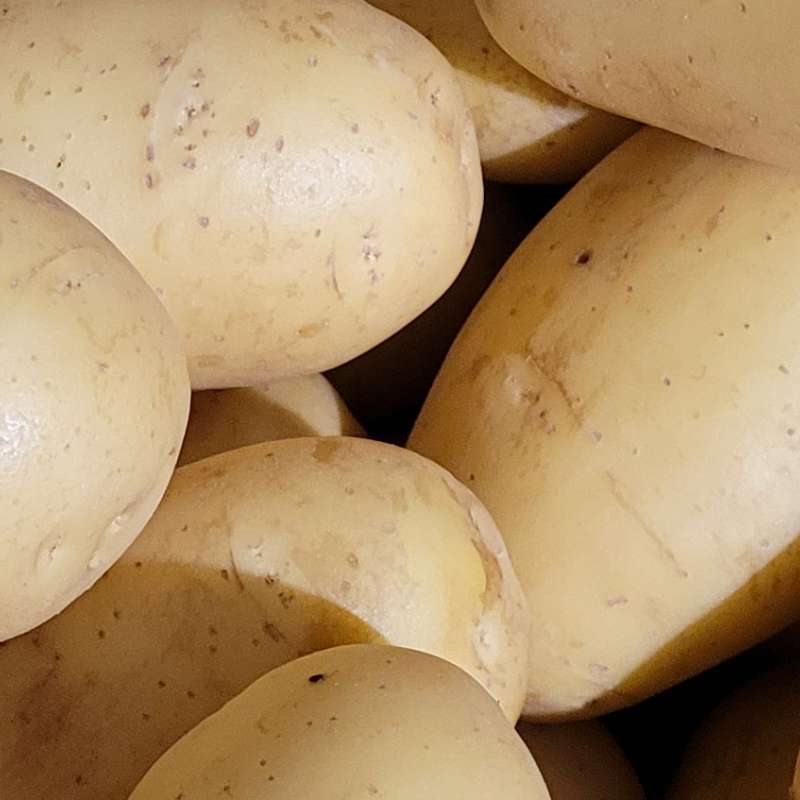
Forbruket av matpoteter er i senere tid dreid mot en økt andel små matpoteter, såkalt delikatessepoteter. Hovedmålet for prosjektet er å utvikle ny kunnskap, teknologi og verktøy for økt presisjon i dyrking og lagring av slike småpoteter. Formålet er at markedet for småpoteter i størst mulig grad skal kunne dekkes av norske småpoteter med rett kvalitet. For at produksjonen skal være lønnsom må antall knoller per plante økes, knollene må ha rett størrelse og være mest mulig jevnstore, og lagringsstrategiene må tilpasses poteter som er små og pakkes tettere i kassene.

Aktiv Sist oppdatert: 09.05.2026
Slutt: des 2027
Start: jan 2024
ef-20080906-121830

Divisjon for bioteknologi og plantehelse

SOLUTIONS: Nye løsninger for nedvisning av potetris, bekjempelse av ugras og utløpere i jordbær og ugraskontroll i eplehager


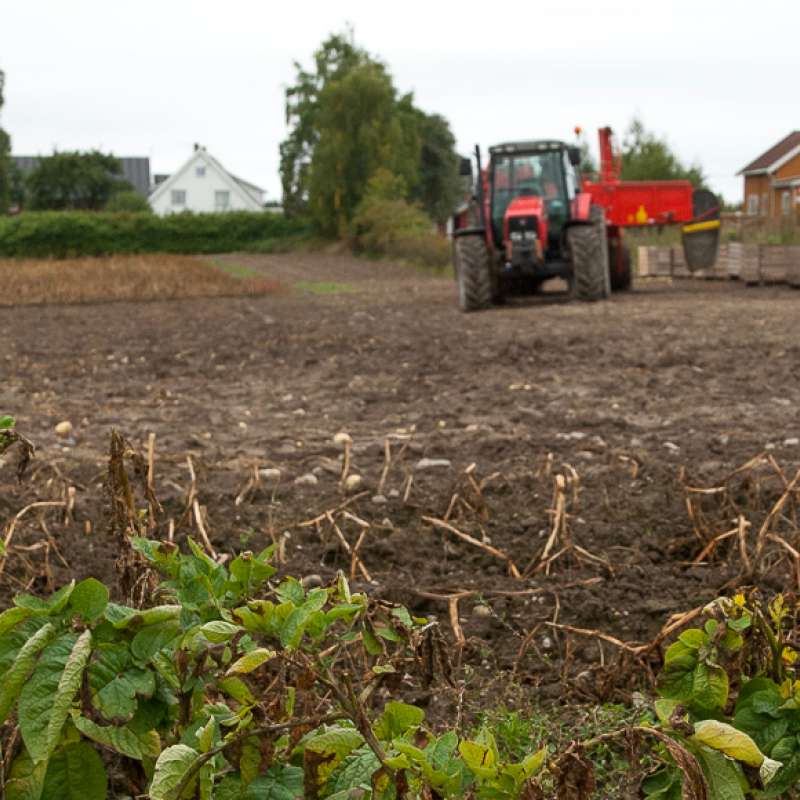
Håndtering av ugress og andre plantevernutfordringer er viktig for å unngå avlingstap i landbruket. Tilbudet av norske rå-, mat- og fôrvarer påvirkes av at bonden lykkes med sin innsats i åker og frukthager. Et nylig forbud mot plantevernmiddelet dikvat og den usikre framtida til glyfosat – begge viktige innsatsfaktorer i norsk jord- og hagebruk – fordrer nye løsninger. Gode alternativ til ordinære plantevernmidler er dessuten velkomne som verktøy i integrert plantevern (IPV). Norske dyrkere er siden 2015 pålagt å følge IPV. Hensikten med IPV er blant annet redusert risiko ved bruk av plantevernmidler på helse og miljø.

Aktiv Sist oppdatert: 24.03.2026
Slutt: des 2026
Start: jan 2021
ebba kvadrat

Divisjon for matproduksjon og samfunn

JordbærSmak: En optimalisert moderne produksjonsteknologi for mer smakfulle norske jordbær


Det er et mål å øke produksjonen i den norske grøntsektoren, inkludert jordbær, med inntil 50 prosent de kommende 15 årene. For å oppnå dette må dyrkingssesongen utvides, men da trengs en mye bedre kunnskap om hvordan man kan påvirke planteveksten og ta i bruk teknologi for å overvåke og beskytte plantene, uten at det går utover kvalitet og smak.

Aktiv Sist oppdatert: 13.10.2025
Slutt: des 2026
Start: jan 2023
20030730ef0198-korn-utdrag
Adaptations within the Norwegian wheat value chain to improve quality and obtain high and stable quantities for milling in the forthcoming decades (MATHVETE)


This project aims to improve the quality of Norwegian wheat used for milling to secure high and stable production in forthcoming decades under more challenging climatic conditions. Increasing wheat production for milling is the most efficient way to achieve increased domestic food production in Norway and it will strengthen the competitiveness in the agricultural sector.

INAKTIV Sist oppdatert: 10.12.2020
Slutt: mars 2023
Start: jan 2019
Project image
Innovative løsninger for økt lønnsomhet i grøntnæringa - TEKNOBÆR


De to største utfordringene norsk grøntnæring står ovenfor, er høye arbeidskostnader og stabilt høye avlinger av god kvalitet. Det skjer en rask teknologisk utvikling i og rundt landbruket. Bruk av avansert teknologi, inkludert robotisering til for eksempel behovsprøvd gjødsling, vanning og plantevern og ved innhøsting er ikke lengre framtiden, det er på full fart inn i internasjonalt landbruk.

INAKTIV Sist oppdatert: 09.12.2022
Slutt: des 2020
Start: jan 2017