
Jihong Liu Clarke
Seniorforsker/Kinakoordinator
(+47) 404 50 609
jihong.liu-clarke@nibio.no
Sted
Ås - Bygg H7
Besøksadresse
Høgskoleveien 7, 1433 Ås
Sammendrag
Det er ikke registrert sammendrag
Forfattere
Thiago Inagaki Junbin Zhao Claire Douheret Pierre-Adrien Rivier Jihong Liu Clarke Nicholas ClarkeSammendrag
Earthworms enhance compost mineralization, improving its fertilizer value and soil quality (biological activity, structure). However, they often increase greenhouse gas (GHG) emissions, particularly nitrous oxide (N₂O), via nitrogen mineralization. Combining biochar with compost may mitigate these emissions while further boosting soil benefits alongside earthworm activity. We present preliminary results from a soil incubation (2 months) experiment testing this synergy. Using a Norwegian loam Cambisol, a 2x2x2 factorial design (four replicates) assessed the presence/absence of earthworms (Lumbricus terrestris - 10 adults/jar), compost (manure/food waste - 60 Mg ha⁻¹ equivalent), and rice-straw biochar (700°C pyrolyzed - 20 Mg ha⁻¹ equivalent). We hypothesized that earthworm and compost addition may present synergistic effects in improving N mineralization with consequent enhanced GHG emissions. We expect that biochar may counteract these emissions and potentially present positive effects for soil quality. The goal was to develop a biochar-compost-earthworm system creating a fertilizer with higher nutrient availability and lower GHG emissions. In the first week of the incubation, we found that higher CO2 and N2O productions were associated with the presence of compost. Earthworms could further enhance the carbon decomposition but appeared to mitigate CH4 production. Further analysis will be carried out with a focus on GHG emissions (CO₂, CH₄, N₂O) and nitrogen mineralization dynamics.
Forfattere
Igor A. Yakovlev Thiago Inagaki Junbin Zhao Pierre-Adrien Rivier Hege Særvold Steen Inger Heldal Daniel Rasse Jihong Liu Clarke Nicholas ClarkeSammendrag
Det er ikke registrert sammendrag

Divisjon for miljø og naturressurser
Systematic detection and mitigation of antimicrobial resistance in soil environment and animal health contributing to human health
Divisjon for miljø og naturressurser
Conservation of Biodiversity in China in the light of Climate Change
Climate change is becoming an increasingly important pressure on biodiversity, which adds to the burden of other drivers of loss of biodiversity causing negative effects on ecosystems and species
Divisjon for miljø og naturressurser
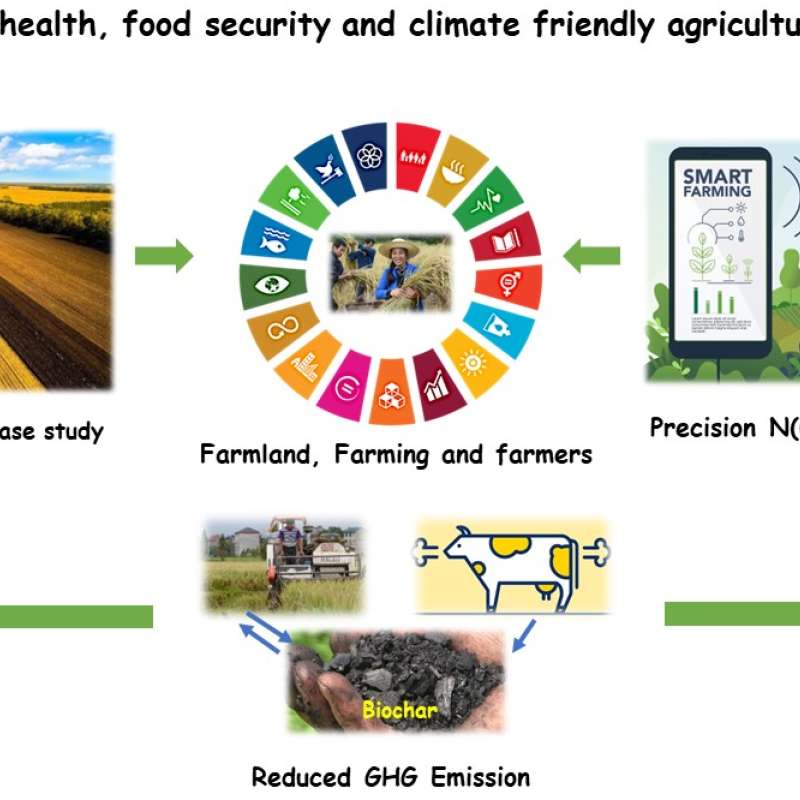
Sinograin III: Smart agricultural technology and waste-made biochar for food security, reduction of greenhouse gas (GHG) emission, and bio-and circular economy
The Sinograin III project’s overall objective is to contribute to the UN SDGs by widely implementing precision agriculture technologies and application of “waste-to-value” biochar products to achieve sustainable food production with minimized GHG emission, improve soil fertility and promote green growth/zero waste in modern agriculture in China.
Divisjon for miljø og naturressurser
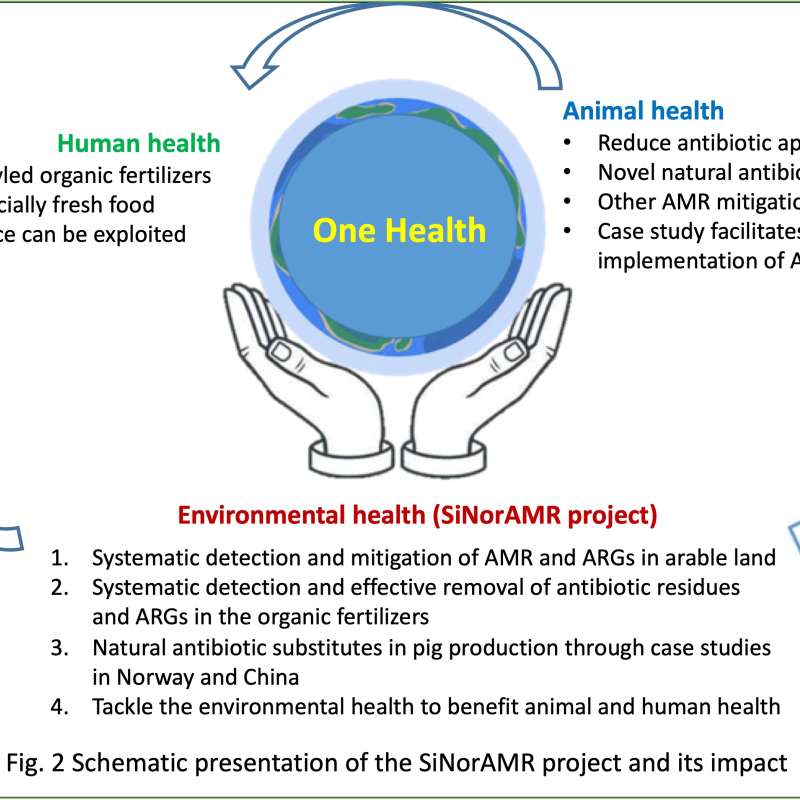
SiNorAMR
Full title: Collaborative and Knowledge-building Project Collaborative Project Systematic detection and mitigation of antimicrobial resistance in soil environment and animal health contributing to human health (SiNorAMR)