Ulrike Bayr
Forsker
(+47) 480 94 762
ulrike.bayr@nibio.no
Sted
Ås - Bygg O43
Besøksadresse
Oluf Thesens vei 43, 1433 Ås (Varelevering: Elizabeth Stephansens vei 21)
Biografi
Ulrike er naturgeograf og landskapsøkolog med særlig interesse for hvordan landskapets romlige struktur påvirker biologisk mangfold og økologiske prosesser. Hun har metodisk kompetanse innen GIS, fjernmåling og romlig analyse, samt praktisk erfaring med vegetasjonsøkologi og vegetasjonskartlegging gjennom feltarbeid i overvåkingsprogrammene 3Q (Tilstandsovervåking og resultatkontroll i jordbrukets kulturlandskap) og ANO (Arealrepresentativ naturovervåking).
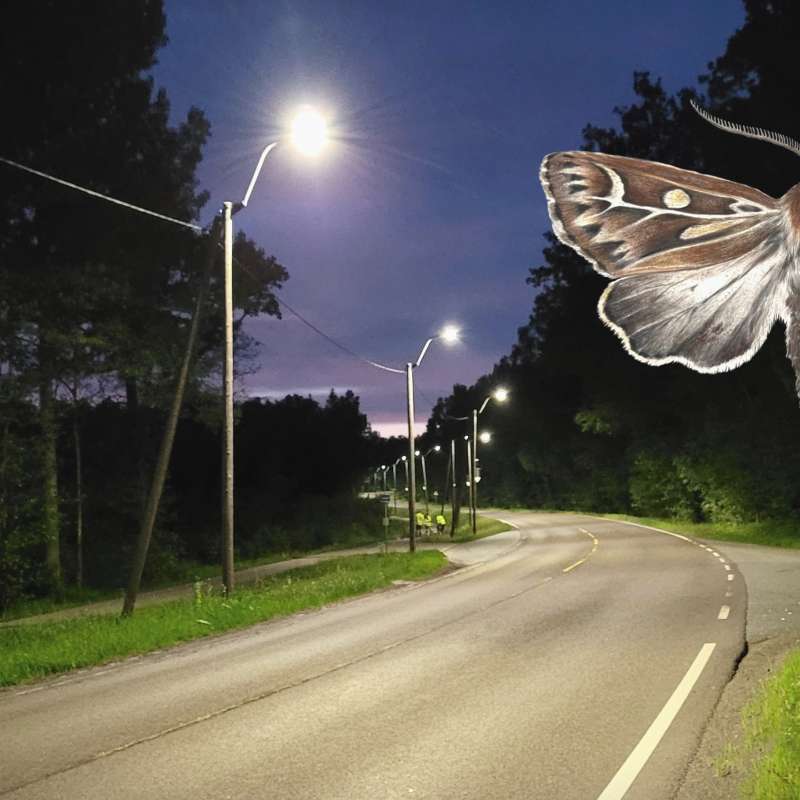
Andre områder hun jobber med er bl.a. lysforuensing og effekter av kunstig lys på insekter, fremmede skadelige planter, jordbruksarealer ute av drift og geovisualisering.
Forfattere
Marie Vestergaard Henriksen Annette Bär Ulrike Bayr Magda Karlo Bjørn Arild Hatteland Anne Muola Line Johansen Steffen Adler Emilie Risdal Danielsen Therese Birkeland Fossøy Gunda ThömingSammendrag
Et bærekraftig jordbruk må bevare naturens evne til å levere økosystemtjenester. Samtidig har en rekke studier dokumentert en global nedgang i insektbestander, noe som truer viktige økosystemtjenester som insektpollinering og biologisk kontroll av skadedyr med naturlige fiender. I Norge er det insekter som bier, fluer, marihøner, gulløyer og snyltevepser som bidrar med disse økosystemtjenestene. Det nye rammeverket Integrert plante- og pollinatorvern (IPPV) har som målsetting å samordne tiltak som styrker både biologisk kontroll av skadedyr med naturlige fiender og insektpollinering i matproduksjonen. I IPPV iverksettes det forebyggende tiltak som over tid øker mangfoldet av ressurser for ulike typer av insekter i kulturlandskapet med mål om å gi en mer stabil levering av økosystemtjenester til produksjonen i åkeren. I denne rapporten vurderer vi relevansen av IPPV rammeverket for norske matproduksjonssystemer og undersøker hvordan eksisterende tiltak og kartlag kan utnyttes i implementeringen av IPPV i norsk jordbruksforvaltning. Vi gir noen anbefalinger til hvordan rammeverket og konkrete tiltak kan iverksettes i norsk jordbruk. Den helhetlige tilnærmingen IPPV har for å sikre økosystemer og arter er viktig for jordbrukets bærekraft og matsikkerheten.
Forfattere
Terje Christensen Are Røysamb Ulrike Bayr Dieu Tien Bui Guðrún Helgadóttir Nina Johansen Joern Klein Mieke Cornelia Louwe Randi Mork Kyung Binn Noh Stefanie Reinhardt Trude Eid Robsahm Kristin Helen Roll Øyvind Steifetten Per Strömberg Gry Tengmark Østenstad Veronika ZaikinaSammendrag
Abstract Energy-efficient lighting solutions, while beneficial for reducing energy consumption, also pose challenges in terms of light pollution. Light pollution, defined as excessive or misdirected artificial light, has become a significant environmental issue globally. This perspective paper explores the extent, effects, and knowledge gaps related to light pollution, with a focus on its impact on human health, ecosystems, and energy consumption. This study focuses on Norway, a country that is particularly relevant for studying light pollution due to its far northern location. At high latitudes, the variation in natural light is larger over the year than at lower latitudes. Therefore, a Nordic perspective is valuable to present knowledge about effects of artificial lighting under these conditions. Under the midnight sun, minimal additional outdoor lighting is required, whereas during the winter season, outdoor lighting may be utilised continuously. The paper synthesizes findings from various studies, highlighting the rapid increase in light pollution due to urbanisation, infrastructure development, and the widespread adoption of LED technology. Human health effects include alterations of circadian rhythms, increased risk of accidents, and potential links to serious diseases such as cancer. Ecosystem impacts are profound, affecting a number of species i.e., within insects and bats, and may lead to for instance disturbances in navigation and circadian rhythms, habitat fragmentation, and altered predator–prey dynamics. This article identifies significant knowledge gaps, particularly in the measurement of light pollution, understanding its health effects, and its impact on various species. Recommendations for future research and policy development are provided, emphasising the need for interdisciplinary approaches to mitigate the adverse effects of light pollution and promote sustainable lighting practices.
Forfattere
Diress Tsegaye Alemu Jonathan Rizzi Ulrike Bayr Misganu Debella-Gilo Richard Adade Denis W. Aheto Belachew Gizachew ZelekeSammendrag
Extensive ecosystem degradation along the coastal areas of Ghana highlights the need for targeted landscape restoration. This study identified areas with high restoration potential by evaluating environmental, climatic, and anthropogenic determinants of mangrove distribution. We tested multiple habitat suitability models, including Random Forest (RF), Generalized Additive Model (GAM), Generalized Linear Model (GLM), Maximum Entropy (MaxEnt), and an ensemble approach. Mangrove occurrence records were compiled from field observations, drone-derived data, and publicly available biodiversity and mapped datasets. The ensemble GAM-RF model emerged as the most robust model, with the highest predictive performance. Hydrological and topographic factors were the strongest predictors of mangrove habitat suitability, particularly proximity to rivers and the coastline, low-elevation terrain (<5 m asl), and temperature-related bioclimatic variables, while precipitation metrics and anthropogenic proxies played secondary roles. Using the ensemble approach, the estimated potentially suitable habitat ranged from 417 to 1313 km2, indicating that substantial areas remain available for mangrove restoration. These findings align with ongoing national and international restoration initiatives, including the coastal restoration plan, and have important implications for coastal protection, carbon sequestration, fisheries habitat, and local livelihoods. Our findings demonstrate that multi-model habitat suitability analyses can guide spatially targeted, and evidence-based restoration planning.