
Junbin Zhao
Seniorforsker
Biografi
My work ranges from plant level ecophysiological processes to ecosystem level carbon, water and energy balance. I am particularly interested in the impact of climate change (including relevant extreme events, e.g., drought, flooding, snow storm, etc.) on these processes and their climate feedbacks. I use many state-of-the-art techniques in my research work, including eddy covariance for ecosystem level gas exchange observations, automatic static/dynamic chambers for plot-level or whole-plant-level gas exchange measurements and machine learning models for data analysis and prediction.
__________________________________________________
Professional appointments
2019 – present Research Scientist Norwegian Institute of Bioeconomy Research (NIBIO)
2016 – 2019 Postdoctoral associate Florida International University (FIU)
2013 – 2015 Postdoctoral researcher Swedish University of Agricultural Sciences (SLU)
__________________________________________________
Education
2013 Ph. D University of Chinese Academy of Sciences, Beijing, China
2011 – 2012 Visiting Ph.D student Max Planck Institute for Biogeochemistry, Jena, Germany
2007 B. S. Yunnan University, Kunming, China
Forfattere
Junbin ZhaoSammendrag
Det er ikke registrert sammendrag
Sammendrag
Det er ikke registrert sammendrag
Forfattere
Palingamoorthy Gnanamoorthy Junbin Zhao Yajun Chen Linjie Jiao Boonsiri Sawasdchai Zhang Jing Abhishek Chakraborty Pramit Kumar Deb Burman Sung‐Ching Lee Thomas A. M. Pugh Yiping Zhang Qinghai SongSammendrag
Increasing drought frequency and intensity affect biophysical functions of natural ecosystems. In tropical semi‐arid savannas, while immediate drought effects are well‐studied, the drought legacy effects on vegetation composition and associated ecosystem functions remain unclear. We used data of vegetation composition, net ecosystem CO 2 exchange, surface albedo and evapotranspiration (ET) in 2017–2022 from a savanna ecosystem, Southwest China, to investigate the legacy effect of an extreme drought event that occurred in 2019. Vegetation declined continuously for 3 post‐drought years. While tree numbers declined by 12%, shrub numbers dropped by 50% compared with pre‐drought levels, shifting vegetation dominance toward trees. This structural change caused sustained reductions in albedo and ET, which remained below pre‐drought levels, despite gross primary production recovering in the years immediately post‐drought. Vegetation shifts disproportionately impact ecosystem functions, with energy and water fluxes exhibiting greater vulnerability and potentially enhancing regional warming as droughts increase in Asian savannas.
Divisjon for miljø og naturressurser
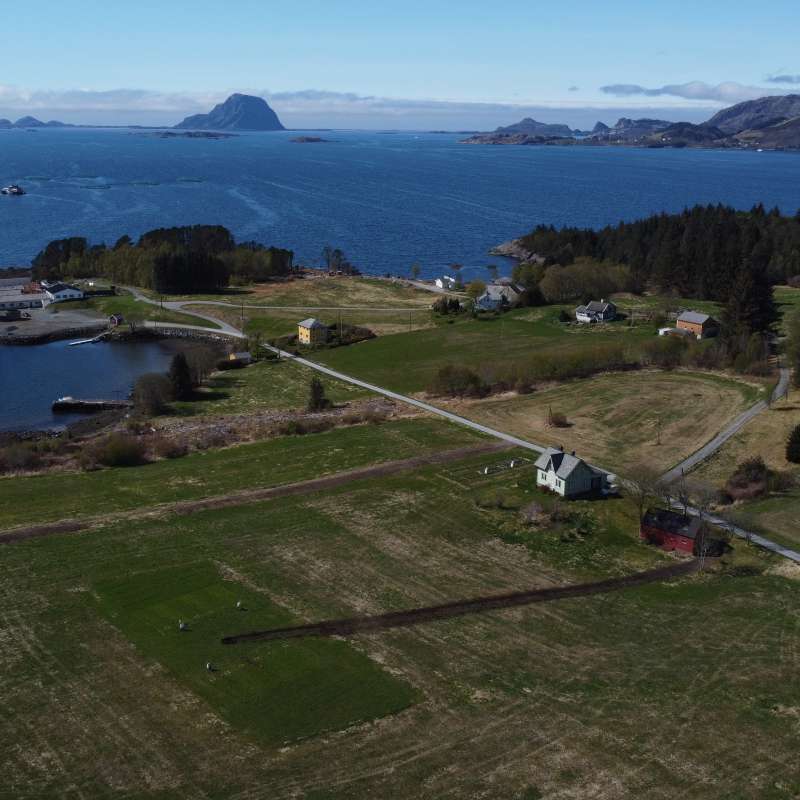
Can paludiculture be a solution to reduce greenhouse gas emissions from Norwegian cultivated peatlands?
Vått landbruk, kjent som paludikultur, gjennom gjenfukting av drenert myr har i økende grad blitt ansett som en tilnærming som minimerer klimagassutslippene samtidig som det gir en økonomisk bærekraftig drift. Imidlertid mangler vi nå feltforsøk som demonstrerer gjennomførbarheten og potensialet til paludikultur i Norge, noe som hindrer beslutningstakere og bønder i å innføre effektive tiltak for å prøve ut paludikultur.
Divisjon for miljø og naturressurser
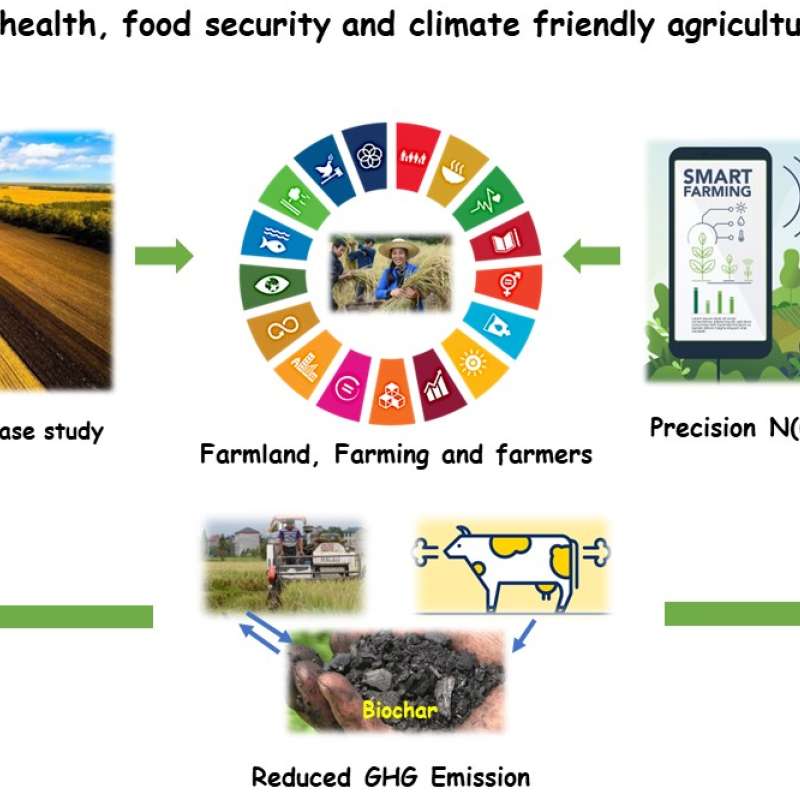
Sinograin III: Smart agricultural technology and waste-made biochar for food security, reduction of greenhouse gas (GHG) emission, and bio-and circular economy
The Sinograin III project’s overall objective is to contribute to the UN SDGs by widely implementing precision agriculture technologies and application of “waste-to-value” biochar products to achieve sustainable food production with minimized GHG emission, improve soil fertility and promote green growth/zero waste in modern agriculture in China.