Hjort
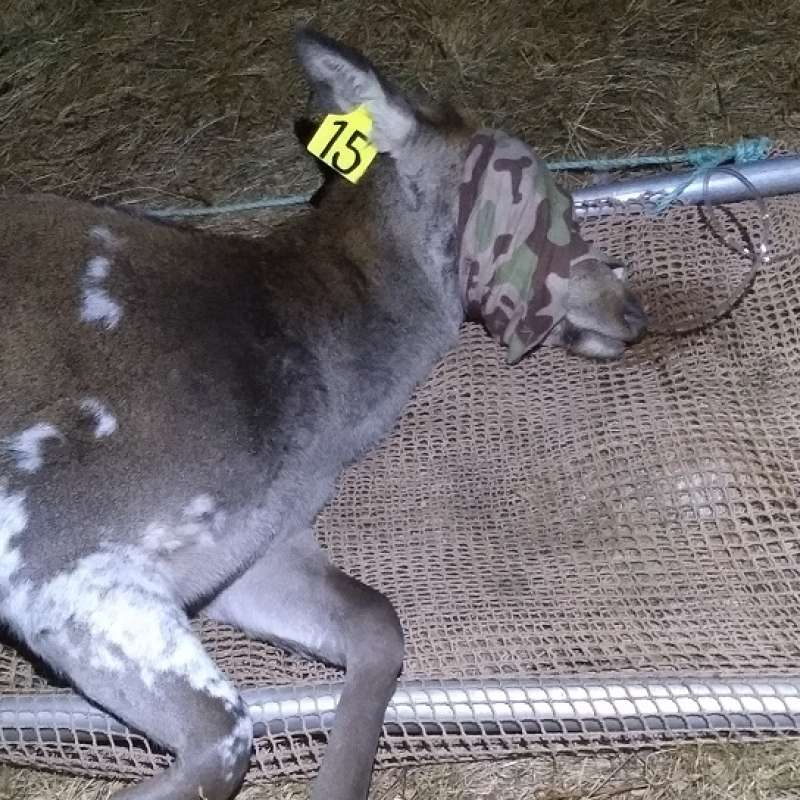
NIBIO har i en årrekke forsket på hjortens områdebruk gjennom omfattende merkeprosjekter hvor dyra utstyres med GPS sendere.
Publikasjoner
Sammendrag
Reliable estimates of the size and composition of harvested populations over time are key to designing adequate population management plans, regardless of management objectives. In Norway, a national system for collecting and analysing hunter-reported data on red deer (Cervus elaphus) has been operational for about 20 years. The system was expected to provide population metrics that would substantially improve deer population management routines at the municipal level. This has proven to be challenging when using existing state-of-the-art estimation methodology. The main reasons are that the variation in the observation data is generally much larger than population abundance variability, and that one does not have a clear understanding of the stochastic process generating the observation data. Here, using hunter-reported observation data and harvest data from six Norwegian municipalities collected in the period 2007–2023, we show that a straightforward estimation methodology based on population modelling can produce robust abundance estimates despite frequent low quality of the observation data. Its major assets are that it does not involve strong assumptions about the stochastic processes underlying the observation process and that it does not involve assumptions about initial population size and structure in terms of prior statistical distributions. We anticipate that the method can be applied in several other population management contexts, and we think that the results offer fresh perspectives on to what extent noisy citizen-collected time series data can be used to inform management decisions.
Sammendrag
1. Our understanding of how migratory wildlife populations affect incidence of in-fectious diseases spilling over into humans is limited. Ticks are expanding theirdistribution towards northern latitudes, causing emergence of tick- borne dis-eases. Deer serve as reproduction hosts for adult ticks, supporting the tick pop -ulations. However, in northern areas, deer populations are partially migratory,and migrants occupy high elevation summer ranges that are unsuitable for ticks.Migration can thus theoretically lead to escape from exposure to ticks and to deerfeeding fewer ticks, which lower disease hazard to humans. 2. Combining data on Ixodes ricinus tick abundance with GPS-tracking data of reddeer (Cervus elaphus), we quantified the distributional overlap of ticks and reddeer along elevational gradients in Norway. Furthermore, we correlated bothdeer density and the proportion of migratory deer with the incidence of Lymedisease in humans. 3. We found that migratory deer summer ranges had colder climate and overlappedless with tick distribution than those of resident deer. Deer density consistentlyincreased Lyme disease incidence in humans. However, we found only weak evi-dence that deer migration negatively affected Lyme disease incidence. 4. Our study provides a rare quantification of how host availability, in terms of bothhost density and migratory movement, affects risk of a zoonotic disease.
Sammendrag
The timing of migration is fundamental for species exploiting seasonally variable environments. For ungulates, earlier spring migration is expected with earlier vegetation green-up. However, other drivers, such as access to agricultural farmland and variation in local conditions, are also known to affect migration. We investigated the timing of spring migration for 96 male and 201 female red deer (Cervus elaphus) using a long-term dataset (2005–2020). Overall, the timing of migration was mainly characterized by large individual variability between and within years (95% range 6 April to 18 June). The spring migration timing was, as expected, later with colder winter and spring conditions (North Atlantic Oscillation (NAO) winter and April indices) and later peak vegetation green-up (NDVI), with a five-day delay in green-up causing a migration delay of 1.2 days. Timing was also influenced by local conditions in summer and winter home ranges. Red deer with greater access to farmland and a more variable topography (hence variable plant phenology) in winter delayed migration. Similarly, individuals with higher-elevation summer ranges (with delayed onset of plant growth) also delayed migration. Our analyses highlight that the timing of red deer migration is determined by multiple drivers affecting foraging conditions in the landscape, indicative of considerable phenotypic plasticity.
Sammendrag
1. Large herbivores at northern latitudes often forage on agricultural farmland. In these populations, the presence of both resident and migrant individuals (termed partial migration) is common, but how migrants and residents differ in their selection of farmland is not well-understood. Higher access to farmland may provide benefits to residents compensating for not following the ‘green wave’ of emerging vegetation such as migrants. According to sexual segregation theory, males and females differ in body-size-related nutritional needs and risk sensitivity associated with farmland. Yet, how the sexes differ in the selection of farmland through an annual cycle remains unclear. 2. We quantified seasonal variation in the selection of farmland by partially migratory red deer (Cervus elaphus) at broad, landscape scale and at fine, within-home range scale using 16 years of data (2005–2020) from 329 females and 115 males in Norway. 3. We tested predictions related to the partial migration and sexual segregation theories using resource selection functions. We predicted higher selection for farmland by residents than by migrants, and higher selection by females than by males due to higher nutritional needs, but that higher perceived predation risk would impact their diurnal selection patterns. 4. The time spent on farmland was higher in winter (14%–18%) than in summer (8%–14%). Residents selected farmland more than migrants mainly at broad, landscape scale, while differences were smaller and less consistent at a fine, within-home range scale. Females showed higher broad-scale selection for farmland in winter, whereas males showed higher selection in summer. At a fine, within-home range scale, females selected farmland more in summer during darkness, whereas sex differences were small otherwise. The fine-scale selection of farmland was markedly higher during low-light conditions than in daylight. A high population density index was correlated with high broad-scale selection of farmland, i.e. high farmland availability in the home ranges, whereas the effect of the density index was weak at a fine, within-home range scale. 5. Our study emphasises how hypotheses deriving from the theories of partial migration and sexual segregation can improve our understanding of ungulates' selection of farmland. The higher selection by residents during summer highlights the importance of retaining landscape connectivity, allowing for migration and reducing pressure on local resources.
Forfattere
Tilde Hjermann Nikolai Antonsen Bilet Inger Maren Rivrud Erling Meisingset Pål Thorvaldsen Atle MysterudSammendrag
Grazing by wildlife on agricultural land is widespread across geographical regions, and can cause human–wildlife conflicts due to reduced crop yield when the grazing pressure is high. Growing red deer (Cervus elaphus) populations in Europe call for an increased understanding of their grazing patterns to mitigate damages. We quantified how red deer grazing pressure (grazing presence and grazing level) on agricultural grass meadows (n = 60) in Norway varied across multiple spatial scales. We used a nested, hierarchical study design transcending from a broad scale (meadows across the landscape) to intermediate (between nearby meadows) and local (within-meadow) scales, allowing us to identify at which scale the variation in grazing pressure was strongest. We estimated how grazing was determined by broad-scale factors influencing forage availability and quality through population density, distance to coastline, and differences between the first versus second harvest, by intermediate-scale factors in terms of meadow management causing differences in botanical composition and quality, and by local-scale factors in terms of perceived predation risk and disturbance. At a broad scale, higher population densities were associated with higher grazing pressure, and more grazing occurred before the first compared to the second harvest. Intermediate-scale factors explained the most variation of grazing pressure from red deer, with higher grazing pressure on newly renewed meadows compared to other nearby meadows. On a local scale, more grazing occurred closer to the forest edge, providing cover, and further away from infrastructure, with increased risk and disturbance. Overall, our study highlights how drivers of grazing pressure on agricultural land vary across spatial scales. Population reductions on a broader scale may have some effect in reducing the grazing pressure, but renewed meadows will nevertheless attract red deer, causing higher grazing pressure compared to neighbouring meadows. This insight is crucial for determining effective mitigation strategies facing rising red deer populations across Europe.
Forfattere
Even Unsgård Erling Meisingset Inger Maren Rivrud Gunn Randi Fossland Pål Thorvaldsen Vebjørn Veiberg Atle MysterudSammendrag
In Europe, over a third of the agricultural area is grass meadows used for livestock grazing and fodder production. Grass meadows provide a food source for wild ungulates causing human-wildlife conflicts due to forage removal. Few experimental studies have quantified biomass loss with enough replicates to determine how surrounding environments influences level of biomass removal. Using an exclosure experiment on 57 grassland meadows over five years at the northwest coast of Norway covering 10 650 km2, we quantified biomass removal by red deer (Cervus elaphus L.) and how environmental factors impacted biomass loss (Study 1). Furthermore, we examined development of biomass loss and crude protein concentration in five fields throughout the growing season (Study 2). The average predicted biomass loss to red deer grazing was 16% for the first harvest, and 7.3% for the second harvest (Study 1). Biomass loss increased with red deer density from 0% at the lowest density (0.6 red deer harvested/km2) to 31% at the highest density (4 red deer harvested/km2). Biomass loss increased from 12% to 32.8% as terrain ruggedness index (TRI) rose from 2.1 to 7.1. Absolute biomass loss increased towards time of grass harvest (Study 2). Crude protein concentration was higher in unfenced plots during the period before first harvest, but not between first and second harvest (Study 2). The quantification of biomass removal at a large spatial scale over several years in this study provides a better understanding of factors causing variation in losses.
Sammendrag
Supplemental feeding of cervids during winter is a widespread management practice, but feeding may increase the risk of disease transmission. Therefore, legal regulations to limit supplemental feeding are often implemented when dealing with severe infectious diseases, such as chronic wasting disease (CWD) in cervids. However, it is currently unclear whether these regulations result in decreased spatial clustering and aggregation as intended. Supplemental feeding is expected to restrict the movement of cervids. Therefore, a ban on feeding may also result in wider space use and a risk of geographic spread of disease. The space use of 63 GPS-marked red deer (Cervus elaphus) was investigated before (n = 34) and after (n = 29) the implementation of a legal regulation aimed at limiting the supplemental feeding of cervids during winter in a CWD-affected region of Nordfjella, Norway. Snow depth was the main determinant of the space use for red deer. A moderate reduction in the number of GPS positions in spatial clusters was evident during periods of deep snow once the ban was in place. Sizes of core areas (Kernel 50%), home ranges (Kernel 95%), and dispersion (MCP 100%, number of 1 km2 pixels visited per deer) declined from January to March and with increasing snow depth. Dispersion (number of 1 km2 pixels visited per deer) did not depend on snow depth after the ban, and red deer used larger areas when snow depth was high after the ban compared to before. The ban on supplementary feeding had no effect on size of core areas or home ranges. Several potential factors can explain the overall weak effect of the ban on space use, including the use of agricultural fields by red deer, other anthropogenic feeding, and landscape topography. This study highlights that snow depth is the main factor determining space use during winter, and it remains to be determined whether the moderate reduction in spatial clustering during deep snow after the ban was sufficient to lower the risk of disease transmission.
Sammendrag
Population densities of several cervid species have increased in recent decades in North America and Europe, and cervids frequently eat and damage agricultural crops. Competition and depletion of natural food resources are the main mechanisms for the density-dependent decline in vital rates of large herbivores. The extent to which access to agricultural crops can buffer density effects in cervid populations, however, is unknown. Agricultural grasslands cover more than a third of the European agricultural area, and red deer (Cervus elaphus) use these grasslands in many European countries. Over the past few decades, such grasslands have been subject to management intensification (with renewal and fertilization) in some areas and abandonment (no longer being harvested) in other areas. We used generalized linear mixed-effects models to examine the development of body masses of red deer in Norway during a period of population density increase in 16 local management units with different availability of cultivated grasslands (0.87–6.44%) in a region with active management of grasslands (Tingvoll, n = 5,780, 2000–2019) and a region with ongoing abandonment (Hitra, n = 10,598, 2007–2020). There was a consistent decline in the body mass of red deer linked to increased population density in both regions. A higher proportion of agricultural grassland was linked to higher body mass and lower density effects in both sexes and across all age classes. There is a link between body mass, survival, and reproduction. Therefore, the buffering of density effects of access to agricultural crops will fuel cervid population growth and lead to less natural regulation of abundance, making it more difficult to control dense cervid populations by harvesting.
Forfattere
Erling Meisingset Joar Gusevik Atle Skjørestad Øystein Brekkum Atle Mysterud Frank Narve RosellSammendrag
Many wild animals perceive humans as predators, and human disturbance,especially in the form of hunting, triggers antipredatory behavior among prey.Yet, knowledge of how game species react to different types of human distur-bance and adapt to repeated disturbances is limited. We investigated howdisturbance in the form of a solitary human approacher (stalker) impactedbehavior (flight response and short-term habitat use) of 28 GPS-collared reddeer (Cervus elaphus) in two populations with contrasting population densitiesin Norway. We studied how the behavioral response differed: (1) with season(pre-hunting vs. hunting); (2) by consecutive approaches within a day;(3) among replicated experiments within the same season; and (4) betweentwo regions with contrasting densities of red deer. The average flight initiationdistance (FID) increased by 15% during the hunting season, and consecutiveapproaches within the same day caused the red deer to move 49% longerdistances. Flight initiation distance was longer in the high-density population,while escape distance was longer in the low-density population. Red deermoved out of their weekly home range after 52% approaches, and after theonset of hunting season, time spent outside the home range increased by 89%.Red deer preferred denser resting sites after the disturbance and animal siteshad shorter sighting distance and higher canopy cover than control plots.Tree density and canopy cover at animal sites increased at the onset of huntingseason, from first to second approach within day, and after replicated experi-ments within season. Our results suggest that red deer preferred dense restingsites, especially in the hunting season. However, these animal sites had thesame amount of the favorable forage plant bilberry (Vaccinium myrtillus), indi-cating no clear food–cover trade-off in selection of habitat. Our study showedthat onset of hunting initiates stronger fear responses in red deer, which mayin turn affect red deer distribution and harvesting efficiency
Forfattere
Atle Mysterud Isa Nergård Skjelbostad Inger Maren Rivrud Øystein Brekkum Erling MeisingsetSammendrag
Simple Summary Chronic Wasting Disease is a deadly infectious disease affecting cervids that was discovered in Norway in 2016. CWD can transmit through environmental reservoirs and aggregation and spatial clustering of animals may affect transmission. Deer usually forage on scattered forage, but anthropogenic food sources are often concentrated in space, leading to spatial aggregation. We determined what caused red deer to revisit the same locations in the environment, and the extent to which this was caused by anthropogenic food sources. We document that the most visited sites were indeed anthropogenic, which opens potential avenues to disease mitigation. Abstract Herbivores like cervids usually graze on widely scattered forage, but anthropogenic food sources may cause spatial revisitation and aggregation, posing a risk for transmission of infectious diseases. In 2016, chronic wasting disease (CWD) was first detected in Norway. A legal regulation to ban supplemental feeding of cervids and to fence stored hay bales was implemented to lower aggregation of cervids. Knowledge of further patterns and causes of spatial revisitation can inform disease management. We used a recently developed revisitation analysis on GPS-positions from 13 red deer (Cervus elaphus) to identify the pattern of spatial clustering, and we visited 185 spatial clusters during winter to identify the causes of clustering. Anthropogenic food sources were found in 11.9% of spatial clusters, which represented 31.0% of the clusters in agricultural fields. Dumping of silage and hay bales were the main anthropogenic food sources (apart from agricultural fields), and unfenced hay bales were available despite the regulation. The probability of the clusters being in agricultural fields was high during winter. It may be necessary to find other ways of disposing of silage and enforcing the requirement of fencing around hay bales to ensure compliance, in particular during winters with deep snow.
Forfattere
Kjell Handeland Rebecca K. Davidson Hildegunn Viljugrein Anders Mossing Erling Meisingset Marianne Heum Olav Strand Ketil IsaksenSammendrag
Nematodes of the genera Elaphostrongylus and Dictyocaulus are associated with disease in semi-domesticated tundra reindeer and farmed red deer whereas less knowledge exists in the wild. Their first stage larvae (L1) develop to the infective third stage (L3) in the environment; Elaphostrongylus spp. within intermediate gastropod hosts and Dictyocaulus spp. as free-living larvae. Larval development of Elaphostrongylus is highly temperature dependent with a developmental minimum of 9–10 °C. Larval development of Dictyocaulus spp. may occur at low temperatures (5 °C) but the larvae are sensitive to desiccation. We examined the prevalence and intensity of Elaphostrongylus spp. and Dictyocaulus spp. infections in six wild reindeer and two wild red deer populations in relation to altitude, temperature and rainfall in their respective main summer pasture area over the 5 summers prior to sampling. The parasitological examination was based upon morphological identification of L1 in the faeces of hunted animals. Altitude was calculated from animal position data and temperature and precipitation by means of a nationwide gridded data set. Temperature decreased with increasing altitude, from 13.3 °C for the lowest located red deer population (300 m) to 6.1 °C for the highest located reindeer population (1400 m). No significant relationship between altitude and rainfall was identified. Elaphostrongylus spp. infection decreased in prevalence with increasing altitude, being identified in 89% of investigated samples from the lowest located population and in 3% of samples from the highest. The prevalence of Dictyocaulus spp. infection varied between 28 and 80% and no relationship with altitude was found. The intensity of Elaphostrongylus spp. infection was low in reindeer and moderate in red deer whereas the intensity of Dictyocaulus spp. infection was moderate in both species. Our results indicated that the climatic conditions in all areas studied were suitable for Dictyocaulus spp., whereas summer temperature was a restrictive factor for Elaphostrongylus sp. in reindeer.
Sammendrag
Large herbivores gain nutritional benefits from following the sequential flush of newly emergent, high- quality forage along environmental gradients in the landscape, termed green wave surfing. Which landscape characteristics underlie the environmental gradi-ent causing the green wave and to what extent landscape characteristics alone explain individual variation in nutritional benefits remain unresolved questions. Here, we com-bine GPS data from 346 red deer (Cervus elaphus) from four partially migratory popula-tions in Norway with the satellite- derived normalized difference vegetation index (NDVI), an index of plant phenology. We quantify whether migratory deer had access to higher quality forage than resident deer, how landscape characteristics within sum-mer home ranges affected nutritional benefits, and whether differences in landscape characteristics could explain differences in nutritional gain between migratory and resident deer. We found that migratory red deer gained access to higher quality forage than resident deer but that this difference persisted even after controlling for land-scape characteristics within the summer home ranges. There was a positive effect of elevation on access to high- quality forage, but only for migratory deer. We discuss how the landscape an ungulate inhabits may determine its responses to plant phenol-ogy and also highlight how individual behavior may influence nutritional gain beyond the effect of landscape.
Sammendrag
Background: Many wingless ectoparasites have a limited capacity for active movement and are therefore primarily dependent on hitchhiking on their hosts for transportation. The distribution of the tick Ixodes ricinus is expected to depend mainly on transportation by hosts and tick subsequent survival in areas where they drop off. In Europe, the most important hosts of adult female I. ricinus are cervids. The extensive space use of large hosts provides a much larger dispersal potential for I. ricinus than that of smaller mammalian hosts. We aim to determine the contribution of red deer (Cervus elaphus) space use on the spatial distribution of I. ricinus, after accounting for landscape factors. Methods: We analysed the spatial distribution of I. ricinus with generalised mixed effects models (GLMMs) based on data from extensive field surveys of questing density in two coastal regions in Norway, from which home range data from 73 red deer with GPS collars were available. Red deer home ranges were derived using the kernel method to identify areas most frequently used by deer. We first fitted a baseline model with tick questing densities relative to landscape features that are likely to affect local climate conditions and hence, survival. We then added deer space use variables to the baseline model with only landscape variables to test whether areas more frequently used by red deer had higher questing tick densities. Results: Questing I. ricinus density was predicted by several landscape features, such as elevation, distance to the fjord and topographic slope. In addition, we found that areas more heavily used within the red deer home ranges, correlated with higher questing tick densities. Increased effects of deer space use were additive to the landscape model, suggesting that correlations were more than just shared landscape preferences between deer and ticks. Conclusions: Our results imply that the distribution of I. ricinus is controlled by a complex set of factors that include both local conditions related to landscape properties that affect survival and how the large host population redistributes ticks. In particular, we have provided evidence that the local distribution of large hosts, with their extensive space use, redistributes ticks at the local scale.
Forfattere
Leif Egil Loe Inger Maren Rivrud Erling Meisingset Silje Bøe Martine Hamnes Vebjørn Veiberg Atle MysterudSammendrag
Det er ikke registrert sammendrag
Sammendrag
Det er ikke registrert sammendrag
Sammendrag
Det er ikke registrert sammendrag
Sammendrag
-
Sammendrag
Det er ikke registrert sammendrag
Forfattere
Celsus Sente Erling Meisingset Alina Evans Sari Jemiina Wedul Barbara Zimmermann Jon Martin ArnemoSammendrag
Det er ikke registrert sammendrag
Forfattere
James David Mervyn Speed Gunnar Austrheim Alison J. Hester Erling Meisingset Atle Mysterud Jean-Pierre Tremblay Dag-Inge Øien Erling Johan SolbergSammendrag
Understanding the responses of ecological communities to perturbation is a key challenge within contemporary ecology research. In this study we seek to separate specifi c community responses from general community responses of plant communities to exclusion of large cervid herbivores. Cervid herbivory and forestry are the main drivers of vegetation structure and diversity in boreal forests. While many studies focus on the impact of cervids on trees, a high proportion of the biodiversity and ecosystem services in boreal forests is found in the fi eld layer. However, experimental approaches investigating the infl uence of herbivory on understory vegetation are highly localised. In this study we use a regionalscale design with 51 sites in four boreal forest regions of Norway, to investigate the infl uence of cervid herbivory on the physical and ecological structure of fi eld layer vegetation. Our study sites cover a range of forest types diff ering in productivity, management and dominant cervid species, allowing us to identify generic responses and those that are specifi c to particular conditions. We found that the height of the fi eld layer and the abundances of individual species were most susceptible to change following short-term cervid exclusion across diff erent forest types and cervid species. Total vegetation density and vascular plant diversity did not respond to cervid exclusion on the same time scale. We also found that the fi eld-layer vegetation in clear-cut forests used by moose was more susceptible to change following cervid exclusion than mature forests used by red deer, but no strong evidence that the response of vegetation to herbivore exclusion varied with productivity. Our study suggests that the parameters that respond to cervid exclusion are consistent across forest types, but that the responsiveness of diff erent forest types is idiosyncratic and hard to predict.
Sammendrag
Det er ikke registrert sammendrag
Sammendrag
Det er ikke registrert sammendrag
Forfattere
Lars Qviller Nina Risnes Olsen Kim Magnus Bærum Erling Meisingset Leif Egil Loe Bjørnar Ytrehus Hildegunn Viljugrein Atle MysterudSammendrag
Partial migration is common among northern ungulates, typically involving an altitudinal movement for seasonally migratory individuals. The main driving force behind migration is the benefit of an extended period of access to newly emerged, high quality forage along the green up gradient with increasing altitude; termed the forage maturation hypothesis. Any other limiting factor spatially correlated with this gradient may provide extra benefits or costs to migration, without necessarily being the cause of it. A common ectoparasite on cervids in Europe is the sheep tick (Ixodes ricinus), but it has not been tested whether migration may lead to the spatial separation from these parasites and thus potentially provide an additional benefit to migration. Further, if there is questing of ticks in winter ranges in May before spring migration, deer migration may also play a role for the distribution of ticks. We quantified the abundance of questing sheep tick within winter and summer home ranges of migratory (n = 42) and resident red deer (Cervus elaphus) individuals (n = 32) in two populations in May and August 2009–2012. Consistent with predictions, there was markedly lower abundance of questing ticks in the summer areas of migrating red deer (0.6/20 m2), both when compared to the annual home range of resident deer (4.9/20 m2) and the winter home ranges of migrants (5.8/20 m2). The reduced abundances within summer home ranges of migrants were explained by lower abundance of ticks with increasing altitude and distance from the coast. The lower abundance of ticks in summer home ranges of migratory deer does not imply that ticks are the main driver of migration (being most likely the benefits expected from forage maturation), but it suggests that ticks may add to the value of migration in some ecosystems and that it may act to spread ticks long distances in the landscape. © 2013 Qviller et al. This is an open-access article distributed under the terms of the Creative Commons Attribution License.
Forfattere
James David Mervyn Speed Erling Meisingset Gunnar Austrheim Alison J. Hester Atle Mysterud Jean-Pierre Tremblay Erling Johan SolbergSammendrag
Browsing by cervids plays a key role in structuring forest ecosystems and dynamics. Many boreal forest systems are managed for timber resources, and at the same time the wild cervid populations are also harvested. Thus, the determination of sustainable densities of cervids for the purpose of forest and game management is challenging. In this study we report on a red deer (Cervus elaphus) exclosure experiment in the mature forests of Western Norway. Ten pairs of exclosures and browsed plots were initiated in 2008. The rate of browsing and height growth of marked individuals was recorded annually, and the total densities of all tree species assessed over the following 4 y. We found that height growth of rowan (Sorbus aucuparia) saplings (1 m tall), the most numerous tree species at the site, was prevented when 20% of the shoots were browsed. Outside of the exclosures, net height growth of rowan saplings tended to be positive when trees were below 40 cm in height, but growth was constrained in rowan saplings over this height. The density of rowan also increased in both treatments, showing that recruitment was occurring, but the increase was greater where browsed than in the exclosure. The increase in density of rowan, combined with the curtailment of height growth in the presence of red deer, serves to create a carpet of short stature rowan saplings. This has parallels with the browsing lawn concept, but it seems to occur in interaction with snow depth; individuals protruding above the snow layer are likely to be browsed during the winter, whilst smaller individuals are protected during this season, when browsing is at its peak. Keywords: browsing lawns, Cervidae, Cervus elaphus, herbivory, snow depth, sustainable management. Résumé : Le broutement par les cervidés joue un rôle clé dans la composition, la structure et la dynamique des écosystèmes forestiers. De nombreux systèmes forestiers boréaux sont gérés à la fois pour la production de ressources ligneuses et la chasse sportive des cervidés. Un enjeu majeur réside dans la détermination d’une densité de cervidés permettant une exploitation durable de ces ressources. Dans cette étude, nous rapportons une expérience d’exclusion du cerf élaphe (Cervus elaphus) dans les forêts matures de l’ouest de la Norvège basée sur 10 paires d’exclos et de parcelles accessibles au broutement établies en 2008. Nous avons mesuré annuellement durant 4 ans le taux de broutement et de croissance verticale de semis et de gaulis marqués et estimé les densités totales de toutes les espèces d'arbres. Hors des exclos, la croissance des gaules (1 m de haut) de sorbier des oiseleurs (Sorbus aucuparia), l’espèce ligneuse la plus abondante sur le site, était compromise lorsque 20 % des pousses étaient broutées. Nous avons observé une tendance positive dans la croissance des gaules de moins de 40 cm alors qu’elle était compromise au-delà de ce seuil. La densité de sorbiers a également augmenté à l’intérieur et à l’extérieur des exclos révélant un recrutement positif, toutefois l'augmentation de la densité était plus marquée dans les parcelles soumises au broutement. L'augmentation de la densité de sorbiers, combinée à la réduction de la croissance en hauteur, en présence du cerf élaphe génère une strate dense de sorbiers de petite stature. Cette situation présente des similitudes avec le concept de haie de pâturage (browsing lawn), mais pourrait être liée à l’épaisseur de neige au sol. En effet, les arbustes qui dépassent la couche nivale sont plus susceptibles d’être broutés que les plus petits qui sont protégés en hiver lorsque la consommation d’espèces ligneuses est maximale. Mots-clés : cervidés, Cervus elaphus, épaisseur de neige, exploitation durable, haie de pâturage, herbivorie

Forfattere
Anders Skonhoft Vebjørn Veiberg Asle Årthun Gauteplass Jon Olaf Olaussen Erling Meisingset Atle MysterudSammendrag
This paper presents a bioeconomic analysis of a red deer population within a Norwegian institutional context. This population is managed by a well-defined manager, typically consisting of many landowners operating in a cooperative manner, with the goal of maximizing the present-value hunting related income while taking browsing and grazing damages into account. The red deer population is structured in five categories of animals (calves, female and male yearlings, adult females and adult males). It is shown that differences in the per-animal meat values and survival rates (‘biological discounted’ values) are instrumental in determining the optimal harvest composition. Fertility plays no direct role. It is argued that this is a general result working in stage-structured models with harvest values. In the numerical illustration it is shown that the optimal harvest pattern stays quite stable under various parameter changes. It is revealed which parameters and harvest restrictions that is most important. We also show that the current harvest pattern involves too much yearling harvest compared with the economically efficient level.
Sammendrag
Det er ikke registrert sammendrag
Forfattere
Atle Mysterud Leif Egil Loe Barbara Zimmermann Richard Bischof Vebjørn Veiberg Erling MeisingsetSammendrag
Det er ikke registrert sammendrag
Forfattere
Atle Mysterud Erling Meisingset Vebjørn Veiberg Rolf Langvatn Erling Johan Solberg Leif Egil Loe Nils Christian StensethSammendrag
Proper management of wildlife relies on metrics of population development. Typically, the best estimation techniques are too expensive for coarse-scale management. In marine fisheries, catch-per-unit effort is commonly used, but problems may arise due to changes in spatial harvest effort or in habitat use as density changes. Managers in Norway are in the early phases of implementing "seen deer" during harvesting and "spring counts" on farmland as a means of monitoring red deer Cervus elaphus populations. We provide a first evaluation of how suitable these methods are by comparing the results with population estimates obtained using cohort analysis, and by analysing the within-season variation in number of seen deer. "Seen deer" predicted annual increases in populations fairly well. Adjusting for harvesting effort provided less good estimates, due to a proportionally larger increase in effort relative to deer population size as population size increased. The number of seen deer per day decreased rapidly at the beginning of the season, and then levelled off or increased slightly during the rut, especially on farmland. The number of seen deer increased both with the number of harvesters and hours harvested, but at a diminishing rate. The current practice of "spring counts" was not successful in predicting population changes, probably due to a lack of replication. Indeed, date strongly affected the number of deer seen during spring counts. While "seen deer" seems to be a very promising tool for monitoring population size of red deer, there are some limitations to the practice as implemented for moose Alces alces in Scandinavia due to a more complex relationship with harvesting effort. Our study highlights that the large number of hours harvesters observe wildlife can provide a useful tool for population monitoring. However, the use of such indices may vary between species and according to harvest techniques and should thus be assessed with care before implementation
Prosjekter
Divisjon for skog og utmark
Red deer and damages: Red deer space use, population ecology and level of grazing damages to farmland and forests
I Norge har det vært en stor økning i hjortebestanden (Cervus elaphus L.), spesielt i kjerneområdene på Vestlandet. Som et resultat av dette har skader på skog og innmark i landbruket økt. Det er imidlertid begrenset kunnskap om beiteskadene i tid og rom, og hvilke faktorer som påvirker skadesituasjonen.
Divisjon for skog og utmark
Hjortmerk
Informasjon om merkeprosjekt på hjort, både pågående og avslutta prosjekt