The trend continues: fewer, but larger farms
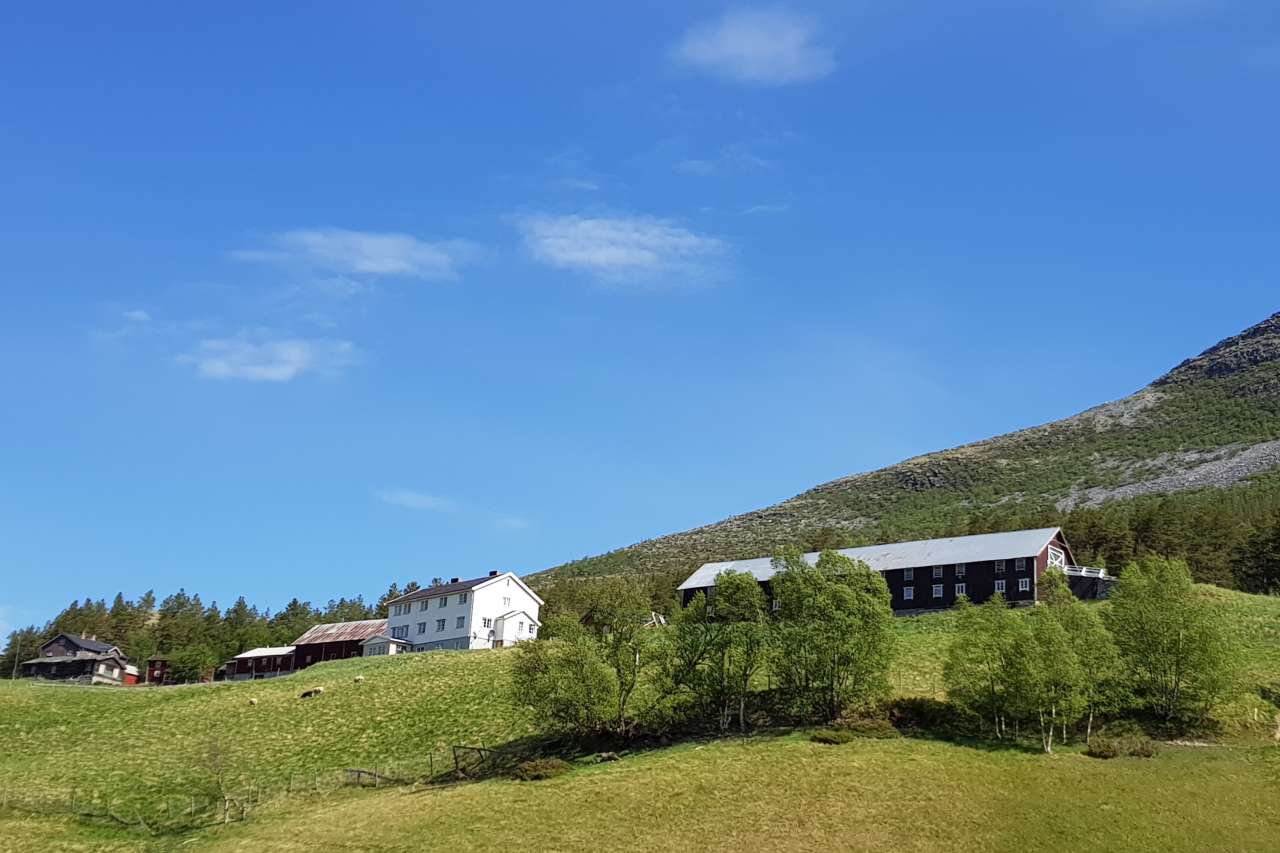
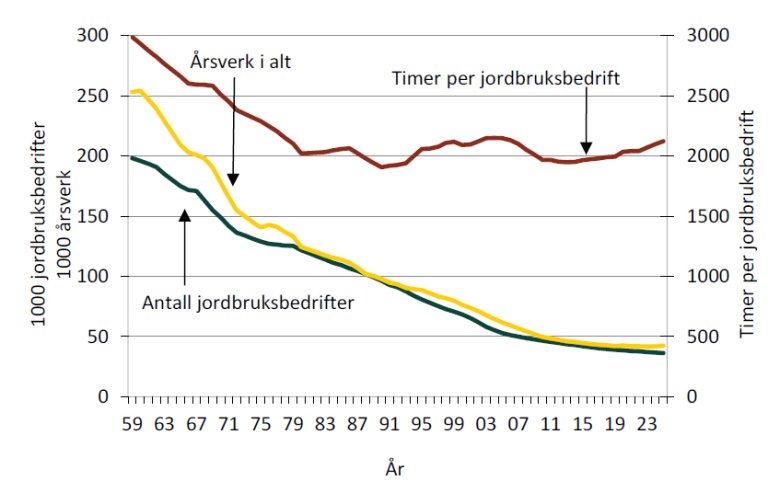
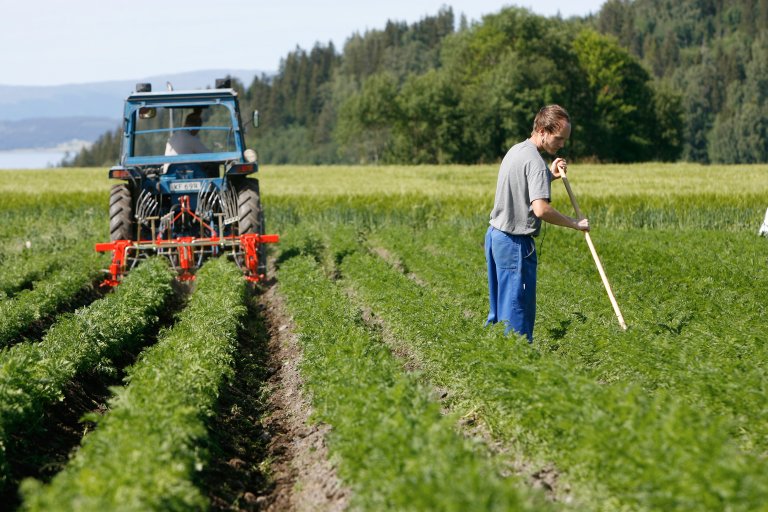
The structural development in agriculture has for a long time been moving toward fewer farms. In 1999, there were 70,700 agricultural holdings in Norway. By 2024, the number had been reduced to 36,700. Photo: Morten Günther
The number of agricultural holdings in Norway has almost halved since 1999. At the same time, farms are becoming larger and more specialised. This is shown in the annual publication Outlook on Norwegian Agriculture.
Structural changes in Norwegian agriculture have long moved in the direction of fewer farms. In 1999, Norway had 70,700 agricultural holdings. By 2024, this number had fallen to 36,700. At the same time, production has largely been concentrated on fewer farms, without the overall production volume necessarily declining.
A clear example is milk production. In the 1989 agricultural census, there were on average 11.7 cows per farm. By 2024, this had increased to 33.5 cows. In a European context, however, Norway still has relatively small dairy herds.
The farms that remain in operation are also managing larger areas of land than before. In 1999, the average agricultural area per farm was 147 decares (14.7 hectares). By 2024, this had increased to 268 decares (26.8 hectares). During the same period, the share of rented farmland has increased by 32 percent.
“Looking back many years, structural change was more pronounced than it is today. How developments will unfold in the future will depend, among other things, on framework conditions such as policy, the economy, climate and the market,” says Jon Fredrik Strandrud of NIBIO. He is the editor of Outlook on Norwegian Agriculture.
The value of agricultural production
The total value of agricultural production in Norway was NOK 63.6 billion in 2024, measured at the producer level and including subsidies. Revenues vary from year to year due to factors such as weather conditions, market developments and changes in prices and subsidies.
Farmers’ production revenues excluding direct subsidies amounted to NOK 45.7 billion. The largest sources of income were sales of meat (35.8 percent) and milk (26 percent).
Profitability varies significantly between different types of farming. Enterprises that combine grain and pig production rank highly in earnings, while farms producing milk and beef follow closely behind. At the same time, the latter production system is among those requiring the most labour.
“Results can vary considerably from year to year, particularly in grain production, where weather conditions play a major role,” says Strandrud.
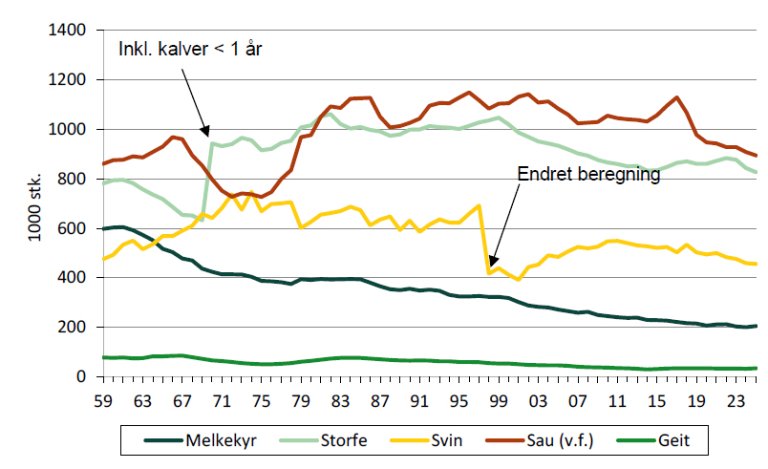
Fewer cows, but more milk
The number of dairy cows in Norway has steadily declined over several decades. In 1980, there were 391,100 dairy cows, while the figure in 2024 was around 200,000.
The decline is partly linked to reduced milk consumption and lower overall milk production. At the same time, milk yield per cow has increased significantly since the turn of the millennium.
As a result, total milk production has remained relatively stable in recent years, with dairy deliveries of around 1.5 billion litres.
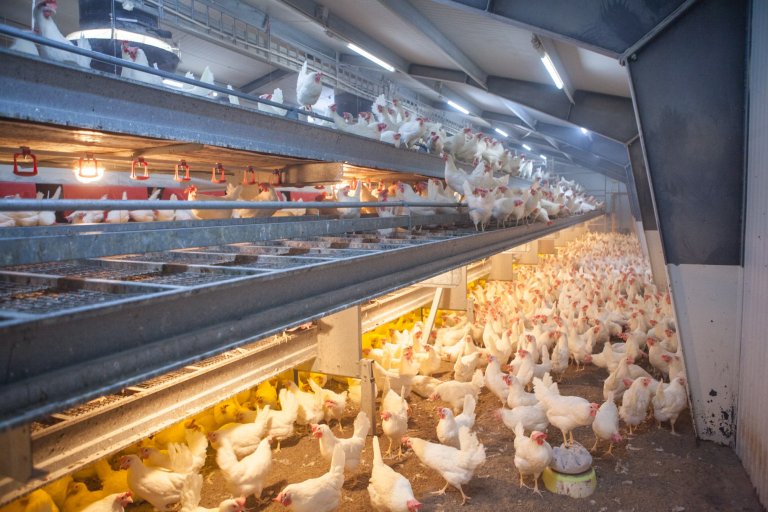
More poultry and eggs
Since 2021, per capita consumption of beef, pork, and sheep and lamb has declined somewhat. At the same time, Norwegians are eating more poultry.
Since 2000, the number of chickens slaughtered has more than doubled. In 2024, a total of 74.1 million poultry were slaughtered in Norway, mainly chickens.
Egg production has also increased. In 2024, Norway had 4.1 million laying hens—29 percent more than in 2000.
During the same period, the Norwegian population increased by around 24 percent.
Grain and food self-sufficiency
Norway’s self-sufficiency rate usually varies between 40 and 55 percent, depending on the harvest year. Grain harvests are one of the factors that influence the level of self-sufficiency the most.
Years with good harvests of food grain lead to higher self-sufficiency, while poor grain years reduce it.
However, most of the grain produced in Norway is used for animal feed. Of a normal annual production of just over one million tonnes, about 80 percent goes to compound feed.
In 2024, the share of Norwegian-produced food grain was estimated at 37 percent. By comparison, the share was 76 percent in 2022 and 72 percent in 2023.
“Self-sufficiency is measured in energy, and all types of production contribute, although some more than others. Grain, dairy products and meat are among the most important contributors,” says Strandrud.
At the same time, he emphasises that a balanced diet also requires other types of food.
“Fruit and vegetables have lower energy density, but they are still essential for a varied and healthy diet.”
Organic production
Organic farming in Norway has declined somewhat over time, both in terms of the number of producers and the total area. In 2024, 4.3 percent of the agricultural area was farmed organically.
This is significantly lower than the target of 10 percent organic agricultural area by 2032, which was set in 2021. Achieving this goal will require an annual increase of around ten percent in the years leading up to 2032.
“Organic production still represents a relatively small part of Norwegian agriculture. Therefore, changes in volume from one year to another can lead to large percentage fluctuations,” says Strandrud.
The new strategy for the period 2025–2032 emphasises increased demand, better market development, stronger subsidies and the recruitment of more producers.
Consumer trends
Total meat consumption has increased over the past decades, but the composition has changed. Poultry has seen the strongest growth, while consumption of beef, pork, sheep and lamb has declined since 2021. Egg consumption has increased, while milk consumption per capita has gradually fallen. At the same time, consumption of yoghurt, cheese and butter has increased.
For plant products, potato consumption has declined, while consumption of vegetables, fruit and berries has increased. Grain consumption per capita has also fallen.
“How this develops in the future will depend on framework conditions such as policy, the economy, climate and the market,” says Jon Fredrik Strandrud.
Contacts

Jon Fredrik Strandrud
Head of Department
-
Division of Survey and Statistics
(+47) 920 13 580 jon.strandrud@nibio.no Office Location: Ås O43
Outlook on Norwegian Agriculture
Outlook on Norwegian Agriculture was first published in 1995. The purpose of the publication is to compile some of the information published annually within the agricultural sector, including data from Statistics Norway, the Budget Committee for Agriculture and NIBIO.
Much of the information collected in the publication was originally produced for specific purposes and aimed primarily at institutions and individuals who work with agricultural issues on a daily basis.
Outlook on Norwegian Agriculture is intended for a broader audience, including public administration, politicians, journalists, students and others interested in Norwegian agriculture. The publication also serves as a useful reference for those who need updated data and descriptions of the most important developments in Norwegian agriculture.
Key figures from Outlook on Norwegian Agriculture
Number of agricultural holdings: 70,700 (1999) → 36,700 (2024)
Average dairy herd size: 11.7 cows (1989) → 33.5 cows (2024)
Average agricultural area per farm: 147 decares (1999) → 268 decares (2024)
Value of agricultural production: NOK 63.6 billion (2024)
Organic agricultural area: 4.3% of total agricultural land (2024)
Contacts
Jon Fredrik Strandrud
Head of Department
-
Division of Survey and Statistics
(+47) 920 13 580 jon.strandrud@nibio.no Office Location: Ås O43
Publications
Editors
Jon Fredrik StrandrudAbstract
No abstract has been registered