
Berit Nordskog
Research Scientist
Biography
I am leading the Norwegian decision-support system for pests and diseases (VIPS), and the Norwegian Agrometeorology network (LMT). My interest in shared and extended use of decision support systems for plant protection is reflected through engagement in several international projects with focus on integrated pest management (IPM) and decision support systems (DSS). I am co-manager of the project Malawi Digital Plant Health Service (MaDiPHS), and work package leader in the EU-project IPM Decisions.
My scientific background is within plant pathology, with focus on epidemiology of oomycete and fungal pathogens in field vegetables
Abstract
Web-based decision support systems (DSSs) are essential tools for precision crop protection, guiding farmers and advisors in implementing need-based control measures against pests, diseases, and weeds. These systems rely heavily on weather-driven models, where data accuracy and availability are critical. Leaf wetness is a key factor for infection and reproduction of many fungal plant pathogens, making it an important input in DSSs. However, the availability of leaf wetness data from weather services is variable, leading to the development of numerous estimation models without a universally accepted standard model. This study aimed to develop a robust mathematical model for estimating leaf wetness across diverse European climate zones and to integrate the model for enabling real-time leaf wetness estimates as inputs to web based DSSs. Hourly weather data, including leaf wetness, temperature, precipitation, relative humidity and wind speed were collected from automatic weather stations. Training data came from five Norwegian sites, while testing data covered 17 locations across Europe. Five machine learning based models (decision tree (DT), random forest, K-Nearest neighbour, multi-layer perception, long short-term memory (LSTM)) were trained and their performance compared with five existing empirical models (RH87, RH90, extRH, DPD, CART/SLD) from the literature. LSTM and DT achieved best performance, demonstrating strong robustness across climate zones. The LSTM model, required fewer data inputs and well suited for time-series data, was integrated into a Flask-based service for automatic use in forecasting models within the web-based IPM Decisions DSS platform, thereby enhancing the precision of this DSS.
Authors
Hanna Huitu Tor-Einar Skog Christophe Pradal Antonio Calatayud Tor Skaslien Brita Linnestad Ari Ronkainen Christian Fournier Marc Labadie Dave Skirvin Matti Pastell David Melchior Johannes Tobiassen Langvatn Berit NordskogAbstract
Decision support systems (DSS) in crop protection provide valuable support for pest risk prognosis and recommendations for pest control, enabling farmers to make better-informed decisions. As a part of the European Union’s strategy for the sustainable use of plant protection products, the “IPM Decisions” project developed an online platform that gives farmers and advisors access to a wide range of DSS for major pests, weeds, and diseases in a variety of crops across Europe. Multiple DSS models relevant for different crops and geographical regions of Europe were selected for integration in the platform. Information on the models is compiled into a model catalogue, which serves as a core component of the IPM Decisions platform. To facilitate the use of these models, two application programming interfaces (APIs) were developed. In line with the FAIR (findable, accessible, interoperable, and reusable) principles, the DSS API provides access to models and their metadata, including descriptions of input and output parameters. The weather API enables access to European online weather data sources and adapts this data to meet the requirements of DSS models. While these APIs are integrated into the IPM decisions platform, they are also open source, allowing other crop protection and farm management software to inspect, download, modify, install, run, and use them. In this article, we describe the development of the DSS and weather APIs, outline their structure and definitions, and present the services that DSS API and weather API provide. Finally, we demonstrate their application through three practical use cases.
Abstract
Vekstsesongen 2025 ble preget av store kontraster i temperatur og nedbør. Vinteren var uvanlig varm og våt i nord, mens våren ble den nest varmeste som er registrert i Norge, med rekordtidlig vekststart i store deler av landet. Sør- og Østlandet opplevde en svært tørr vår, mens Vestlandet og Trøndelag hadde ekstremt mye nedbør. Sommeren startet med normale temperaturer, men varierte nedbørsmengder, før juli ble varm og tørr i nesten hele landet. August og september bød på nye rekorder, med ekstrem varme i nord og store regionale forskjeller i nedbør. Disse forholdene påvirket både vekststart, avlingsutvikling og høstetidspunkt for flere kulturer.
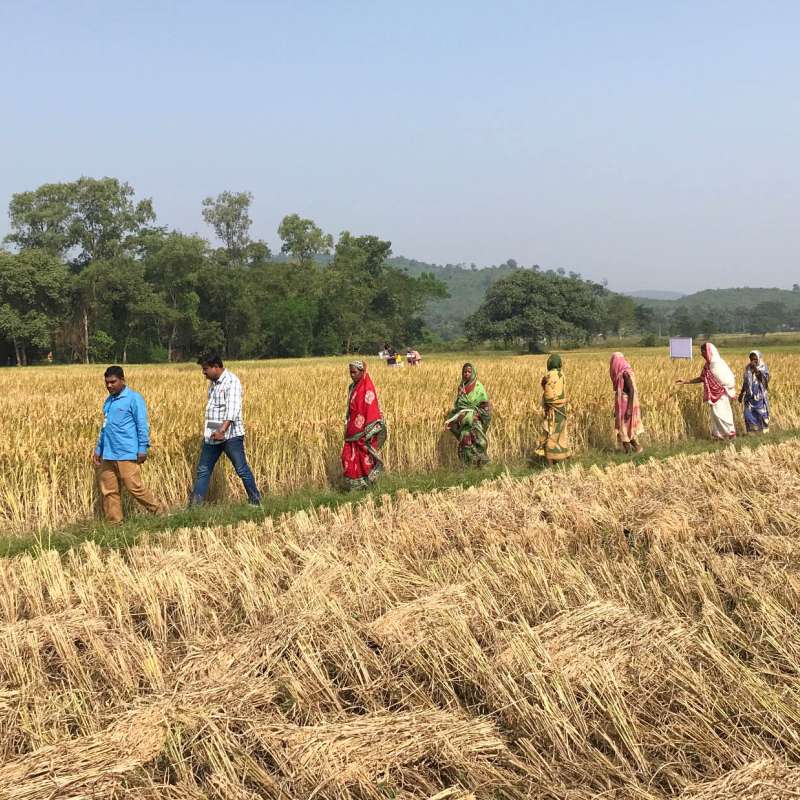
Division of Environment and Natural Resources
UPSCALE
A transformative climate action through upscaling climate resilient rice and other agricultural technologies supported by evidence-based knowledge and policy in India (UPSCALE).
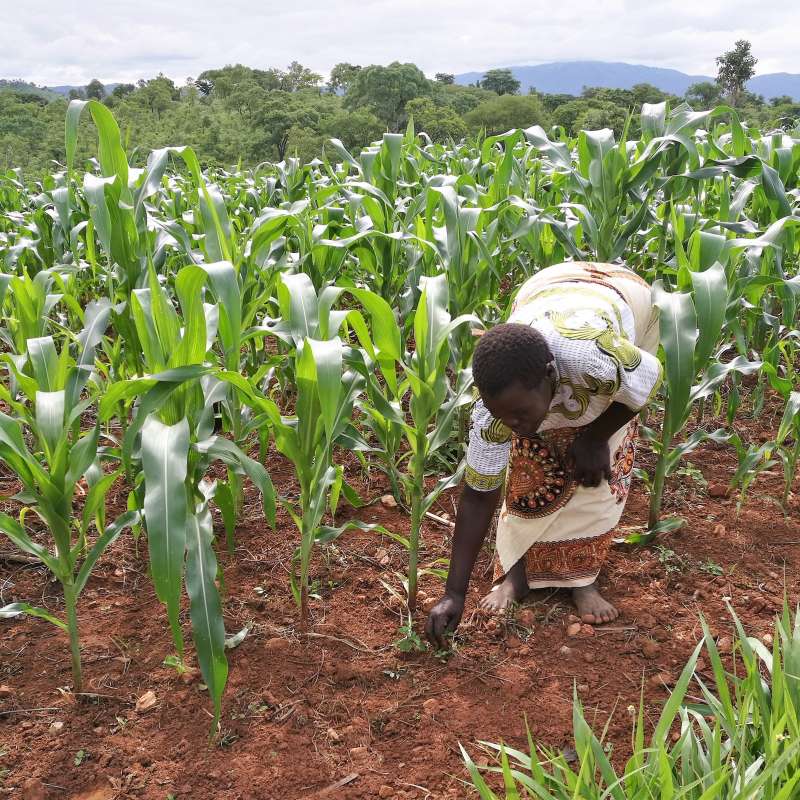
Division of Biotechnology and Plant Health
Malawi Digital Plant Health Service (MaDiPHS)
This project will establish a digital agricultural plant health service at the national level in Malawi, based on coordination of internationally developed digital systems.