
Giovanna Ottaviani Aalmo
Research Scientist
(+47) 980 30 422
giovanna.ottaviani.aalmo@nibio.no
Place
Ås O43
Visiting address
Oluf Thesens vei 43, 1433 Ås
Authors
María Bustamante Liria Concetta Maria Messina Simona Manuguerra Andrea Santulli Giovanna Ottaviani AalmoAbstract
Despite significant progress in understanding the complexity of food systems’ challenges, there remains a lack of clarity around how these systems can undergo transformative change and what is required to enable such shifts. This paper focuses on social innovation as a promising mechanism for addressing structural challenges and reconfiguring food systems toward sustainability, equity, justice, and resilience. Our main contribution is the design of an actionable guidance that helps practitioners and researchers explore and leverage the transformative potential of social innovations. This guidance emerges from a dialogue between a key framework for analyzing social-ecological transformations and recent advancements in Transformative Social Innovation (TSI) theory. By incorporating insights on adaptive, bottom-linked governance and relational dynamics into the SES processual framework, we strengthen its applicability to TSI analysis and make it more adaptable for real-world contexts. We apply this guidance to a case study in Western Sicily’s aquatic food systems, where a long-standing social innovation – rooted in Living Lab methodologies and collaborative governance – demonstrates the potential to challenge dominant values by reconfiguring dominant social relations, empower local actors, and engage with both deep and shallow leverage points, contributing to systemic transformations. By combining cross-field dialogue with empirical application, this paper offers both practical tools for analyzing and designing transformative social innovation processes and practical insights into how social innovations can contribute to more sustainable, resilient, and equitable futures. It directly speaks to practitioners, scholars, and policy makers interested in enabling systemic transformation through socially embedded innovation processes.
Authors
Giovanna Ottaviani AalmoAbstract
No abstract has been registered
Abstract
No abstract has been registered

Division of Food Production and Society
FlexBio – Flexible biorefineries for upcycling of local bioresources
FlexBio develops flexible biorefinery technologies to convert Norwegian food industry by-products and urban food waste into valuable feed ingredients. The project integrates biotechnology, process optimisation, and socio-economic assessment to enable more efficient and locally adapted use of bioresources.
BOLD LEAP
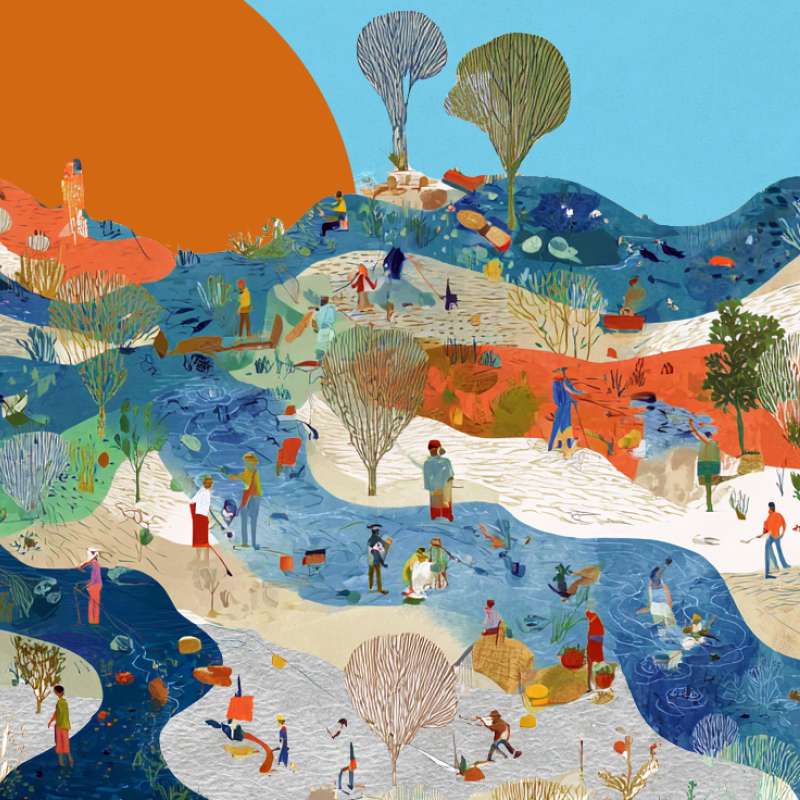
BOLD LEAP will provide an independent systems-based evaluation of Jawahir’s post-release pathway in Morocco. Jawahir is a drought-tolerant durum wheat variety released in 2023 following more than a decade of research and participatory evaluation with support from the BOLD Project, and seed multiplication is now underway towards commercial production.
Division of Food Production and Society
FULCRUM – Transforming Food Systems Through Bioeconomy
FULCRUM envisions a world where circular and just bioeconomy strategies contribute to sustainable food system transformation. By engaging different actors in co-designing bioeconomy strategies in five different regions across Europe, FULCRUM connects bottom-up innovation with actionable and scalable policy recommendations for living and vibrant land and seascapes.
Division of Environment and Natural Resources
CANALLS Agroecological practices for sustainable transition
Agroecology covers all activities and actors involved in food systems. It also places the well-being of people (producers and consumers of crops and products) at its core. The EU-funded CANALLS project will focus on the agroecological zones and diverse farming systems in the humid tropics of Central and Eastern Africa. It will explore the complex environmental, social and economic challenges, which in some cases are exacerbated by conflict and high vulnerability. Moreover, it will advance agroecological transitions in these regions through multi-actor transdisciplinary agroecology Living Labs at eight sites in four countries. The focus will be on crops such as cocoa, coffee and cassava, which are vital for subsistence and economic development.
FIREFLIES – Farming with nature
Division of Food Production and Society
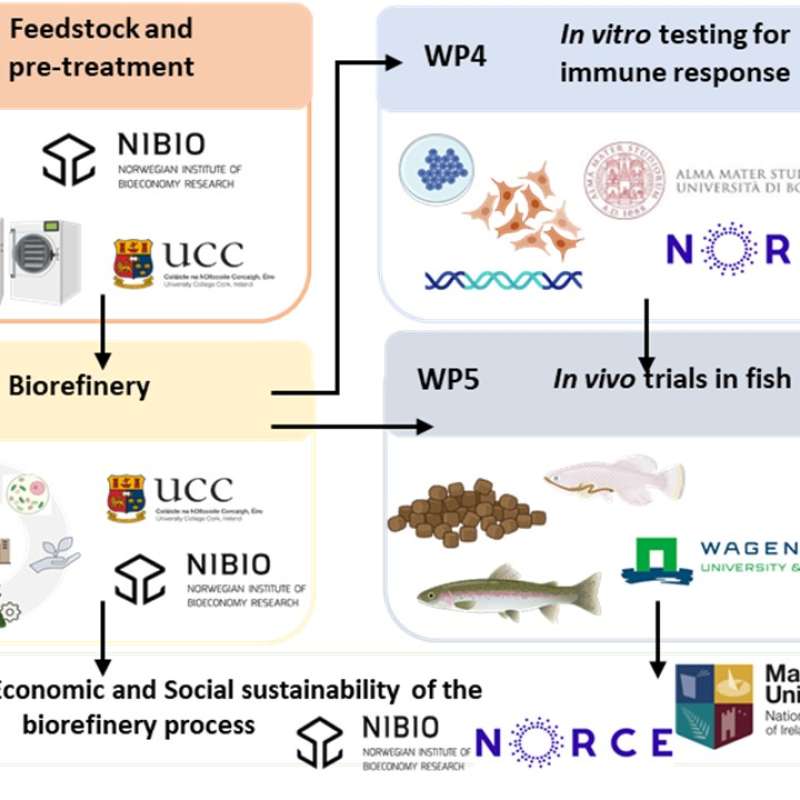
AquaUP - Aquafeed Upgraded: Enhancing Immune Function of Fish with Seaweed-modified Functional Compounds
The aquaculture industry is anticipating intensive production growth to meet future food demand. Yet, this growth is constrained by a number of challenges, not least including disease spread and use of antibiotics and chemicals to combat or reduce disease outbreaks.