
Division of Food Production and Society
AquaUP - Aquafeed Upgraded: Enhancing Immune Function of Fish with Seaweed-modified Functional Compounds

End: may 2027
Start: may 2024
The aquaculture industry is anticipating intensive production growth to meet future food demand. Yet, this growth is constrained by a number of challenges, not least including disease spread and use of antibiotics and chemicals to combat or reduce disease outbreaks.
Project participants
Johan Johansen Ralf Rautenberger Giovanna Ottaviani Aalmo Hanne Mæhre Lars Sandved Dalen Gaurav Rajauria. WP3 leader Sara Ciulli, University of Bologna. WP4 Leader Enrico Volpe, University of Bologna. WP4 Project Member Fotini Kokou, Wageningen University & Research (WUR). WP5 Leader Marit Nederlof, Wageningen University & Research (WUR). WP5 Project Member Preethi Surendran, Norce. WP6 Leader Anushree Priyadarshini, Maynooth University. WP6 Co-LeaderConsortium
Host
Norwegian Institute of Bioeconomy Research (NIBIO)
Norwegian Research Partners
Norwegian Research Centre (Norce)
International Research Partners


Photo: Sara Ciulli, University of Bologna

Photo: Fotini Kokou, Wageningen University & Research
| Status | Active |
| Start - end date | 02.05.2024 - 01.05.2027 |
| Project manager | Abirami Ramu Ganesan |
| Division | Division of Food Production and Society |
| Department | Biomarine resource valorisation |
| Total budget | 2849000 |
To support fish health, alternative aquatic feeds need to be added with immune-stimulating functional ingredients. Seaweed is a promising aquaculture feed crop due to its rapid growth rate, carbon sequestration properties, and valuable biomass supply it provides without the need for fertilization. It also can potentially be a valuable source of nutrients in fish feed.
However, the use of unrefined seaweed is hampered by the presence of anti-nutritional compounds such as high levels of non-starch polysaccharides, phytases, and tannins that reduce nutritional digestibility and, consequently, fish health and aquaculture productivity.
Pre-treatment technology to sustainably (cost-effective, scalable, and environmentally responsible) unlock the potential of seaweed bioactive compounds is not well-established.
In response, a biorefinery process can help extract seaweed’s nutritional components and convert them to high-value products for various applications. However, the current extraction process involves harmful chemicals (acid or alkali).
Therefore, significant progress is needed to develop extraction and purification technologies that can contribute to a sustainable and circular blue economy.
Screening and identification of seaweed-derived functional compounds are also required to assess their functional properties like immunomodulatory, antimicrobial, antioxidant, and prebiotic effects. Here, invitro cell culture is an efficient screening tool for assessing the functionality of novel bioactive molecules as it enables efficient and cost-effective control and manipulation of experimental conditions for compound screening.
This needs to be complimented and validated using in vivo studies. While several studies have investigated native compounds’ effects on immune function in f ish, determining the functionality of seaweed-derived compounds is in its early stage of R&D. Finally, there is a lack of information on the environmental and economic impacts of seaweed-based functional ingredients compared to existing conventional functional ingredients.
The above knowledge gaps identified will be addressed in this project to use of seaweedmodified ingredients in aquaculture. Our objective is to investigate seaweed-modified functional compounds in aquatic feed to improve growth, immune response, and disease resistance.


Photo: Private

Science Without Borders
What happens when expertise in aquatic animal health meets innovation in seaweed-based aquaculture? New ideas, inspiring discussions, and stronger partnerships.
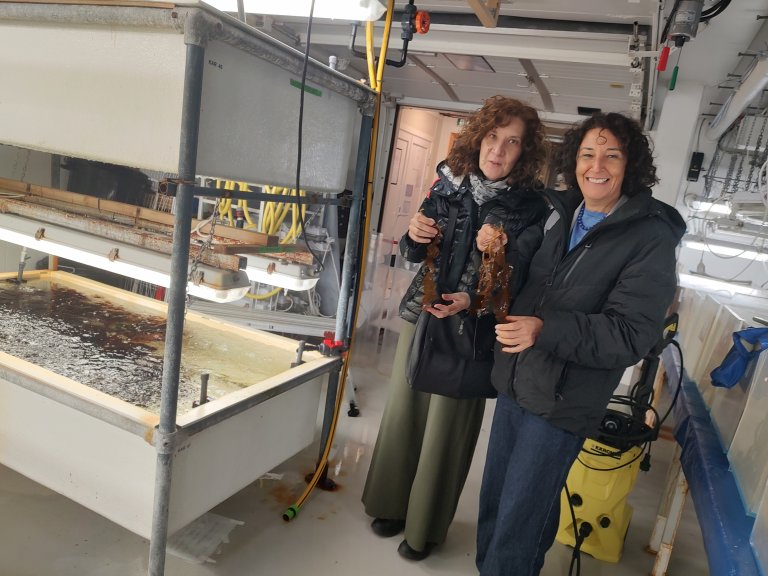
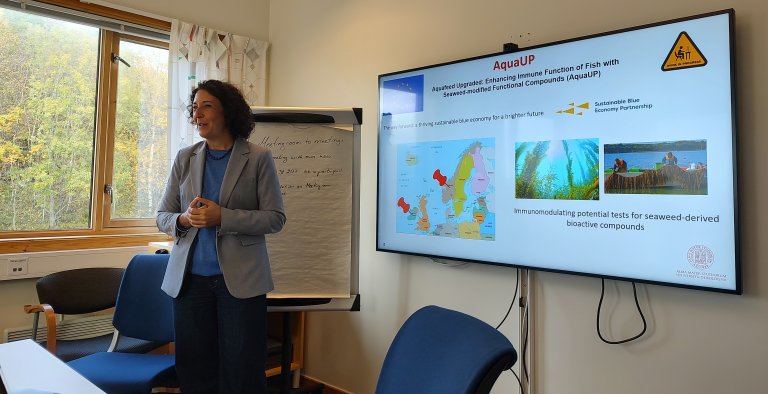
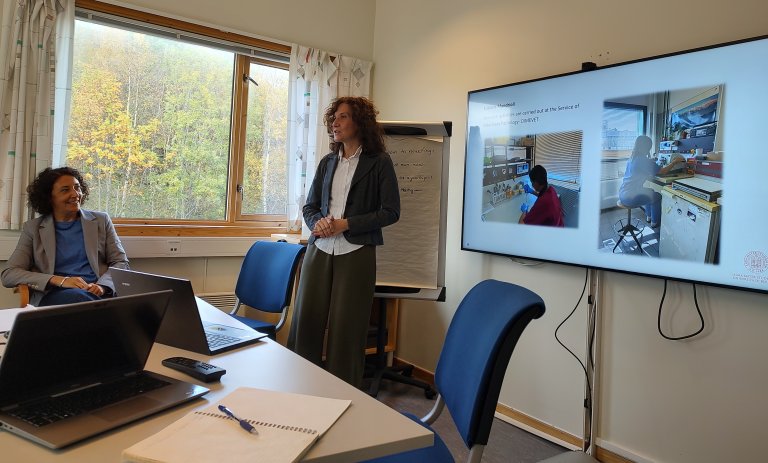
We were delighted to welcome Professor Sara Cuilli, AquaUP partner and WP4 leader from the Department of Veterinary Medical Sciences, University of Bologna, to NIBIO. During her visit, Sara and Luciana toured our laboratory facilities and shared insights from her work on aquatic animal health, including infectious diseases affecting fish and other aquatic species.
The visit sparked valuable scientific discussions, strengthened collaboration across the AquaUP consortium, and highlighted our shared commitment to advancing sustainable aquaculture through international cooperation.
From Italy to Norway, science connects people, ideas, and solutions for the future of aquaculture.
Connecting Research and Industry
How do innovative ideas shape the future of aquaculture? Through collaboration, knowledge sharing, and industry engagement.
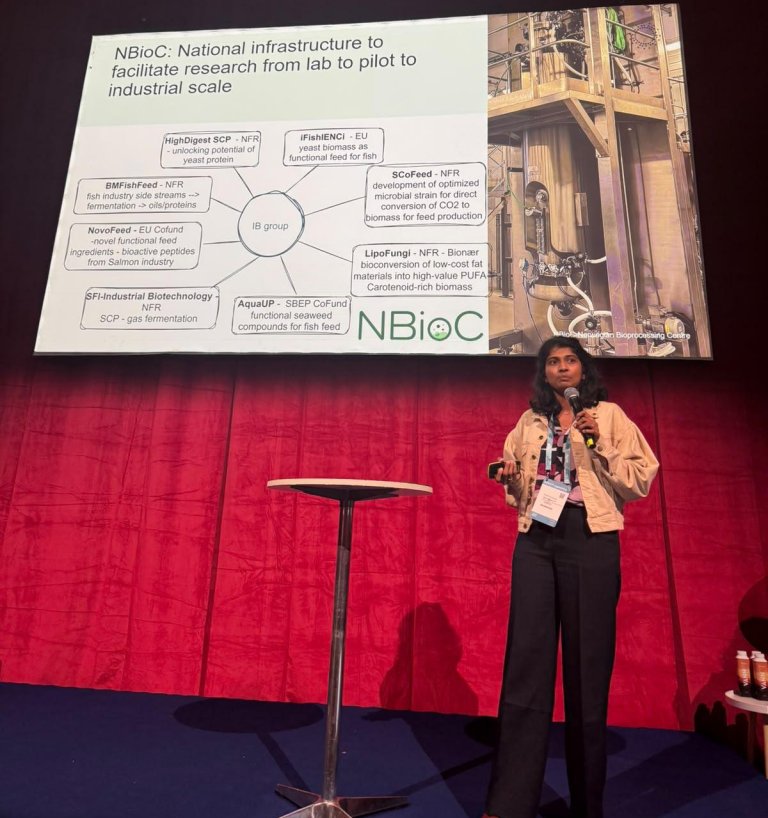
At Aqua Next 2026 in Stavanger, Preethi Surendran represented the AquaUP project, showcasing our ongoing research and connecting with researchers, industry leaders, and innovation partners from across the aquaculture sector.
The event provided a valuable opportunity to exchange ideas, build new connections, and highlight AquaUP's contribution to sustainable aquaculture.
AquaUP reaches new audiences through Spanish media outreach
AquaUP research has reached audiences beyond the project partnership through a feature published in the Spanish newspaper El Día de Soria on the occasion of World Maritime Day (26–27 September 2026).
The article, “Día del Mar – Vida en el agua salada”, highlights the work of AquaUP researcher Alberto Ruiz on fish nutrition and the potential of seaweed-derived compounds to support fish health and more sustainable aquaculture.
The feature also brings attention to the broader importance of marine research, conservation and sustainable use of ocean resources, helping communicate AquaUP's research to a wider public beyond the project's partner regions
AquaUP partners came together in Slovenia for the 2nd Annual Meeting!
With participants joining both onsite and online, the consortium shared progress, exchanged ideas, and aligned the next steps towards more sustainable aquaculture solutions.
Strong partnerships, shared knowledge, and a common vision continue to drive AquaUP forward.
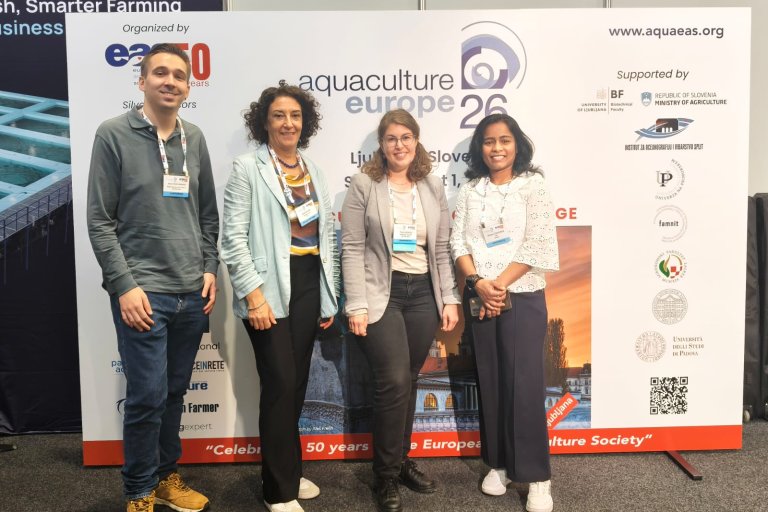
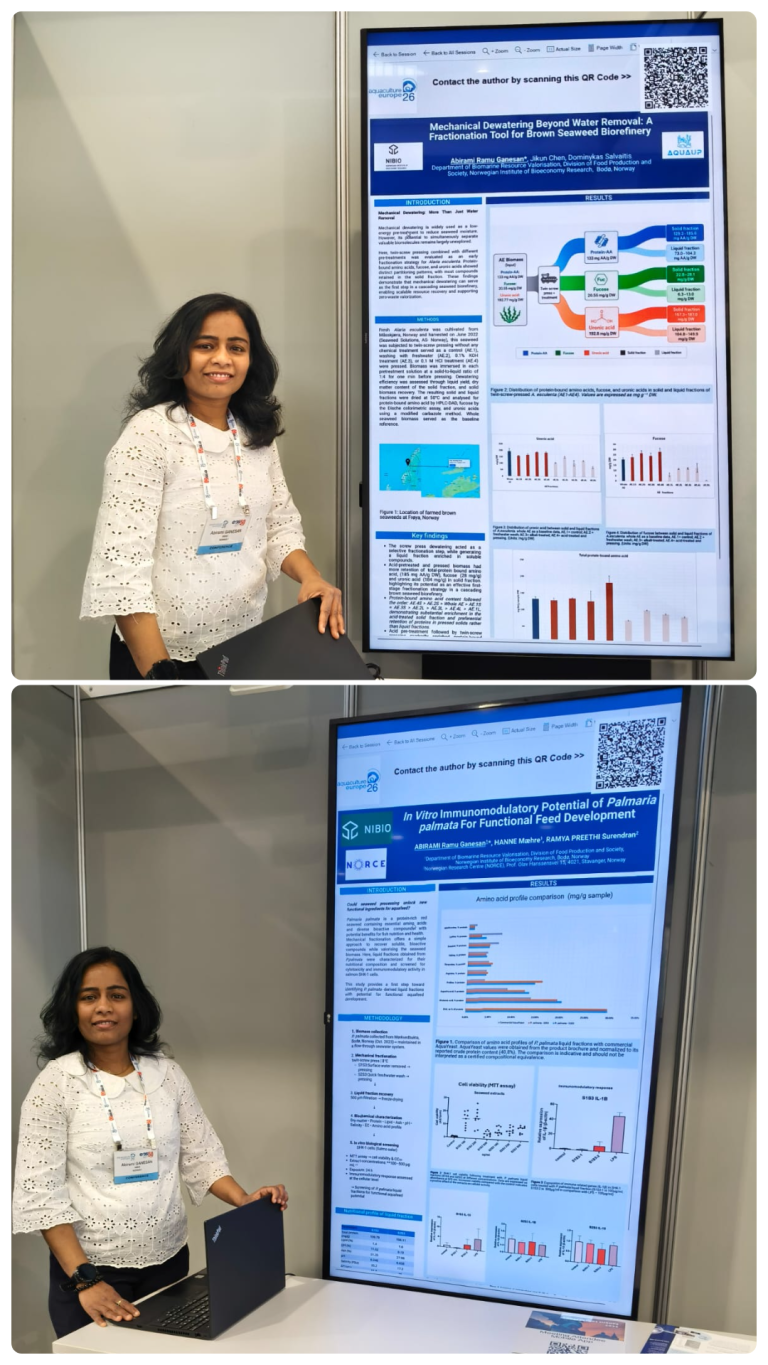
AquaUP research was prominently showcased at Aquaculture Europe 2026 in Ljubljana, Slovenia.
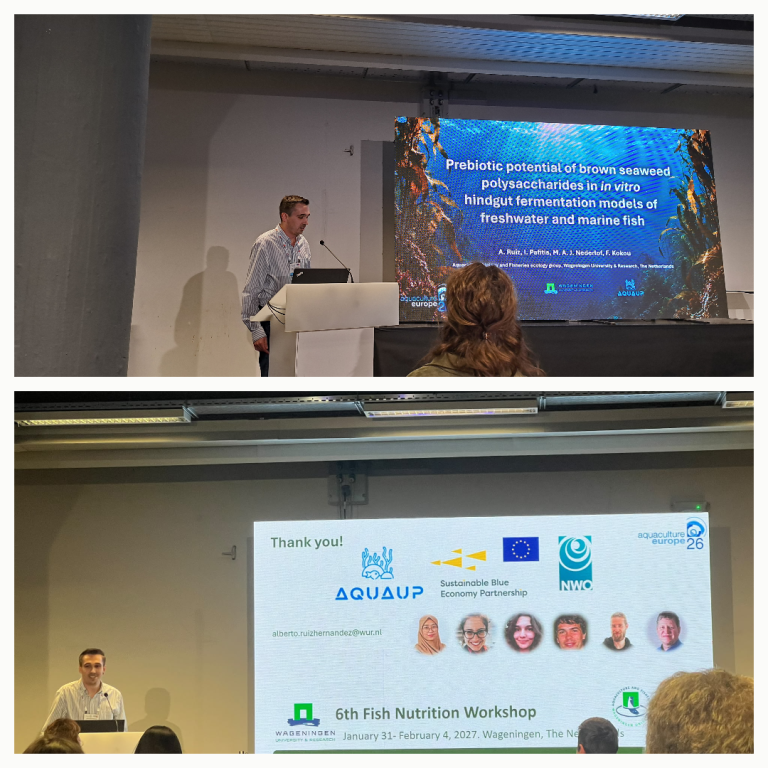
Representing the project, Alberto Ruiz Hernández delivered an oral presentation exploring the prebiotic potential of brown seaweed polysaccharides in fish nutrition, while Abirami Ganesan presented four posters highlighting advances in seaweed biorefinery, biomass fractionation, and the development of functional feed ingredients.
These presentations demonstrated how AquaUP is unlocking the value of seaweed biomass to support healthier fish production and a more sustainable aquaculture sector.
WP3 Dissemination activities by AquaUP partner from Ireland
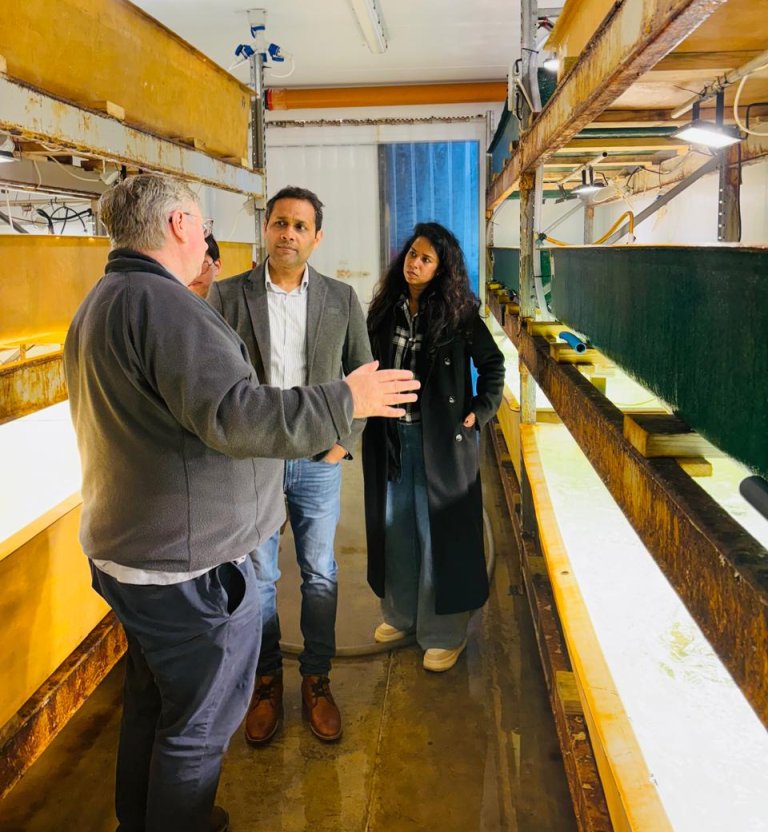
On 24 June 2025, the AquaUP WP3 team visited a seaweed cultivation facility operated by West Cork Business in West Cork, Ireland. The visit was led by Gaurav Rajauria, WP3 Lead at University College Cork, together with Rifna Elenjikkal Jerome.
The field visit provided valuable insights into land-based seaweed cultivation systems, current farming practices, and industry needs, helping to strengthen the link between research and commercial production. Seaweed samples were also collected to support ongoing AquaUP research activities on seaweed valorisation and sustainable aquaculture solutions.
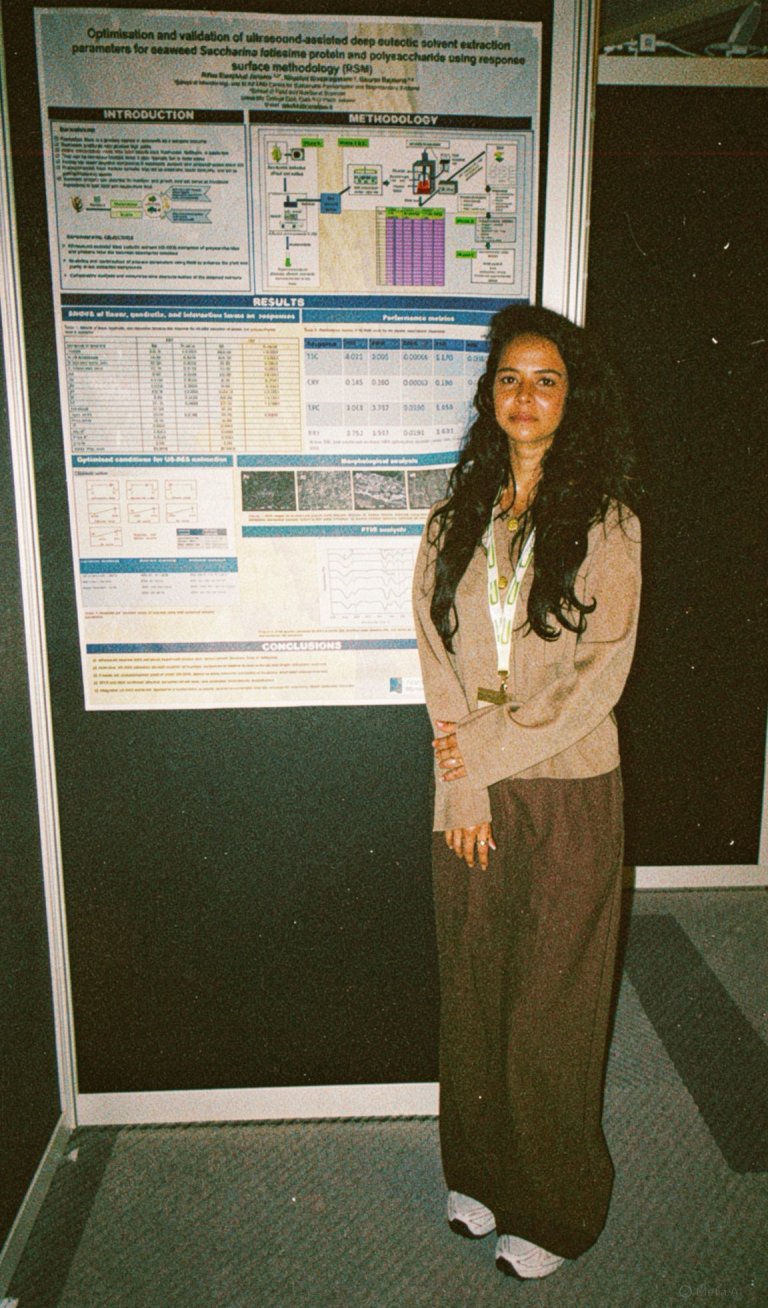
AquaUP at Algae4IBD 2026
AquaUP partner Rifna Elenjikkal Jerome (WP3) represented the project at the Algae4IBD Conference, held on 4–5 March 2026 at the Teagasc Food Research Centre, Dublin, Ireland.
The conference brought together researchers, seaweed farmers, and industry representatives from across Europe, providing an excellent platform to exchange knowledge and discuss innovations in sustainable seaweed cultivation, processing, and valorisation.
Rifna presented the poster: “Optimising Ultrasound-Assisted Deep Eutectic Solvent Extraction of Polysaccharides and Proteins from Saccharina latissima”
AquaUP at Aquaculture Europe 2025
AquaUP partner Rifna Elenjikkal Jerome (WP3) represented the project at the Aquaculture Europe 2025 International Conference & Exposition in Valencia, Spain, organised by the European Aquaculture Society (EAS).
Rifna delivered an oral presentation entitled “Developing a green, economically viable, zero-waste cascading biorefinery to extract functional compounds from brown seaweed for aquaculture applications.”
The conference provided an excellent platform to share AquaUP research, engage with the international aquaculture community, and discuss innovative approaches to sustainable seaweed valorisation, circular bioeconomy, and aquaculture development.
AquaUP at Research Without Borders 2026
On 18 February 2026, Rifna Elenjikkal Jerome delivered an invited talk at Research Without Borders 2026: Connecting Future Innovators, an online event jointly organised by RMIT University, University College Cork, and the University of Limerick.
The presentation provided an overview of the AquaUP project and highlighted the innovative research being carried out within WP3 at University College Cork, showcasing how seaweed-based solutions can contribute to sustainable aquaculture and the blue bioeconomy.
The event offered a valuable platform to connect researchers across disciplines, share knowledge, and inspire future collaborations.
AquaUP at Pint of Science Cork 2026
On 19 May 2026, AquaUP research reached a wider audience through Pint of Science Cork 2026, a public engagement event dedicated to bringing science beyond academia.
Rifna presented the talk “Development of a Multiproduct Biorefinery from the Seaweed-Based Economy,” highlighting the potential of seaweed as a sustainable resource and exploring innovative approaches for developing multiproduct biorefineries and valorising seaweed-derived compounds.
Events like Pint of Science help connect research with society, showcasing how seaweed-based innovations can contribute to a more sustainable and circular blue bioeconomy.
Can greener solvents unlock the full potential of seaweed for future food systems?
AquaUP partners Gaurav Rajauria and Rifna E. Jerome have recently published a review paper in Carbohydrate Polymers:
“Role of Deep Eutectic Solvents for the Extraction of Polysaccharides from Seaweed for Food Applications”
Link to manuscript: https://www.sciencedirect.com/science/article/pii/S0144861726006922
By bringing together the latest research on green extraction technologies, this review helps guide AquaUP's efforts to develop sustainable and resource-efficient seaweed biorefineries for the food sector.
