
Division of Biotechnology and Plant Health
IPM-fruit: IPM strategies for future fruit production
End: nov 2027
Start: dec 2023
IPM fruit will investigate how preventive and alternative control measures can be used for sustainable fruit production. The project will study how natural enemies, physical control, and biologicals as well as combinations of these can be best applied under Norwegian conditions. The project will be carried out in collaboration with the Norwegian University of Life Sciences (NMBU), the Norwegian advisory service (NLR), NIAB East Malling (UK), IRTA (Sapin), and also in close collaboration with fruit growers.
Project participants
Runa Gidske Nina Trandem Arne Stensvand Lene Sigsgaard Gunnhild Jaastad Håvard Rønningen Graarud Anna Birgitte Milford Torbjørn Haukås Anne Kari Heen Gaute Myren Endre Bjotveit Nuria Agusti Michelle Fountain Harald Mundal Simen Myhrene Knut Opedal Jop Westplate Gabriela Lundberg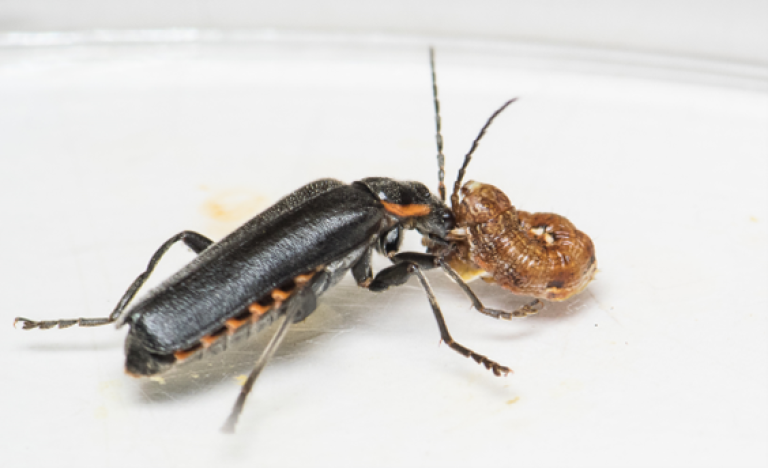
| Status | Active |
| Start - end date | 01.12.2023 - 30.11.2027 |
| Project manager | Bjørn Arild Hatteland |
| Division | Division of Biotechnology and Plant Health |
| Department | Invertebrate Pests and Weeds in Forestry, Agriculture and Horticulture |
| Total budget | 13100000 |
Integrated Pest Management (IPM) has a long history in fruit production in Norway and elsewhere, aimed at both improving plant protection and minimizing the use of chemical pesticides in agricultural systems. In 2015, Norway implemented an EU directive that made IPM mandatory for all professional users of plant protection products.
Furthermore, over the recent decades, numerous commonly used pesticides have been banned in both the EU and Norway. In practice, this means that food production will be increasingly dependent on alternatives to chemical pesticides. Additionally, climate change contributes to further challenges related to the management of plant diseases and pests.
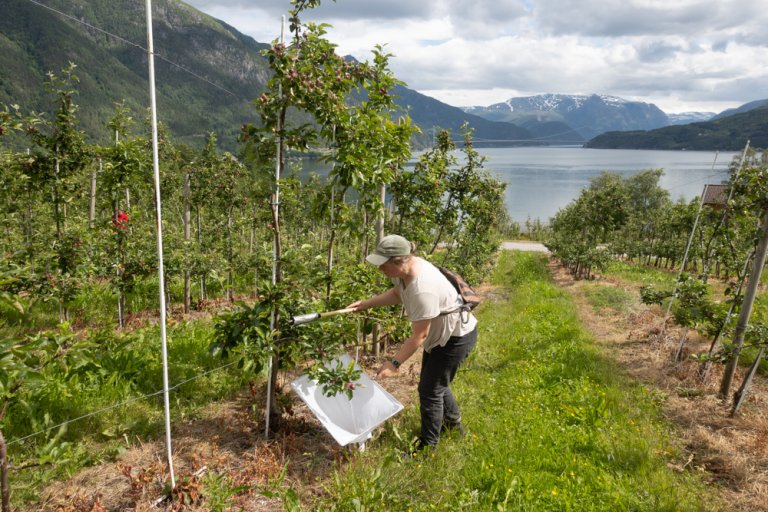
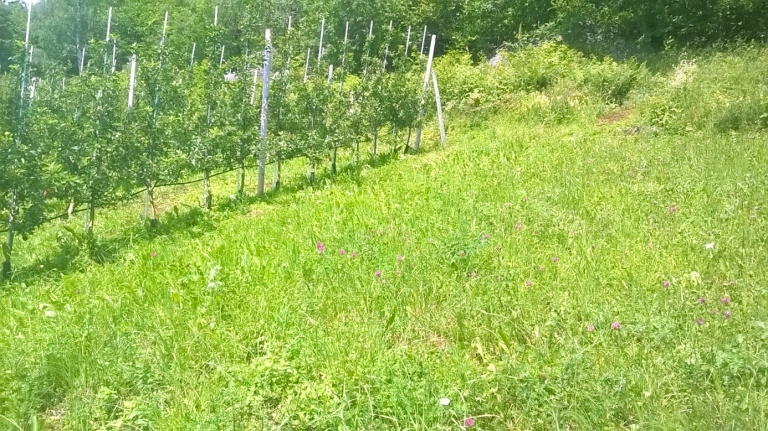
IPM fruit focuses on preventive measures. Natural enemies and the facilitation of these are studied through management of edge vegetation and semi-natural vegetation in and around apple orchards. Codling moths and other tortricid moths damaging fruits are the main focus pests. Effects of semi-natural habitats on abundance and diversity of pests and predators as well as fruit damage will be analyzed. In addition, molecular analysis of gut contents of predators collected in apple and plum orchards are done, identifying which natural enemies are important for controlling moths.
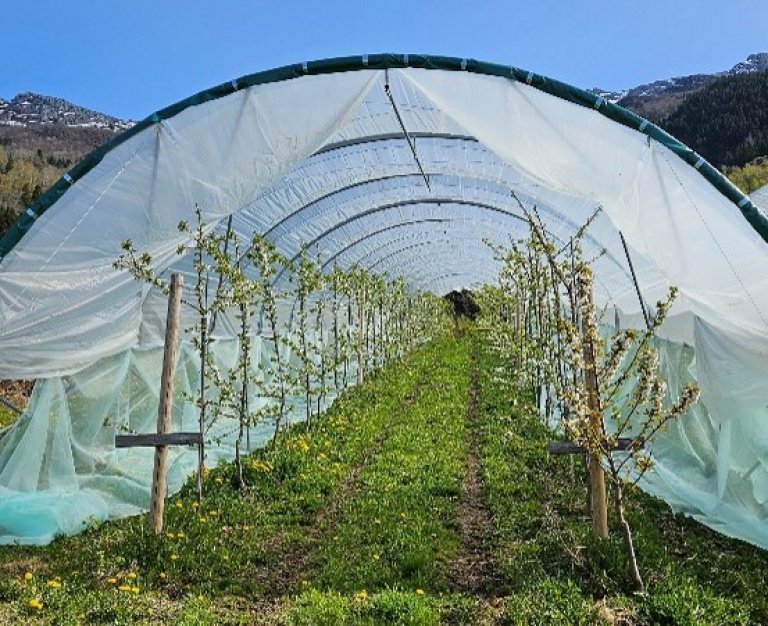
We will also investigate the potential of using warm steam to rid apple and plum trees of various pests and diseases. European canker and woolly aphids will be treated in apple, while bacterial canker and rust and gall mites will be treated in plum. Physical control using insect nets will be tested in sweet cherry fields against various harmful insects, as well as unintended effects on natural enemies.
Although preventive measures are carried out in orchards, in some years direct control measures will be required against pests such as moth larvae. The use of biological plant protection products will reduce the risks associated with pesticide use. In IPM fruit, we will examine which biological plant protection products have the greatest potential of pest control in Norwegian fruit orchards.
An important part of IPM fruit is economic cost-benefit analyses of introducing the various measures considered and tested in the different parts of the project. Furthermore, the socioeconomic consequences for fruit growers and their motivation to change their plant protection regimes according to alternative measures developed in IPM fruit and elsewhere will be analyzed. The project is carried out in close collaboration with important stakeholders of the Norwegian fruit production, and the various proposed IPM measures in IPM fruit are tested among multiple growers.
Publications in the project
Abstract
No abstract has been registered
Abstract
No abstract has been registered