
Simo Maduna
Research Scientist
Biography
Research Statement
Dr. Simo Njabulo Maduna is a molecular ecologist with expertise in multi- and interdisciplinary research that integrates ecology, genetics, conservation, and reproductive biology toward biodiversity conservation, genetic/genomic monitoring, and adaptive management of sustainable natural resources. His research covers a wide variety of topics (aquaculture genomics, genome assembly, landscape/seascape genomics, invasion ecology and genomics, molecular phylogenetics, phylogenomics, wildlife forensics, and eDNA-based biodiversity monitoring) and taxa (chondrichthyans, teleosts, pinnipeds, molluscs, avians, bears, and insects). The latest addition to his research themes and study systems is the domestication of animals and plants, with foci on epigenomics of equines and medicinal plants. His work not only aims to enhance our understanding of these diverse biological systems but also seeks to apply this knowledge to real-world challenges in conservation and resource management. By integrating genomic tools with traditional ecological approaches, he aspires to develop innovative strategies that promote resilience and sustainability in both natural and domesticated populations. Dr. Maduna is always keen on collaborating and perusing uncharted research ventures. His passion for discovery often leads him to partner with experts from diverse fields, fostering a dynamic exchange of ideas that can spark groundbreaking innovations.
Skills and Expertise
-
Research project management (conceptualizing projects and developed funding proposals, coordinating multi-collaborator and -funding agency projects, conducting wet laboratory work, curating and analyzing data, writing scientific publications, conducting outreach, and managing funding proposals for future research).
-
Establishing research collaborations and strategic partnerships with public and private stakeholders in terms of service delivery for natural resource management and essential biodiversity research priorities within the contexts of climate change, sustainable development, EcoHealth/OneHealth, and food security.
-
Supervising and mentoring postgraduate students while providing customized seminars for the development of laboratory and bioinformatics skills to a wider audience in academia and industry.
-
Designing, implementing and managing genetic and genomic experimental work, genotypic datasets and associated metadata for population genetics and genomics, seascape/landscape genetics and genomics, phylogeography, molecular phylogenetics and phylogenomics, DNA barcoding and metabarcoding projects.
-
Developing and employing several molecular markers (e.g., microsatellites, SNPs and species-specific assays) for genotyping platforms ranging from low to medium throughput (ABI 3730xl DNA Analyzer, Real-Time PCR System, and Biomark HD).
-
Seting up of advance molecular techniques (3RAD, GTseq, Megabarcoding, Metabarcoding, Mitogenomics, Epitranscriptomics and DNA methylomics) in the laboratory for DNA library preparation, size selection and high-throughput sequencing with Illumina, Ion Torrent, PacBio and Nanopore sequencing platforms.
-
Developing field and laboratory protocols for eDNA-based monitoring of within-species genetic diversity, community structures, invasive species, pathogen surveillance and diet analysis.
Abstract
Accurate species identification is essential for conserving and managing plants that provide important ecosystem services and have ethnobotanical value. The Greyia tree genus ( G. sutherlandii , G. radlkoferi and G. flanaganii ) is endemic to South Africa and Eswatini, and certain genotypes have medicinal value for treating skin hyper‐pigmentation. However, distinguishing among species is difficult because of overlapping phenotypes and the limited resolution of standard DNA barcodes. To overcome these limitations, a robust molecular identification assay was developed using a two‐phase strategy. First, de novo SNP discovery using 3RAD sequencing identified 47,726 genome‐wide SNPs from two to three plants sampled from each species' core geographic range: G. radlkoferi in northern Limpopo, G. sutherlandii in eastern KwaZulu‐Natal, and G. flanaganii in the south‐eastern Eastern Cape. Principal component analysis and coancestry matrices revealed three discrete genetic clusters, supporting the recognition of the three species. Selecting a set of 200 SNPs with intermediate Fst values (0.2–0.5) resulted in optimal separation of the three clusters. This led to the final selection of a 23‐SNP panel that included five informative barcoding loci (ITS, trnL‐F , matK ). Second, the 23 SNPs were converted into allele‐specific fluorescent PCR assays (SNP Type) for genotyping on the BioMark HD platform. The panel was validated using genomic DNA from 17 individuals from the 3RAD population groups and successfully differentiated all three species. It was then applied to 73 trees sampled across a 1000‐km transect from the Eastern Cape to Limpopo. Genetic clustering (PCA, UPGMA and ADMIXTURE) assigned each tree to one of three species‐level groups matching their expected ranges. In a practical case study, the assay also identified the species origin of 33 Greyia trees of unknown provenance from production orchards. This study provides an efficient SNP‐based tool for accurate species identification, supporting conservation planning and the sustainable management of Greyia populations.
Authors
Dalphy Ondine Camira Harteveld Abdelhameed Elameen Simo Maduna Adam Vivian-Smith Andrea Podavkova Sabine Oettl Stefanie Maria Primisser Jorunn BørveAbstract
Small, superficial rot spots occurring around lenticels postharvest on apple in Norway have not been identified but were assumed to be underdeveloped Neofabraea lesions. Fungal isolation from such spots on fruit from the 2022 season revealed both Neofabraea perennans and Ramularia spp., identified by B-tubulin and ITS sequencing, respectively. In the 2023 season, isolations were made from fruit with spots resembling dry lenticel spot caused by Ramularia mali. The aim of this study was to identify the Ramularia species associated with the postharvest fruit spots in Norway. Multiple gene regions of five Norwegian isolates (E20, E21 from 2022; 13,15 and 18 from 2023) and three reference isolates, R. mali, R. eucalypti, and R. collo-cygni, were sequenced and used for phylogenetic analysis. The Norwegian isolates were distinct from the included reference isolates, but clustered with other Ramularia species. Isolates 13, 18 and E21 clustered with Ramularia vizellae, while isolates 15 and E20 were most closely related to Ramularia phacae-frigidae. Isolate E20 was sequenced using the Oxford Nanopore Technologies MinION platform. Pathogenicity was assessed in a field inoculation study using isolate E21, resulting in typical spot development on inoculated fruit. Ramularia vizellae has previously been reported from dead apple leaf litter and other woody hosts in the Netherlands and Iran, while R. phacae-frigidae was originally described from Phaca frigida in Switzerland. Neither species has previously been reported in association with apple fruit spotting. While Ramularia mali has caused outbreaks on apple in several European countries, recent studies hypothesize that the symptoms may be caused by a species complex with regional variation. The present results identify candidate species contributing to this complex in Norway and highlight the need for further studies to improve species delimitation and pathogenicity.
Authors
Paul Eric Aspholm Carmen Rizzo Gabriella Caruso Giovanna Maimone Luisa Patrolecco Marco Termine Marco Bertolino Stefania Giannarelli Alessandro Ciro Rappazzo Josef Elster Alessio Lena Maria Papale Tanita Pescatore Jasmin Rauseo Rosamaria Soldano Francesca Spataro Maurizio Azzaro Angelina Lo Giudice Hans Geir Eiken Mikkel Meyn Liljegren Simo Maduna Juho Matti Vuolteenaho Cornelya Klutsch Hallvard Jensen Ida Marie Luna Fløystad Ingrid Søvik Ane-Sofie Bednarczyk Hansen Runar Kjær David Kniha Josefine Bergs Vidar Berg Snorre B. HagenAbstract
No abstract has been registered
Division of Environment and Natural Resources
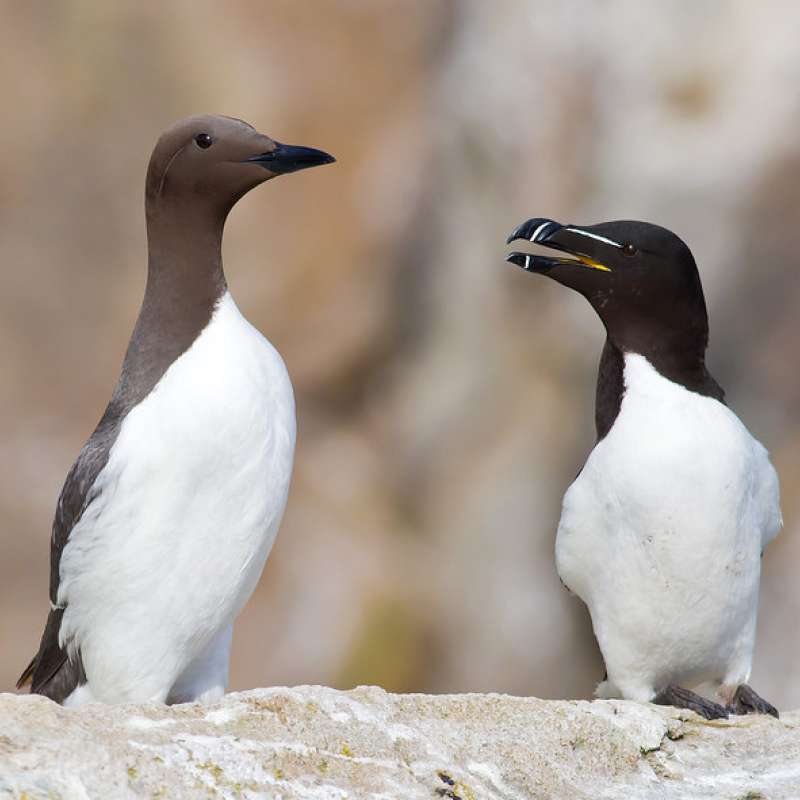
Integrating genetic data into the study of the significance of the North Sea and Skagerrak for wintering auks
This project aims to investigate the impact of recent mass mortality events on auk populations around the North Sea by determining the origin of the birds involved. This will be achieved through a genetic analysis of samples of dead guillemots and razorbills washed up in Norway and Denmark in two main mass mortality events, and comparing them with samples from live birds of known origin.
Division of Environment and Natural Resources
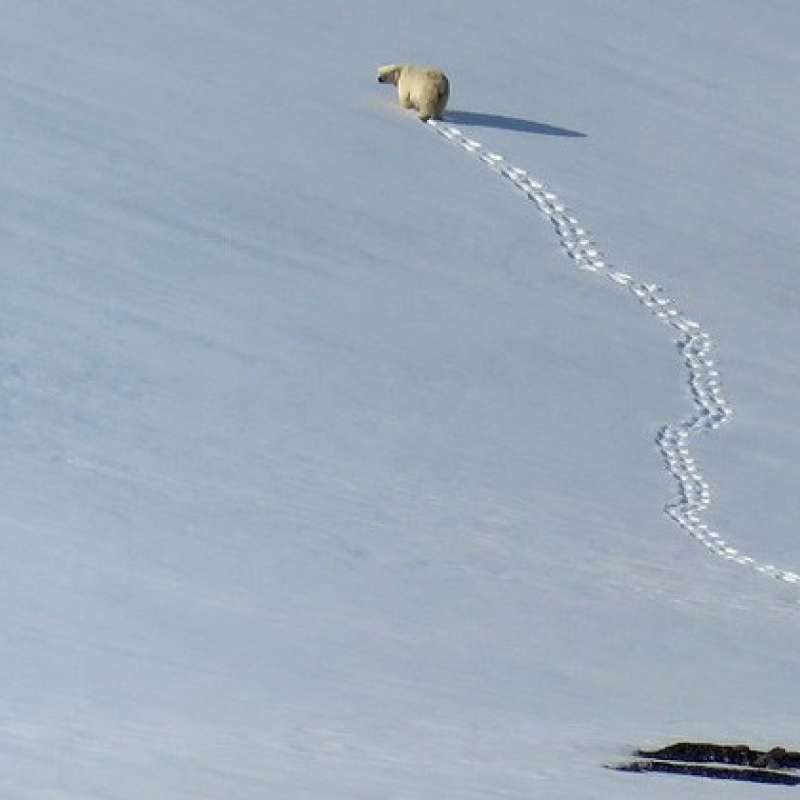
Paw Prints to DNA – Non-invasive polar bear monitoring in using eDNA derived from snow tracks in Svalbard
Effective conservation and management of polar bears depend on robust knowledge of their ecology, behaviour, population size and structure, connectivity, and adaptive capacity. Although genetic tools are critical for addressing these questions, traditional sampling approaches, often involving capture and handling, are logistically challenging, costly, potentially hazardous to personnel, and can cause stress to animals