
Division of Environment and Natural Resources
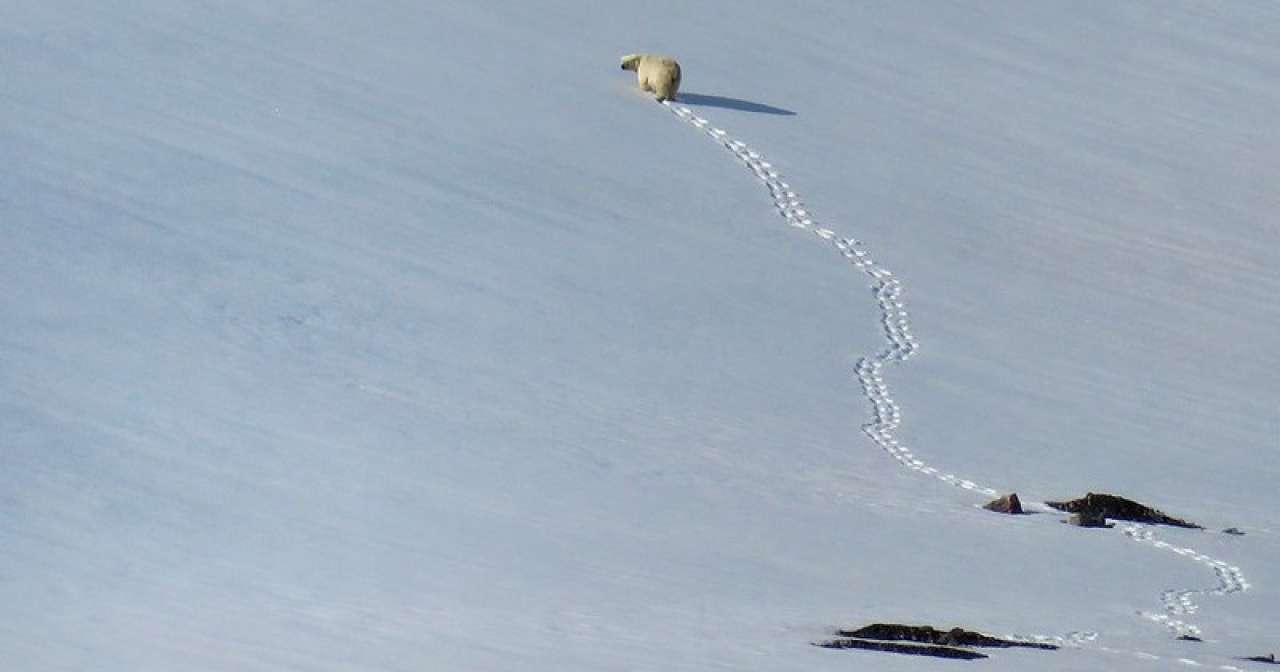
Paw Prints to DNA – Non-invasive polar bear monitoring in using eDNA derived from snow tracks in Svalbard
End: dec 2026
Start: dec 2023
Effective conservation and management of polar bears depend on robust knowledge of their ecology, behaviour, population size and structure, connectivity, and adaptive capacity. Although genetic tools are critical for addressing these questions, traditional sampling approaches, often involving capture and handling, are logistically challenging, costly, potentially hazardous to personnel, and can cause stress to animals
Project participants
Melanie Lancaster, WWF Jon Aars, NPI Snorre Hagen Ida Marie Luna Fløystad François Pierre Alexandre Cléon| Start - end date | 19.12.2023 - 31.12.2026 |
| Project manager at Nibio | Simo Maduna |
| Division | Division of Environment and Natural Resources |
| Department | Ecosystems in the Barents region |
| Funding source | Stiftelsen Världsnaturfonden WWF |
Recent advances in molecular techniques have enabled the use of low-quality and low-quantity DNA sources, including environmental DNA (eDNA). Building on this progress, WWF and partners developed and published a novel method in 2023 for isolating eDNA from polar bear footprints in snow (see Hellström et al., 2023). This approach successfully recovers nuclear DNA suitable for individual identification using a panel of microsatellite markers commonly used in polar bear population genetic studies (e.g. Maduna et al., 2021). This project aims to further validate and operationalize this non-invasive method as a reliable source of genetic data for mark–recapture analyses. Through continued testing and application in collaboration with partners, the project seeks to integrate footprint-derived eDNA into standard polar bear monitoring frameworks, thereby improving data collection while minimizing disturbance to animals.
Publications in the project
Authors
Simo Maduna Jon Aars Ida Marie Luna Fløystad Cornelya Klutsch Eve Marie Louise Zeyl Fiskebeck Øystein Wiig Dorothee Ehrich Magnus Andersen Lutz Bachmann Andrew E. Derocher Tommi Nyman Hans Geir Eiken Snorre HagenAbstract
Loss of Arctic sea ice owing to climate change is predicted to reduce both genetic diversity and gene flow in ice-dependent species, with potentially negative consequences for their long-term viability. Here, we tested for the population-genetic impacts of reduced sea ice cover on the polar bear (Ursus maritimus) sampled across two decades (1995–2016) from the Svalbard Archipelago, Norway, an area that is affected by rapid sea ice loss in the Arctic Barents Sea. We analysed genetic variation at 22 microsatellite loci for 626 polar bears from four sampling areas within the archipelago. Our results revealed a 3–10% loss of genetic diversity across the study period, accompanied by a near 200% increase in genetic differentiation across regions. These effects may best be explained by a decrease in gene flow caused by habitat fragmentation owing to the loss of sea ice coverage, resulting in increased inbreeding of local polar bears within the focal sampling areas in the Svalbard Archipelago. This study illustrates the importance of genetic monitoring for developing adaptive management strategies for polar bears and other ice-dependent species.