Division of Food Production and Society
The role of diversified small-scale horticulture in a transition towards more sustainable food systems with healthier diets (SmallHort)
End: feb 2029
Start: feb 2025
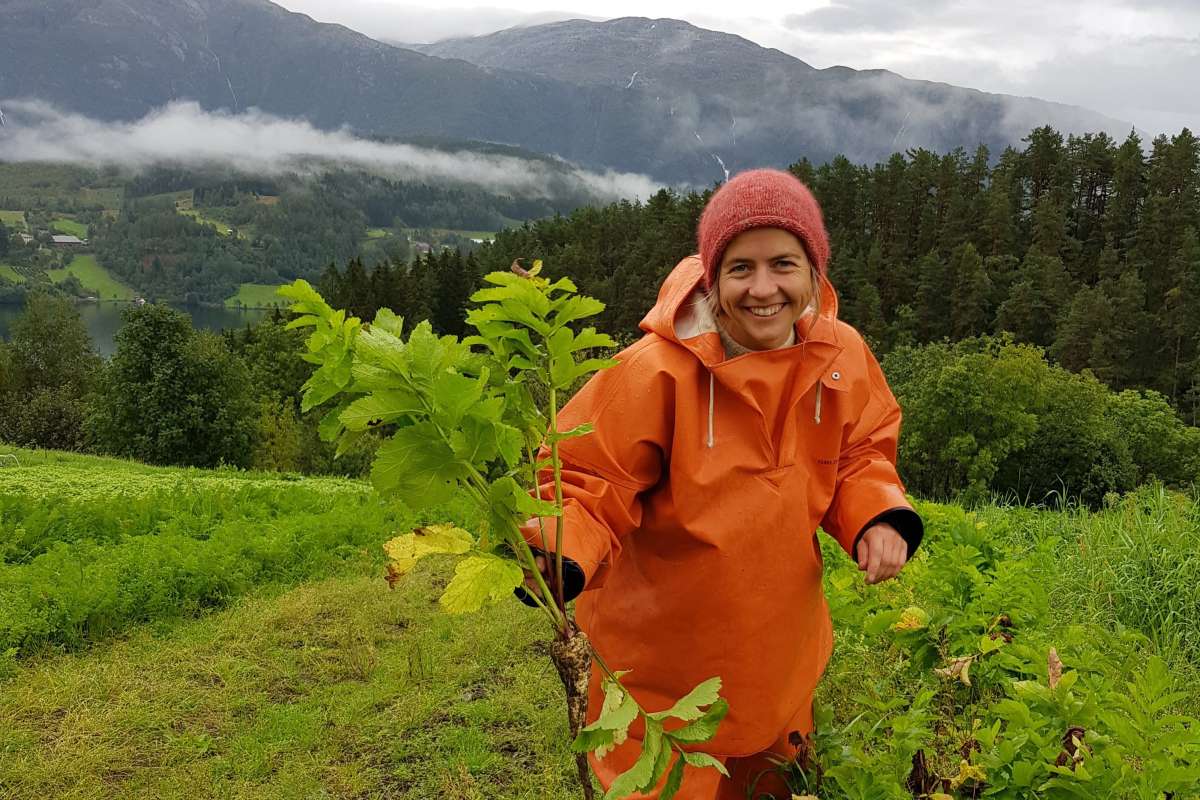
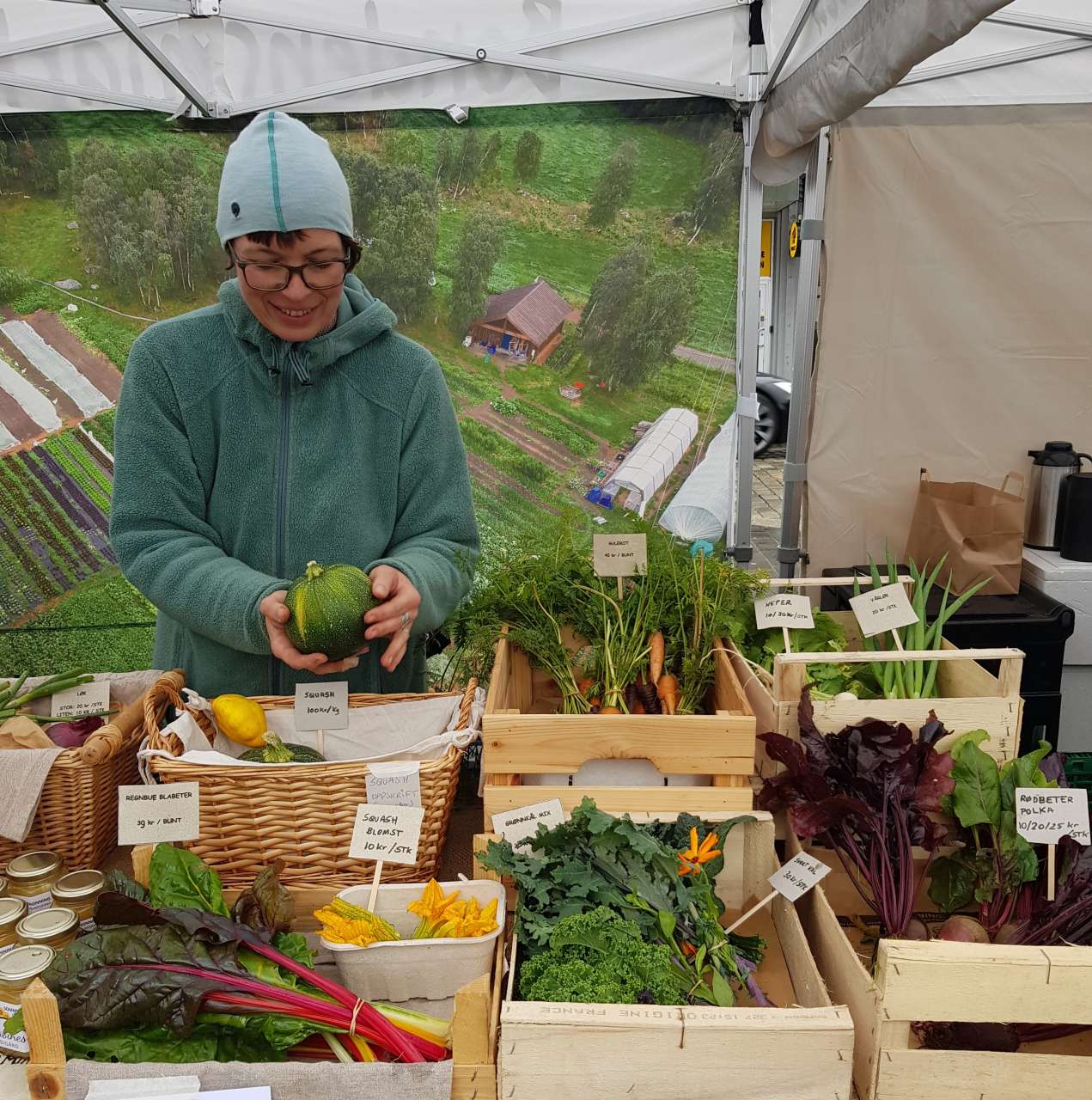
SmallHort investigates how diversified small-scale horticulture can contribute to more sustainable food systems, healthier diets, stronger local communities and increased food preparedness in Norway.
Project participants
Frøydis Gillund Bjørn Egil Flø Maiken Skjørestad Granberg Bjørn Arild Hatteland Jørund Johansen Hilde Halland Gro Johannesen Anne-Kristin Løes Viktorija Viciunaite Christine Marie Hvitsand Kevin Morel Antonín Pepin Anne Strøm Prestvik Lystgården Økologisk Norge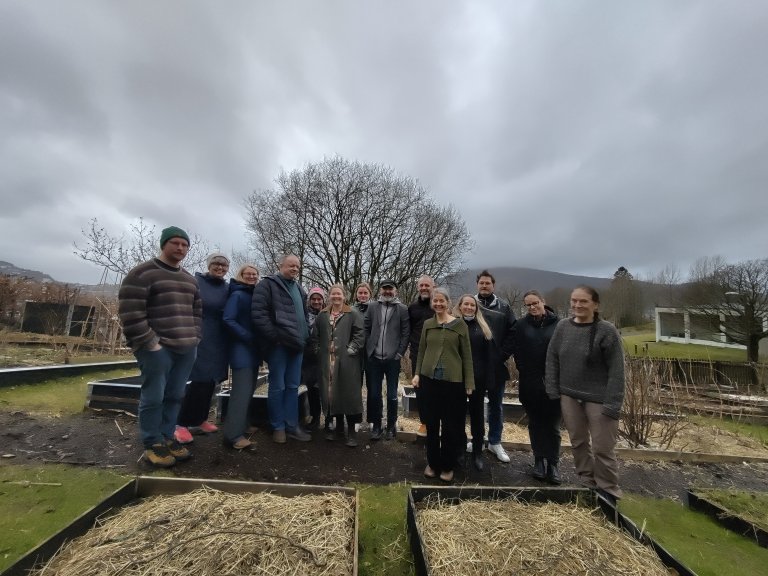
| Status | Active |
| Start - end date | 03.02.2025 - 04.02.2029 |
| Project manager | Anna Birgitte Milford |
| Division | Division of Food Production and Society |
| Department | Economics and Society |
| Partners | Norwegian Centre for Organic Agriculture, Western Norway Institute of Applied Sciences, Telemark Research Institute, Veterinærinstituttet, Norges Vel, Lystgården, County Governor of Vestland, Organic Norway, Holt Økopark |
| Total budget | 12 000 000 NOK |
| Funding source | Norwegian Research Council |
Norwegian vegetable production is limited by climate, topography and high labour costs, and commercial horticulture is concentrated in relatively few regions. Small-scale horticulture may provide opportunities to produce local vegetables in more parts of the country, while also supporting biodiversity, rural development, circular resource use and public health.
The project examines small-scale horticulture from several perspectives. It will study the economic, social and environmental sustainability of small-scale vegetable production, including barriers, opportunities and trade-offs for growers and local food systems. It will also investigate how cultivation practices affect insects. Another part of the project explores how access to locally grown vegetables influences consumers’ food practices and possibilities for lasting dietary change. In rural areas, SmallHort will study whether small-scale horticulture can strengthen social networks, wellbeing and people’s connection to nature and food production. SmallHort also addresses safe use of composted organic waste as a resource in vegetable production.
Through case studies, surveys, interviews, field studies, experiments and workshops, the project will provide knowledge and practical recommendations for growers, advisors, public authorities and local communities.
The project is led by NIBIO and brings together researchers and practitioners from several disciplines and organisations. Its goal is to support the development of small-scale horticulture as a sustainable source of local vegetables across Norway.
Publications in the project
Abstract
Småskala grønnsakprodusenter kan løfte selvforsyningen – nå er det opp til regjeringen å anerkjenne det i jordbruksforhandlingene.
Authors
Anna Birgitte MilfordAbstract
No abstract has been registered
Abstract
Essay
Abstract
https://www.okologisk24.no/synspunkt/varonn-i-vinduskarmen-og-krisetid/1316882
Authors
Christine Hvitsand Anna Birgitte Milford Frøydis Gillund Viktorija Viciunaite Jenny Fossum GrønnAbstract
Problemsstillingene i prosjektet har vært: - Hva kjennetegner produksjon, salg og markedsføring hos markedshagedyrkere? - Hvilke faktorer påvirker lønnsomheten til markedshagedyrkere med spesielt fokus på valgte salgskanaler, markedsføring og hvorvidt økologisk sertifisert? Hva er deres utfordringer og pla-ner framover? - Hvordan oppleves fordeler og ulemper med økologisk sertifisering? - Hvordan samarbeider markedshagedyrkerne med andre produsenter og aktører? - Hvordan kan utvikling i samarbeid, virkemidler og annen støtte bidra til å styrke småskala grønnsaksproduksjon?
Abstract
No abstract has been registered
Authors
Cormier, Caitlin Marie Favero, GiacomoAbstract
Food self-sufficiency and local food production are increasingly important in the context of global supply chain uncertainty. In Northern Norway, sustaining agricultural activity is central to national food preparedness, yet vegetable production in Arctic municipalities remains limited. In this study, we examine how vegetable production can be enhanced in Nordreisa municipality by exploring barriers, opportunities, and stakeholder perspectives. Using a qualitative single-case study design, we investigate local realities that shape the current lack of vegetable production through semi-structure interviews with diverse stakeholders across the regional food system and a local interest in vegetable production survey. We found that systemic barriers such as limited infrastructure, fragmented markets, and governance gaps constrain immediate growth. At the same time, motivated producers, consumer interest in local food, and a shared desire for self-sufficiency indicate a latent potential for development. This study suggests that increasing local vegetable production requires a dual approach: grassroots initiatives that mobilize local actors and supportive governance that enables implementation. Practical measures include the establishment of local storage and distribution facility, fostering collaboration between producers and consumers, and aligning municipal and national policies with local capacities. Through the enhancement of social networks and institutional support, municipalities like Nordreisa can take concrete steps towards strengthened local vegetable production.
Authors
Lone PolletAbstract
Although community supported agriculture (CSA) is generally considered a potent alternative to the globalized food system, the capacity of CSA farms to foster community support in agriculture has been questioned due to low engagement of members at the farm and high member turnover rates. In this study, I consider the case of member-driven CSA farms and explore the potential of this CSA model to increase member engagement in CSA farming. Using an inductive, phenomenon-first approach to research, I compare the cases of four Norwegian member-driven CSA farms to describe how they engage members at the farm and explore the factors influencing member engagement. The on-farm participant observation, focus group interviews with farm coordinators and members survey revealed that Norwegian member-driven CSAs significantly engage members in all aspects of the farm operations. Yet, the differences observed between cases showed that member engagement depend on the capacity of the farm to create the right conditions for collaboration. Although the member-driven model has the potential to increase member engagement in CSA farming, the preferences of members, the opinions and engagement of coordinators, the size of the farm, the number of years of operation and the external support received by the farm, are five factors that affect the capacity of the CSA farm to collaborate with members. Ultimately, this study concludes that achieving community engagement in member-driven CSAs depends less on their organizational model and more on the specific conditions that facilitate collaboration and member engagement.