New research project gives horses a voice
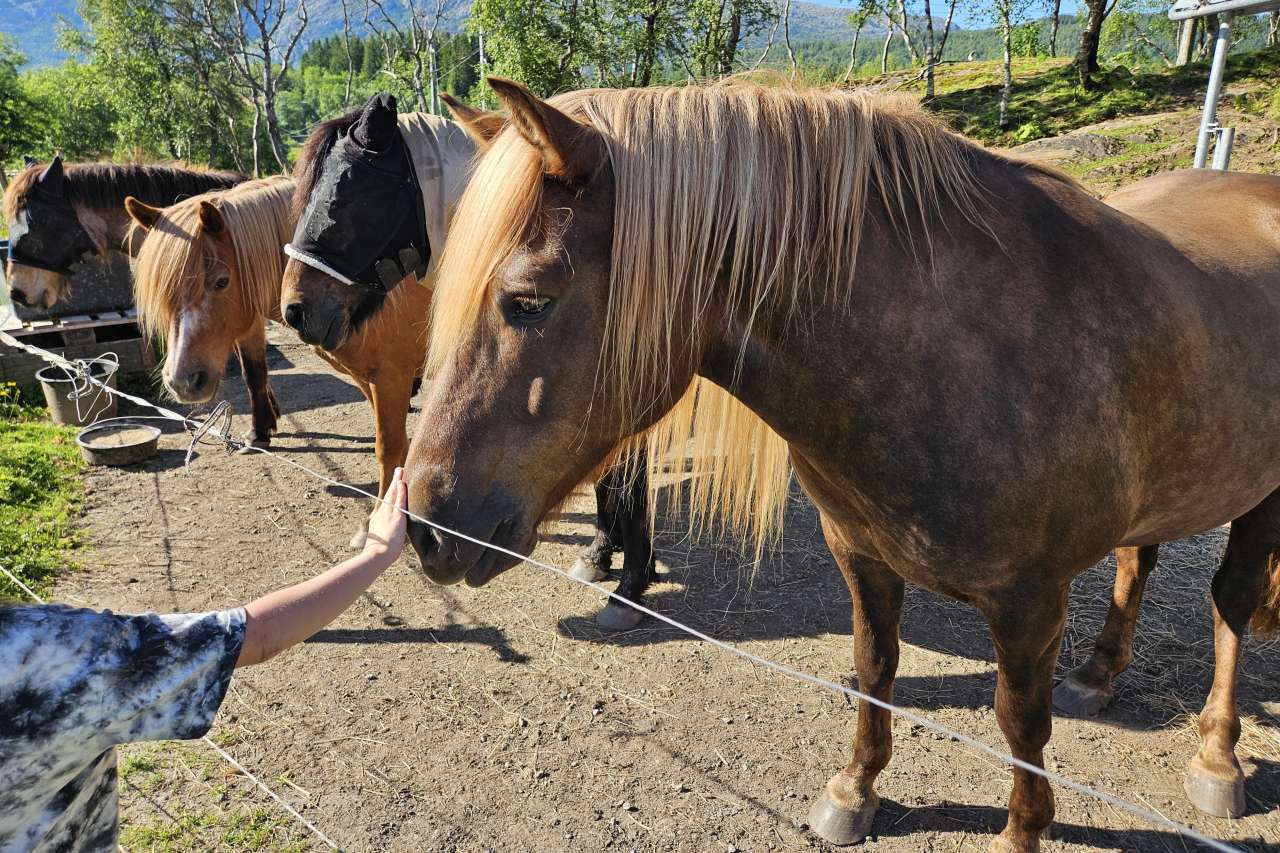
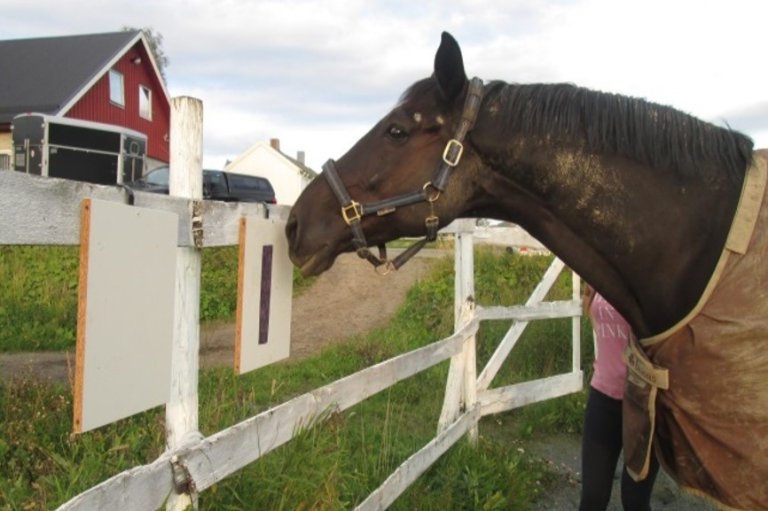
What if horses could tell us what they prefer—whether it’s blankets, training methods, or equipment? Photo: Grete H. M. Jørgensen
What if horses could tell us what they prefer—whether it’s blankets, training methods, or equipment? In the research project HorseVoice, horses learn to communicate their choices using symbols. The goal is to improve horse welfare by making owners more aware.
In recent years, revelations of unethical horse handling in elite levels of the horsesport have drawn attention to an uncomfortable question: Do we really understand how our horses are feeling? According to Norwegian and Swedish researchers in the project HorseVoice, the answer is often no.
The project “Giving the Horse a Voice – Horse Welfare and Owner Awareness”, known in short as HorseVoice, aims to improve horse welfare by increasing knowledge about horses’ cognitive abilities and emotional needs and preferences. The project is funded by the Swedish-Norwegian Foundation for Equine Research and is a collaboration between the Norwegian Institute of Bioeconomy Research (NIBIO), the Norwegian Veterinary Institute, Ridskolan Strömsholm, and Malmö University. In addition, both an experienced animal trainer and researchers with long-standing expertise in animal behaviour are involved.
Teaching horses to "answer"
At the core of the project is the so-called symbol method. This method was developed in an earlier research project in which horses learned to use symbols to express whether they wanted to wear a blanket or not. The results attracted international attention and showed that horses can, in fact, communicate their own preferences in a reliable way.
“Now we are taking this a step further,” explains researcher Grete H.M. Jørgensen in NIBIO, who leads the Norwegian part of the project.
“Students in equine studies train their own horses to use the symbol method, for example after exercise, allowing the horse to choose whether it wants to wear a blanket or not.”
But HorseVoice is about far more than blankets.
“In principle, there are no limits to what we can ask horses about—their preference for equipment, training methods, feed, or housing. At the same time, this forces us to reflect on ethical questions. What do we do if the horse’s choice differs from what we want—or if it chooses not to be ridden at all?”
Changing attitudes among future horse owners
A new and important aspect of HorseVoice is its social science perspective. The researchers are investigating whether students who learn to communicate with their horses in this way also change how they view them—from “sports performers” to individuals with their own needs and preferences.
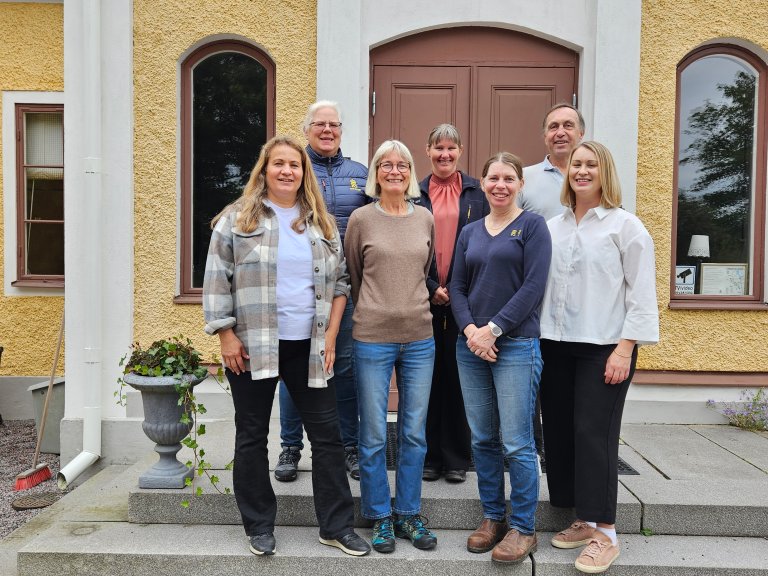
Students from Skjetlein Upper Secondary School in Norway and Strömsholm National Equestrian Center in Sweden are participating in the project. Social scientists from Malmö University have already conducted interviews with the participants.
“Many young people are strongly influenced by role models in the equestrian world. When it is revealed that a former hero has treated horses poorly, it creates confusion and reflection. This project provides space for exactly those kinds of discussions,” says Jørgensen.
A handbook for the entire equestrian sector
A key objective of HorseVoice is to develop a practical handbook on the symbol method, aimed at horse owners, trainers, and educational institutions. The ambition is for the method to be used far beyond the scope of the project itself.
“If more people learn to listen to horses’ own signals, it could lead to lasting changes in both attitudes and practices across the entire equestrian sector,” says Jørgensen.
The project is well underway. In 2026, researchers will begin systematically asking fully trained horses about their preferences for wearing blankets after exercise. At the same time, photo and video material is being collected for the handbook.
“We are looking forward to the next stages and to seeing what answers the horses actually give us,” the project leader concludes.
Contacts
Grete H. M. Jørgensen
Research Scientist
-
Division of Food Production and Society
(+47) 407 66 769 grete.jorgensen@nibio.no Office Location: Tjøtta
HorseVoice
The project partners are NIBIO, the Norwegian University of Life Sciences (NMBU), the Norwegian Veterinary Institute (VI), Ridskolan Strömsholm Flyinge (RSFlyinge), and Malmö University (MU). In addition, the project has engaged professional horse trainer Turid Buvik from Trondheim Hundeskole, who is responsible for the equine-specific aspects of the operational design and for training the horses in the symbol method.
The project is funded by Stiftelsen Hästforskning and the Research Council of Norway, with in-kind contributions from NIBIO and Ridskolan Strömsholm.
Contacts
Grete H. M. Jørgensen
Research Scientist
-
Division of Food Production and Society
(+47) 407 66 769 grete.jorgensen@nibio.no Office Location: Tjøtta
Publications
Abstract
No abstract has been registered
Abstract
This paper describes a method in which horses learn to communicate by touching different neutral visual symbols, in order to tell the handler whether they want to have a blanket on or not. Horses were trained for 10–15 min per day, following a training program comprising ten steps in a strategic order. Reward based operant conditioning was used to teach horses to approach and touch a board, and to understand the meaning of three different symbols. Heat and cold challenges were performed to help learning and to check level of understanding. At certain stages, a learning criterion of correct responses for 8–14 successive trials had to be achieved before proceeding. After introducing the free choice situation, on average at training day 11, the horse could choose between a “no change” symbol and the symbol for either “blanket on” or “blanket off” depending on whether the horse already wore a blanket or not. A cut off point for performance or non-performance was set to day 14, and 23/23 horses successfully learned the task within this limit. Horses of warm-blood type needed fewer training days to reach criterion than cold-bloods (P < 0.05). Horses were then tested under differing weather conditions. Results show that choices made, i.e. the symbol touched, was not random but dependent on weather. Horses chose to stay without a blanket in nice weather, and they chose to have a blanket on when the weather was wet, windy and cold (χ2 = 36.67, P < 0.005). This indicates that horses both had an understanding of the consequence of their choice on own thermal comfort, and that they successfully had learned to communicate their preference by using the symbols. The method represents a novel tool for studying preferences in horses.
_cropped.jpg?quality=60)