From spot checks to more automated monitoring of timber façades
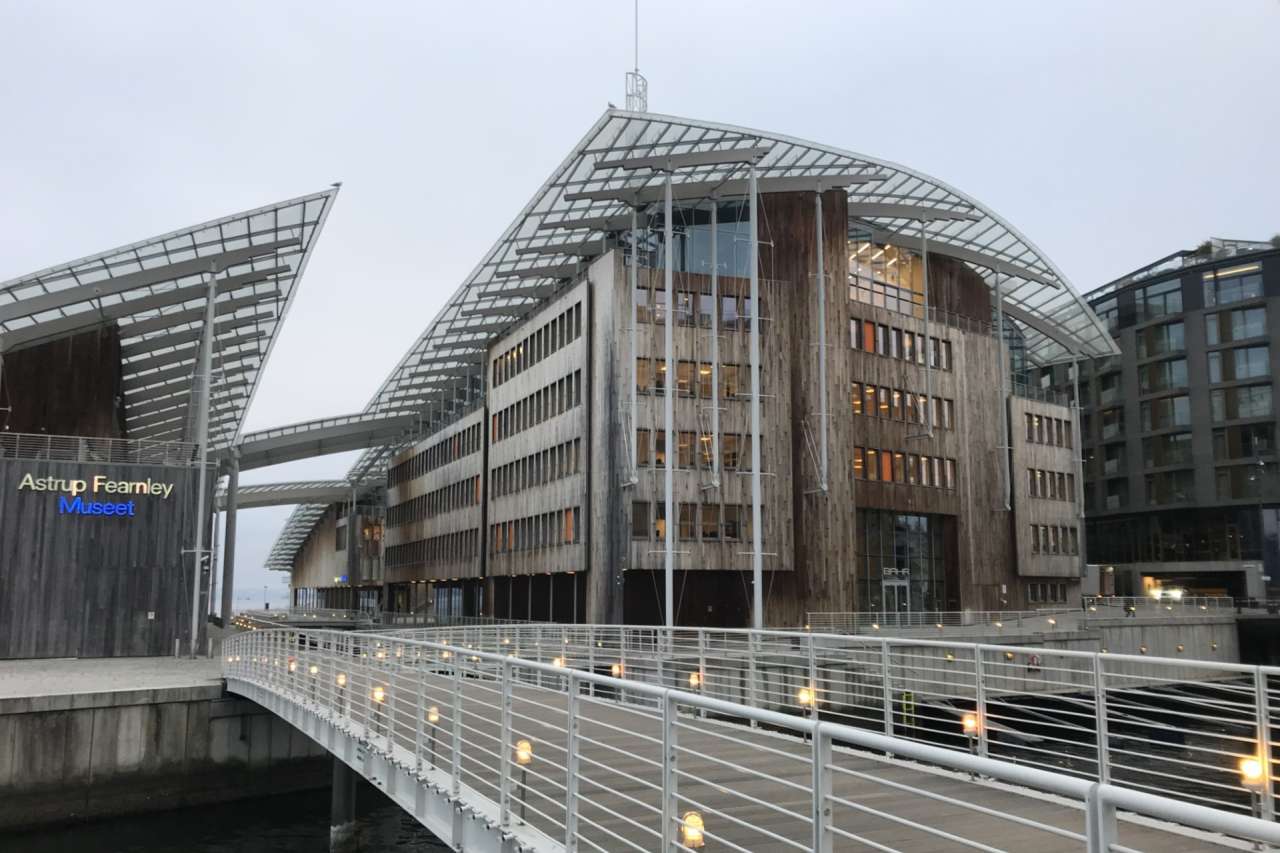
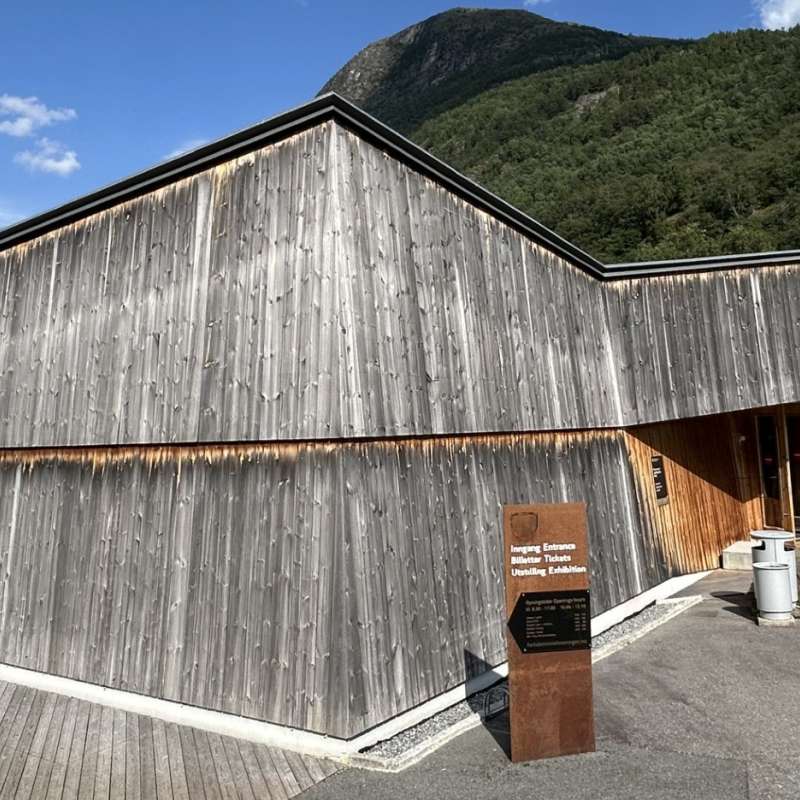
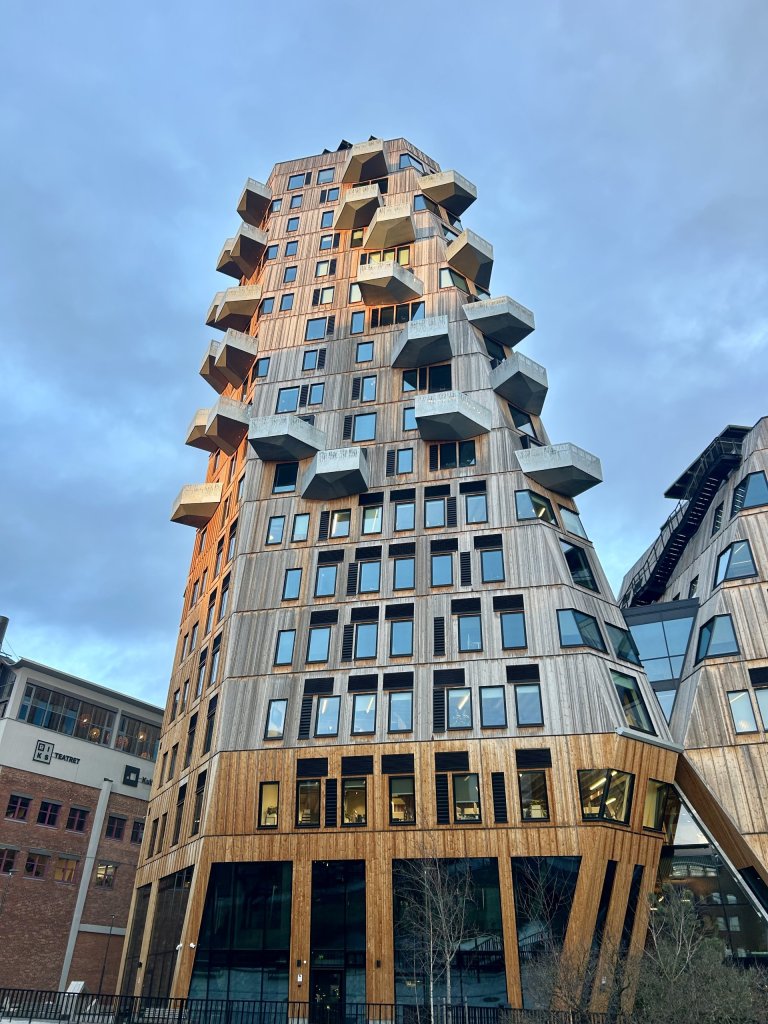
Using advanced imaging technology, researchers in SenseWood aim to develop new methods that make it possible to monitor the condition of timber façades in an automated way. Here at the Astrup Fearnley Museum in Oslo. Photo: Lone Ross
As wood use grows in modern construction, monitoring tools for fire safety and material quality lag behind. SenseWood researchers aim to change this by using advanced imaging to assess timber cladding and anticipate when and where maintenance is needed.
In recent years, façade fire safety has received increased attention, not least following the Grenfell Tower fire in London in 2017. The tragedy triggered wide-ranging discussions about material choices, documentation requirements and the need for better knowledge of how façade solutions perform throughout a building’s lifetime.
In Norway, timber-clad façades are common in both older buildings and many new developments. Wood has also taken on a more prominent role in larger and more complex structures. This creates new opportunities, but also raises demands for safety, quality and long-term maintenance.
External timber façades are continuously exposed to sunlight, precipitation, temperature fluctuations and wind. Over time, this can lead to material degradation, surface changes and increased maintenance needs. However, wood is a combustible material, meaning timber cladding must be fire-protected, either through impregnation or surface treatments such as intumescent coatings, which swell when exposed to heat and protect the wood from flames.
In Norway, strict requirements apply to fire safety and documentation for both wood and other construction materials. There is also a growing need for methods to track changes in material quality and protective treatments throughout a building’s service life.
Developing methods to monitor safety and wear
Today, quality control of treated timber panels often relies on manual inspections and spot checks. Many standard methods are also destructive, poorly suited to continuous monitoring, or provide limited information about variations across the surface.
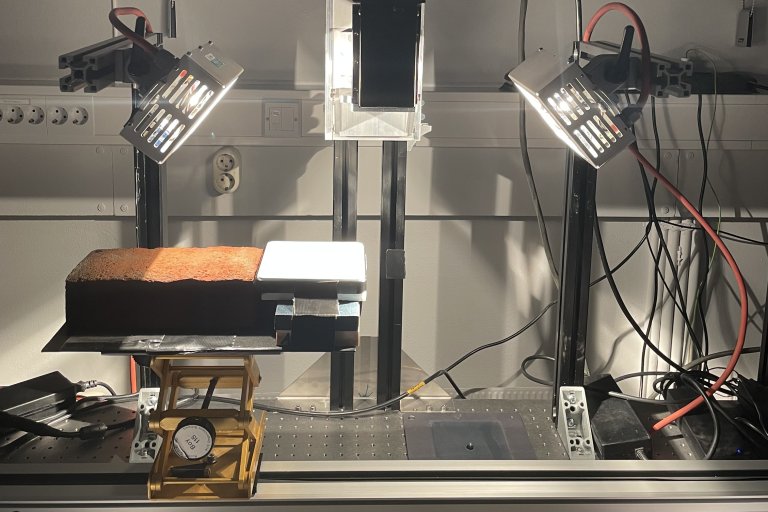
In the SenseWood project, researchers from the Norwegian Institute of Bioeconomy Research (NIBIO) and the Norwegian University of Life Sciences (NMBU) will develop new methods that enable more automated monitoring of timber façades. This will be achieved by using hyperspectral imaging to map changes in fire-retardant chemicals, surface treatments and signs of material degradation in timber cladding.
“Hyperspectral cameras can detect chemical information in material surfaces that is invisible to the naked eye,” explains NIBIO researcher and project leader Michael Altgen.
“This allows us to monitor developments in both fire protection and timber quality in a more precise, systematic and less intrusive way than is possible today.”
Testing ageing and weather exposure
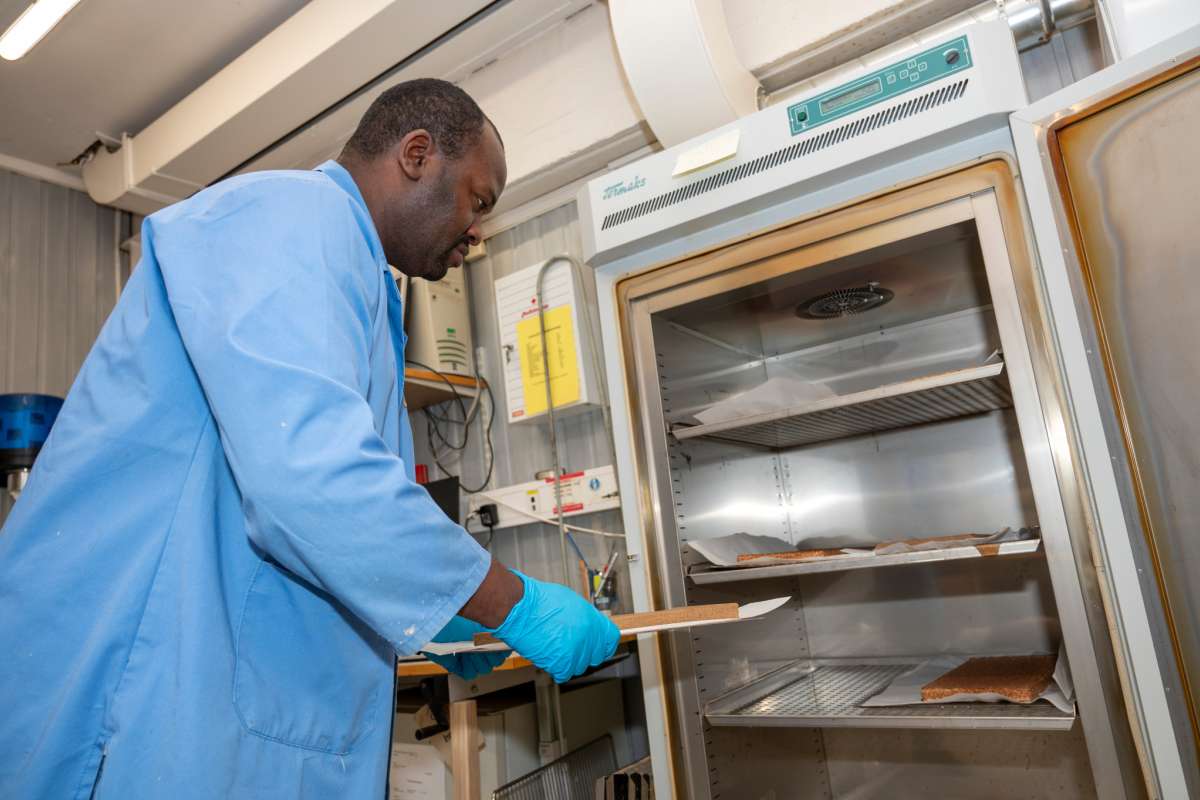
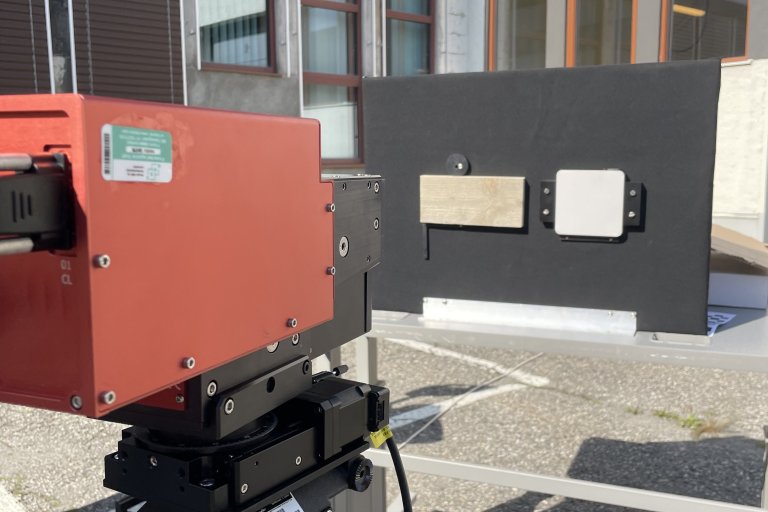
Researchers from NMBU and NIBIO recently conducted laboratory studies examining timber samples treated for enhanced fire protection. The samples were exposed to controlled cycles of moisture and drying to simulate natural climate exposure.
“The results gave us valuable insight into how we can assess the effects of weather and wind on wood surfaces with different treatments,” says Ingunn Burud from the Norwegian University of Life Sciences (NMBU).
“We will use this knowledge to train models that can interpret hyperspectral images and identify patterns related to ageing, wear and maintenance needs.”
SenseWood will now move the technology beyond controlled laboratory conditions and deploy it outdoors. The aim is to monitor timber-clad façades remotely, using sensors that detect material changes without the need for physical contact or spot sampling.
Better decision-making for operation and maintenance
In the longer term, the ambition is for the technology developed in SenseWood to be used for inspection and follow-up of both existing and new buildings.
“This could give building owners, consultants and authorities a better basis for deciding when maintenance is needed, how fire protection and material quality can be documented over time, and how the service life and safety of timber façades can be safeguarded in a more knowledge-based way,” says Altgen.
By linking information on material condition and fire protection within a single monitoring system, the researchers in SenseWood aim to contribute to the safe and sustainable use of wood in future buildings – even when façades are exposed to weather and wind for decades.
Contacts

Michael Altgen
Research Scientist
-
Division of Forest and Forest Resources
(+47) 459 12 093 michael.altgen@nibio.no Office Location: Ås H8
SenseWood
Full title: Digitalisation of wooden building skins for a predictable performance (SenseWood)
Duration: January 2026 – December 2029
Partners: Norwegian Institute of Bioeconomy Research (NIBIO) and Norwegian University of Life Sciences (NMBU)
Funding: Research Council of Norway
Climate and building physics are key
From a building physics perspective, the interaction between materials and climate is crucial for how façades perform over time. Temperature, moisture, solar radiation and precipitation influence drying, moisture transport and degradation processes in wood and surface treatments.
A significant part of the work in SenseWood will therefore take place at NMBU, where the research group Climate and Buildings studies how weather, microclimate and wind‑driven rain affect façades and building materials through measurements, laboratory tests and simulations.
“For exterior timber structures, it is essential to understand how climate affects materials over time. Moisture, temperature and solar radiation act together and can gradually alter both material properties and protective coatings,” says Professor Thomas Thiis at NMBU.
Read more about the research group Climate and Buildings here.
Hyperspectral imaging predicts wood performance
While our eyes – and the camera in your mobile phone – detect only a narrow range of wavelengths through combinations of red, green and blue, some animals can see beyond this range into ultraviolet. Hyperspectral cameras go even further, capturing a broad spectrum of wavelengths that stretch beyond the red edge of human vision. Instead of three colour channels, they record hundreds of distinct “colours”.
In SenseWood, hyperspectral cameras collect data across a wide range of wavelengths, and each image contains extensive information about the material’s chemical composition. By training chemometric models on datasets made up of such images, the researchers can develop algorithms that predict how effectively timber will resist fire, based on how fire-retardant chemicals are reflected in different spectral bands.
Contacts
Michael Altgen
Research Scientist
-
Division of Forest and Forest Resources
(+47) 459 12 093 michael.altgen@nibio.no Office Location: Ås H8