
Robert Barneveld
Research Scientist
(+47) 968 51 427
robert.barneveld@nibio.no
Place
Ås O43
Visiting address
Oluf Thesens vei 43, 1433 Ås
Authors
Robert BarneveldAbstract
No abstract has been registered
Abstract
Rapporten beskriver utprøving av rotstokkmetoden som en naturbasert løsning for sikring av erosjonsutsatte elvekanter. Metoden ble etablert våren 2023 langs en om lag 80 meter lang strekning nederst i Gjødingelva i Hurdal kommune. Sikringen består av rotstokker stabilisert med stein, stedlige masser og et lag grus fra elvebunnen. Oppfølging med dronebaserte høydemodeller, visuelle observasjoner og vegetasjonskartlegging viser at sikringen og den tilstøtende kantsonen i hovedsak er stabile. Det er ikke observert fortsatt erosjon eller vesentlig masseforflytning. Vegetasjonen er i ferd med å reetableres naturlig, mens plantede stiklinger og små trær har hatt lav overlevelse. De foreløpige resultatene tyder på at metoden kan redusere erosjon og undergraving og samtidig gi et mer variert fysisk habitat enn tradisjonell erosjonssikring. Det er likevel behov for videre overvåking og utprøving på flere lokaliteter før det kan trekkes generelle konklusjoner om levetid og anvendelighet.
Abstract
ABSTRACT This study evaluated the SWAT+ model in a Norwegian catchment with mixed forest-agriculture land use, tile drainage, and multiple lakes, and examined the added value of incorporating soft data as process-based constraints during calibration. The primary aim was to test whether such constraints improve hydrological consistency in addition to statistical fit. A stepwise methodology was applied, including parameter initialization, model verification, water balance soft calibration, and constraint-based hard calibration. We showed how each stage incrementally improved model performance. Three hydrological constraints were defined to represent water balance components (runoff coefficient), streamflow signatures (baseflow index), and expert knowledge of catchment behavior (tile flow ratio). Constraint-based calibration achieved slightly lower efficiency scores (NSE = 0.61, KGE = 0.72) than unconstrained calibration (NSE = 0.65, KGE = 0.77), reflecting the trade-off between optimizing performance metrics and ensuring realistic hydrological processes. The baseflow index was the most influential constraint, eliminating about 77% of non-behavioral simulations when assessed individually. The results also highlight the importance of lake initialization and the need for multiple performance metrics when tuning lake release parameters. Overall, integrating process-based knowledge strengthened internal consistency and increased confidence that SWAT+ performs well for the right reasons.

Division of Environment and Natural Resources
MARCHES - Methodologies for Assessing the Real Costs to Health of Environmental Stressors
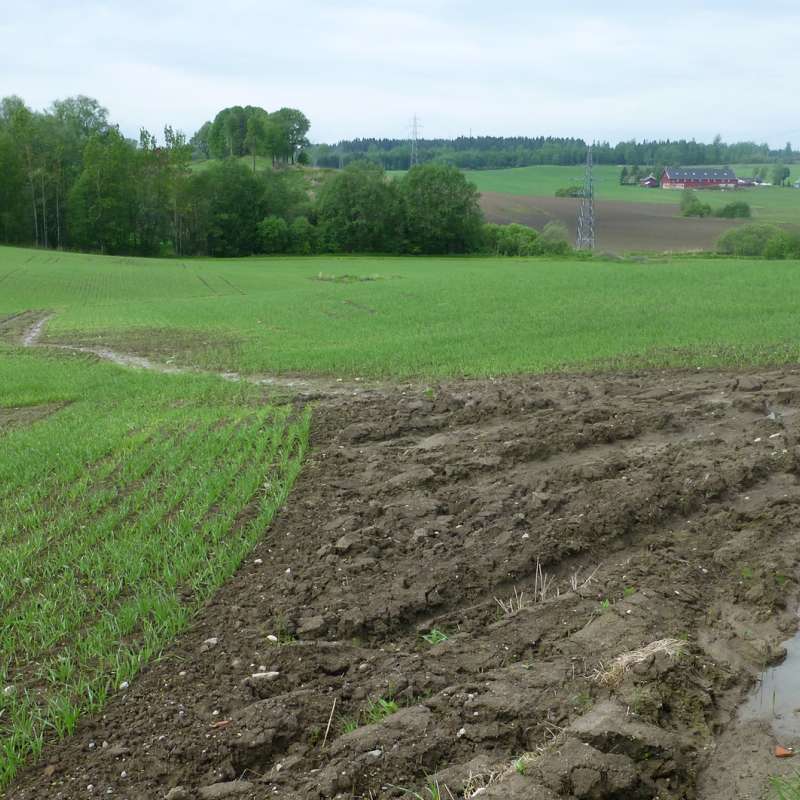
Division of Environment and Natural Resources
EUROSION
European Soil Erosion Monitoring and Modelling Network for Sustainable Agricultural Land Management
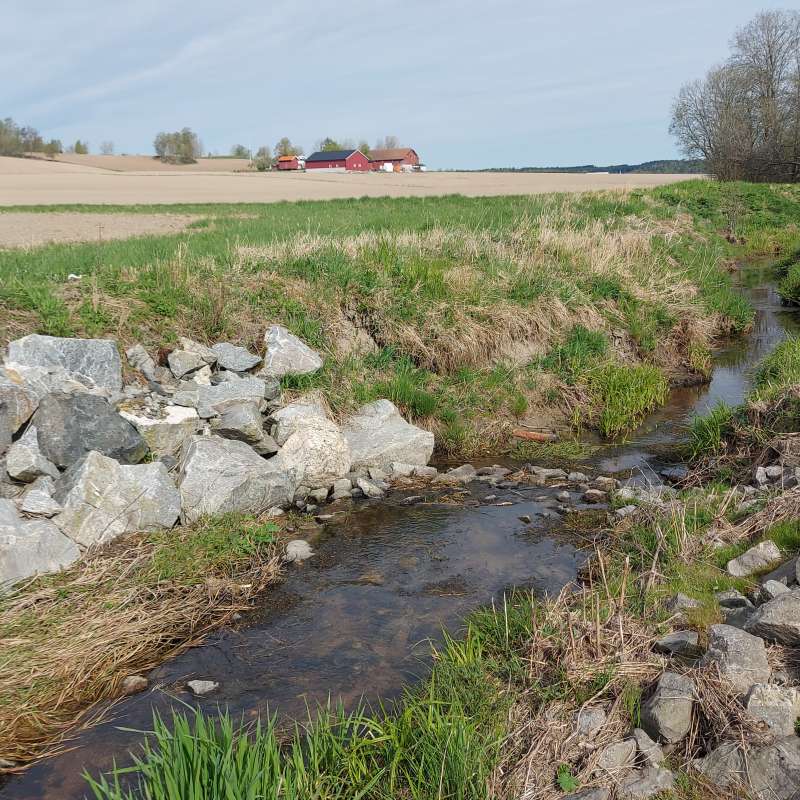
Division of Environment and Natural Resources
PATH4MED: Demonstrating innovative pathways addressing water and soil pollution in the Mediterranean Agro-Hydro-System.
Path4Med is a multi-participatory and multidisciplinary project that will pave clear pathways towards zero water and soil pollution in the agro-hydro-system of the Mediterranean sea basin and other European seas through an innovative triple bottom line approach achieving economic, social, and environmental sustainability to ensure human well-being and ecosystems functioning.
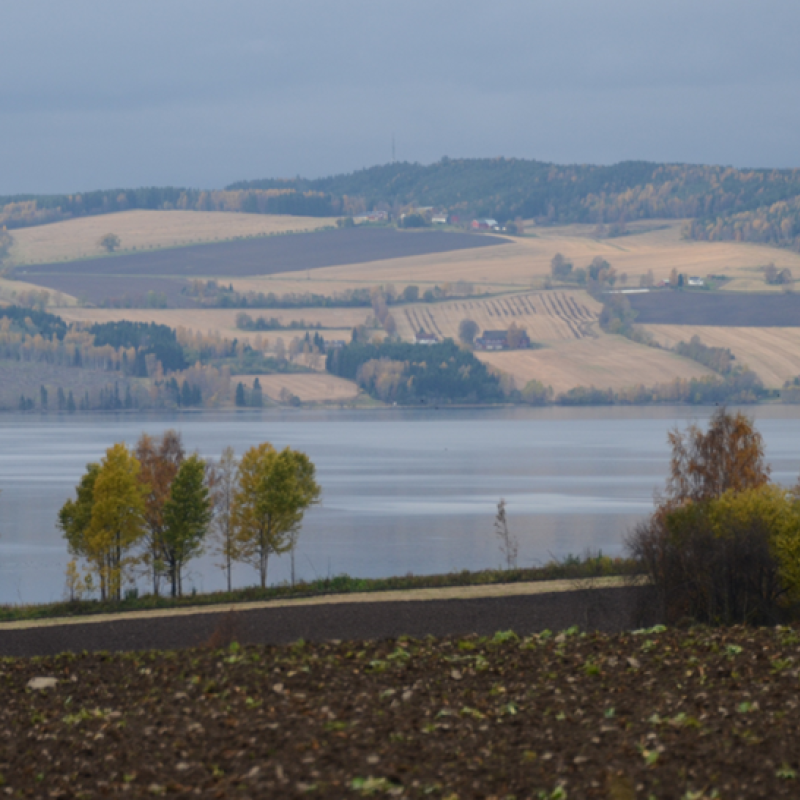
Division of Food Production and Society
Agricultural mitigation measures and the value of water quality improvements
Agriculture is one of the main sources of water pollution in Norway, and an important contributor to GHG emissions.