
Division of Survey and Statistics
Mitigation and Adaptation in Cultural Heritage Landscapes: Lessons from Transhumant Pastoral Systems for Managing Novel Climate Risks (PastAdapt)
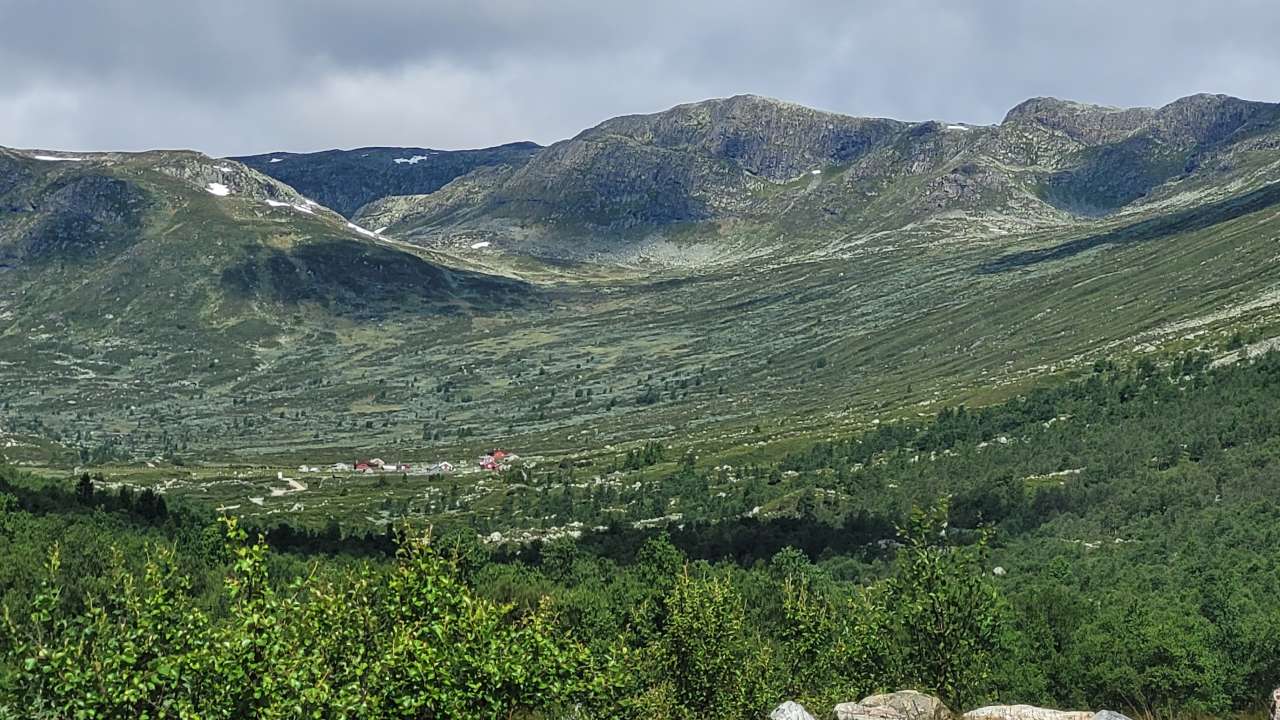
End: apr 2027
Start: may 2024
Cultural landscapes provide essential ecological and sociocultural services and contain insights needed to combat climate change, but they are vulnerable to climate change and other stressors. By examining the cultural landscapes of transhumant pastoralism in France, Norway, and Spain, we will detail climate and other threats to this intangible cultural heritage (ICH), the characteristics and factors that create adaptive capacity in these systems, and methods for sustaining ICH through community action and policy.
| Status | Active |
| External project link | Belmont Forum |
| Start - end date | 01.05.2024 - 30.04.2027 |
| Project manager | Sebastian Eiter |
| Division | Division of Survey and Statistics |
| Department | Landscape Monitoring |
| Partners | Research: University of Georgia, Appalachian State University, University of Kentucky (all US), Centre National de la Recherche Scientifique - CNRS (FR), Basque Centre for Climate Change - BC3 (ES), University of Lausanne (CH); Stakeholders: Norsk seterkultur (NO), La Commission Syndicale du Pays de Soule (FR), Asociacion Concejo de la Mesta (ES) |
| Total budget | 4080000 |
| Funding source | Research Council of Norway / Belmont Forum |
The research supports three goals established with societal partners: 1. Develop a toolkit that helps communities and decision-makers assess the vulnerability and resilience of cultural landscapes. 2. Develop communication resources for the public and policy makers illustrating why threatened cultural heritage matters and how cultural heritage can contribute to climate change mitigation and adaptation. 3. Contribute to scientific literature on the vulnerability and resilience of cultural landscapes and culturally informed strategies for climate mitigation and adaptation. Our team builds on multiple collaborations and deep expertise. The most significant involves French, Spanish, and U.S. partners modeling future changes in the French Basque pastoral system. The Basque Centre for Climate Change specializes in Spanish transhumant pastoralism and ecological modeling; Swiss partners designed tools for measuring livelihood resilience, and partners in Norway have expertise in agricultural landscape change, cultural heritage, and public participation. Societal partners (Syndicate of Soule and Concejo de la Mesta) will contribute to project management and synthesis, and farmers are fully engaged in collecting and analyzing data. In addition to adaptation and management tools, the project supports guides for professional journalists and farmer-made films to spread awareness and increase public support for cultural heritage protection.
Publications in the project
Abstract
No abstract has been registered
Authors
Anaïs Zimmer Adrienne Grêt-Regamey Ignacio Palomo Carolina Adler Meryem Aakairi Marie Anière Fabien Anthelme Chloe Baruffa Bolette Bele Vincent Ralph Clark Aida Cuni-Sanchez Sebastian Eiter Richard Field WariNkwi Flores Katherine Hanly Jan Hartmann Amina Maharjan Sara Manuelli Dominic Andreas Martin Nelly Nambande Masayi Paula Mayer Graham McDowell Holly Moulton Anne Nolin Lydia Olaka Binaya Pasakhala Jorge Recharte Neema Robert Kinabo Luciana Rojas Hanne Sickel Lobzang Stanzen Peter John Taylor Irene Teixidor-Toneu Catherine Tucker Sabarnee Tuladhar Robert MarchantAbstract
No abstract has been registered
Abstract
No abstract has been registered
Abstract
Norske stølsbønder har god tilgang til kunnskap og offentlig støtte, men er sårbare når det gjelder økonomi, grovfôrproduksjon og klimaendringer.
Abstract
This study has applied FAO’s resilience assessment tool «SHARP+» to 14 farm enterprises practicing mountain summer farming (stølsdrift) in the Valdres region, representing the first use of this tool in a Norwegian context. The questionnaire was adapted to better capture local agricultural practices and institutional conditions, and structured interviews with farm managers were conducted in November 2025. Technical resilience scores ranged from 4.9 to 7.4 out of 10 (mean 6.2), and self-assessed scores from 5.9 to 7.9 (mean 6.9). The strongest areas were Government and institutional support (9.3) and Education and knowledge (8.5). The weakest were Livestock nutrition (3.5), Reasonably profitable (3.8), and Globally autonomous and locally interdependent (3.2), pointing to structural constraints related to feed self-sufficiency, farm profitability, and dependence on external inputs. Self-assessed scores consistently exceeded technical scores, particularly in production-related modules. Farmers' stated priorities — climate adaptation, infrastructure, farm economy, cooperation, and policy — largely aligned with the weakest areas in the technical assessment. The 2018 drought was the most critical environmental event reported by ten of the fourteen interviewees during their career as farmers.
Abstract
Foredraget presenterte prosjektet "Kan seterdrift lære oss å begrense negative effekter av klimaendringer? - En studie av immateriell kulturarv i ulike beitelandskap (PastAdapt)". Prosjektgruppen og målsetningene, samt studieområdene i prosjektet ble presentert. Den immaterielle kulturarven som både er knyttet til den norske seterdrifta og de beitesystemene som studeres i Frankrike og Spania er skrevet inn på UNESCOs representative liste for immateriell kulturarv. Hovedforskjellene mellom driftssystemene ble kort presentert. Videre ble det satt fokus på det norske seterbrukssystemet og Valdres som studieområde, og hvordan den tradisjonelle økologiske kunnskapen (TEK) kan bidra når klimaendringene både truer kulturarven, økosystemene og levebrødet til bønder med tradisjonelle driftssystemer. Det ble presentert foreløpige resultater knyttet til hvordan stølssamfunn i Valdres har tilpasset seg tidligere ekstremvær, og hvilken tilpasningsdyktighet (resiliens) gårder med stølsdrift har i møte med klimaendringene. Presentasjonen ble holdt under Seterkonferansen 2026 på Berkåk, Trøndelag.
Abstract
Foredraget presenterte prosjektet "Kan seterdrift lære oss å begrense negative effekter av klimaendringer? - En studie av immateriell kulturarv i ulike beitelandskap (PastAdapt)". Prosjektgruppen og målsetningene, samt studieområdene i prosjektet ble presentert. Den immaterielle kulturarven som både er knyttet til den norske seterdrifta og de beitesystemene som studeres i Frankrike og Spania er skrevet inn på UNESCOs representative liste for immateriell kulturarv. Hovedforskjellene mellom driftssystemene ble kort presentert. Videre ble det satt fokus på det norske seterbrukssystemet og Valdres som studieområde, og hvordan den tradisjonelle økologiske kunnskapen (TEK) kan bidra når klimaendringene både truer kulturarven, økosystemene og levebrødet til bønder med tradisjonelle driftssystemer. Det ble presentert foreløpige resultater knyttet til hvordan stølssamfunn i Valdres har tilpasset seg tidligere ekstremvær, og hvilken tilpasningsdyktighet (resiliens) gårder med stølsdrift har i møte med klimaendringene.
Abstract
No abstract has been registered
Authors
Sebastian EiterAbstract
No abstract has been registered
Authors
Sebastian EiterAbstract
No abstract has been registered