
Daniel Rasse
Head of Department/Head of Research
Authors
Daniel RasseAbstract
No abstract has been registered
Authors
Kathrin Yvonne Weber Erlend Grenager Sørmo Gerard Cornelissen Alice Budai Daniel Rasse Harald Bier Troy RobichaudAbstract
Biochar has emerged as a promising carbon dioxide removal (CDR) solution that combines long-term carbon storage with benefits for soil health, waste management, and industrial applications. This report provides a comprehensive assessment of the current state of biochar across feedstocks, production technologies, material properties, and end-use pathways, with a particular focus on its role in climate mitigation. Drawing on scientific literature and international case studies, the report evaluates the carbon sequestration potential, environmental performance, and technological maturity of biochar systems. It distinguishes between applications that deliver durable carbon removal and those that primarily contribute to emission reductions. The report further examines deployment barriers, including feedstock availability, regulatory frameworks, market development, and safety considerations, and reviews the status of biochar implementation across Mission Innovation countries. Based on these insights, it outlines key opportunities and recommendations to support the responsible scale-up of biochar as a climate solution.
Authors
Babak Minofar Simon Weldon Alice Budai Beata Gavurova Lukáš Trakal Daniel Rasse Anna Maroušková Josef MarousekAbstract
No abstract has been registered

Division of Environment and Natural Resources
Conservation of Biodiversity in China in the light of Climate Change
Climate change is becoming an increasingly important pressure on biodiversity, which adds to the burden of other drivers of loss of biodiversity causing negative effects on ecosystems and species

Division of Environment and Natural Resources
AgriCascade
Cascading recycling of organic N-sources with next-generation biochar fertilizer for Norwegian agriculture
Division of Environment and Natural Resources
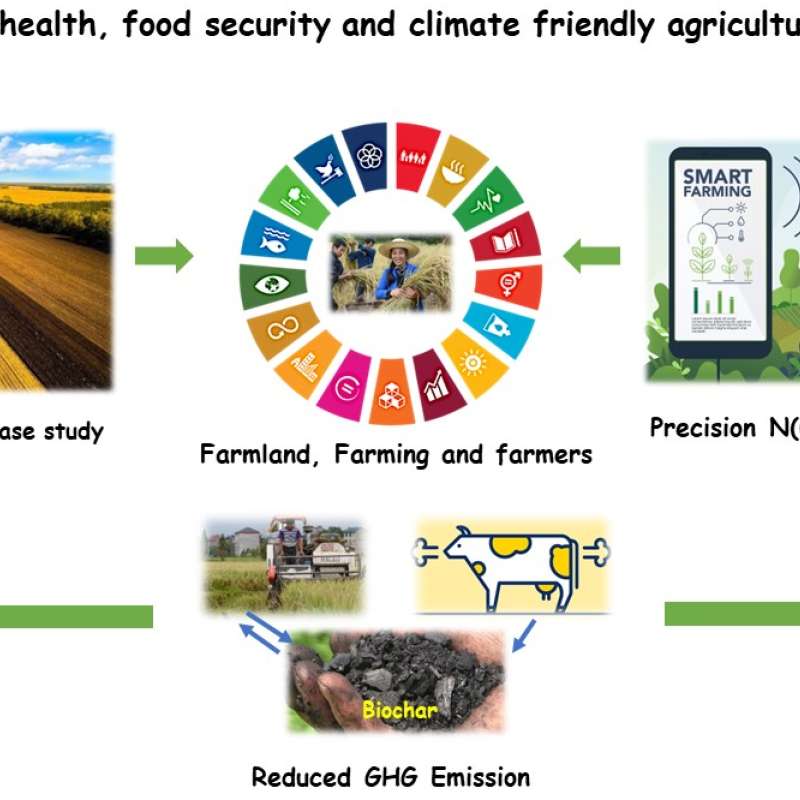
Sinograin III: Smart agricultural technology and waste-made biochar for food security, reduction of greenhouse gas (GHG) emission, and bio-and circular economy
The Sinograin III project’s overall objective is to contribute to the UN SDGs by widely implementing precision agriculture technologies and application of “waste-to-value” biochar products to achieve sustainable food production with minimized GHG emission, improve soil fertility and promote green growth/zero waste in modern agriculture in China.