Organic waste products used as fertilizers

Organic vegetable production on stock-less farms has a need of various off-farm nutrient resources. The parts of agricultural co-streams that not can be used as food or feed are relevant to be used as fertilizers for those needs. Waste products with soil or certain animal residue compounds needs to be hygienized before use on agricultural land. This can be done through a composting process at high temperature or as part of the aimed processing or industrial treatment (e.g. bio-gas facilities) that produce the co- stream material.

qaccp
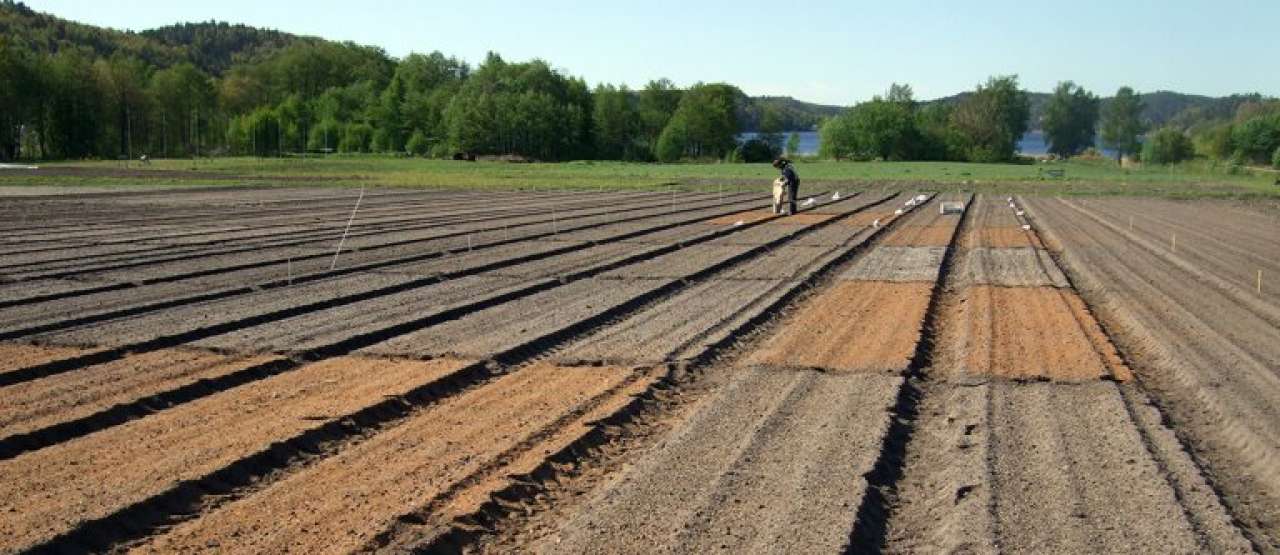
Field experiment with organic waste related fertilizers, Nibio Landvik, Grimstad. Photo: Randi Seljåsen / NIBIO
Contacts
Several co-stream products originating from food industry or household waste are relevant to be used as fertilizers. Such material, in more or less processed conditions – e.g. as residue from food industry processing or biogas production - are in the right conditions for use as fertilizer. The fertilizer effect can wary largely due to differences in mineralization time, immobilization and leaching ability which is related to climate and soil conditions.

Our research within this topic has be related to utilization of anaerobic digested food waste, shrimp shell and alga meal in comparison with animal manure and mineral fertilizers. The nitrogen use efficiency, mineralization time and product yield and quality have been studies.

Publications

To document

Abstract

Organic vegetable production attempts to pursue multiple goals concerning influence on environment, production resources, and human health. In areas with limited availability of animal manure, there is a need for considering various off-farm nutrient resources for such production. Different organic and waste-derived fertilizer materials were used for broccoli production at two latitudes (58° and 67°) in Norway during two years. The fertilizer materials were applied at two rates of total N (80 and 170 kg ha–1) and compared with mineral fertilizer (170 kg ha–1) and no fertilizer. Broccoli yield was strongly influenced by fertilizer materials (algae meal < unfertilized control < sheep manure < extruded shrimp shell < anaerobically digested food waste < mineral fertilizer). Yield, but not glucosinolate content, was linearly correlated with estimated potentially plant-available N. However, extruded shrimp shell and mineral NPK fertilizer gave higher glucosinolate contents than sheep manure and no fertilizer. Sensory attributes were less affected by fertilizer material and plant-available N.