
Living Labs
Living Labs
Food-system transformation cannot be designed from a distance. Policies, technologies and business models need to respond to the realities of the people who produce, process, distribute and consume food.
FULCRUM therefore works through five Living Labs in Belgium, Germany, Italy, the Netherlands and Norway. Together, they represent diverse terrestrial and aquatic food systems, governance structures and circular-bioeconomy challenges.
The Living Labs bring together farmers, fishers, food businesses, policymakers, researchers, civil-society organisations and local communities. Participants jointly examine how their food system works, identify barriers and policy contradictions, and develop practical responses that can be tested in real settings.
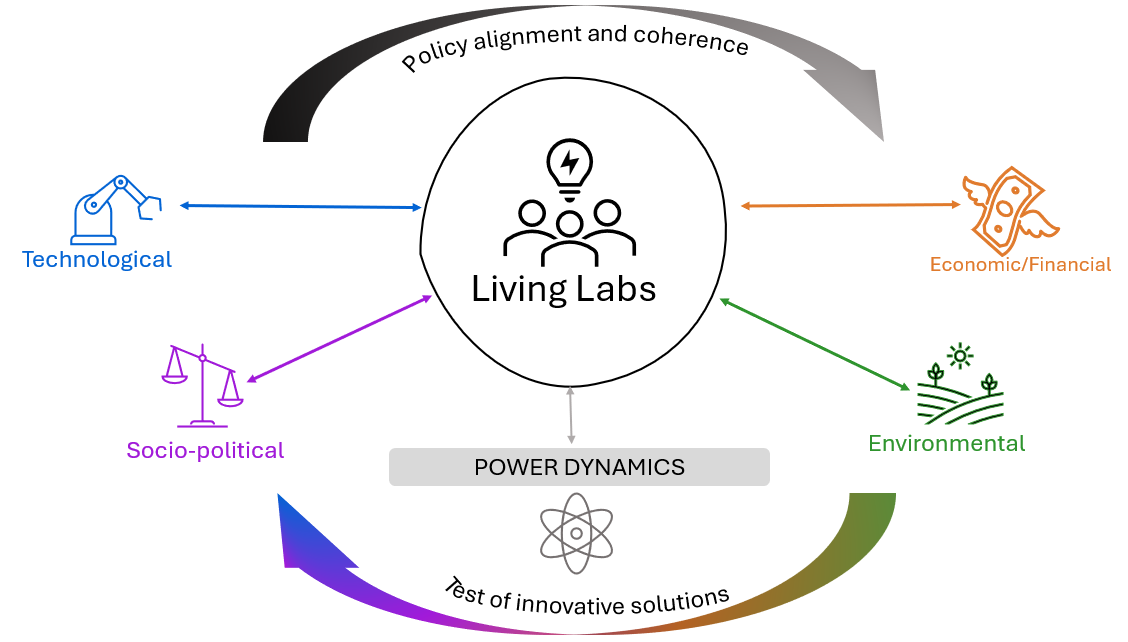
What happens in a FULCRUM Living Lab?
Each Living Lab follows an iterative process of understanding, co-creation, experimentation and learning.
Stakeholders will:
- map local food-system actors, relationships and resource flows;
- identify policy misalignments, institutional lock-ins and power imbalances;
- develop Causal Loop Diagrams and other participatory system maps;
- identify leverage points where coordinated action can produce meaningful change;
- co-create circular business models, governance arrangements and policy interventions;
- test promising solutions in practice;
- assess their environmental, economic and social implications; and
- exchange lessons with the other FULCRUM Living Labs.
This approach connects local experience with scientific analysis and policy development. Rather than arriving with predefined solutions, FULCRUM supports stakeholders in defining the challenges, considering who benefits or may be disadvantaged, and developing responses that are locally relevant, feasible and fair.
Five Living Labs, one shared learning process
Nordland, Norway
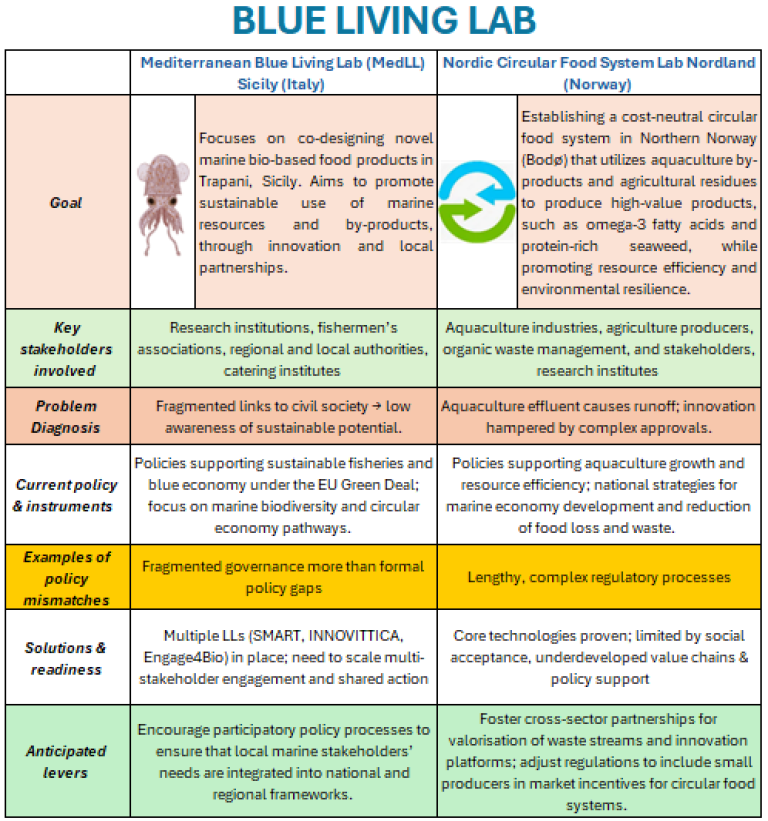
Connecting blue and green circular bioeconomies
The Nordland Living Lab explores how resources and side streams from aquatic food production can contribute to more circular regional food systems. Activities include collaboration with producers, researchers, public authorities and local food initiatives to understand the conditions under which marine-derived resources can be safely and effectively reused. One area of experimentation involves testing fertiliser products produced from blue-sector by-products in small-scale agricultural settings. The Living Lab will examine not only their technical performance, but also questions related to regulation, organic-production requirements, producer capacity, market acceptance and regional cooperation.
Sicily, Italy
Creating value from marine resources and fish-processing side streams
The Mediterranean Blue Living Lab in Sicily focuses on the sustainable use and valorisation of marine biological resources. It brings together fishers, seafood producers, researchers, public institutions, businesses and civil society to explore new products and uses for aquatic side streams. Building on regional knowledge and previous innovation activities, the Living Lab will examine how technological solutions, circular business models and supportive policies can work together. Particular attention will be given to market opportunities, regulatory barriers, value-chain collaboration and the inclusion of small-scale fisheries and local communities.
Flanders, Belgium
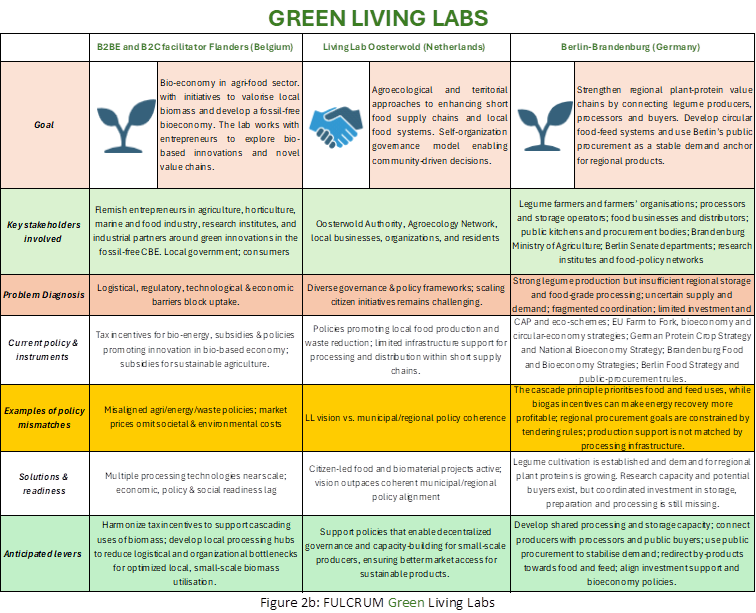
Developing markets for agricultural by-products and food surpluses
The Flemish Living Lab investigates how agricultural by-products and food surpluses can be transformed into valuable food and non-food products. Researchers, businesses, producers, consumers and policymakers will jointly explore customer needs, viable business models and policy conditions that can support circular innovation. The Living Lab will consider the entire pathway from the availability of residual materials to processing, product development, consumer acceptance and market uptake. It will also examine how risks, costs and benefits are distributed among actors in the value chain.
Berlin-Brandenburg, Germany
Improving policy design for circular and resilient regional food systems
The Berlin-Brandenburg Living Lab focuses on the relationship between circular-bioeconomy innovation, food-system governance and public policy. It will engage actors from farming, food businesses, government, research and civil society in analysing how different policies interact in practice. Participants will identify where regulations and policy instruments reinforce one another, where they create contradictions, and how more coherent policy mixes can support innovation without increasing administrative burdens or excluding smaller actors. Foresight and participatory policy-design methods will help stakeholders explore alternative transition pathways.
Oosterwold, the Netherlands
Agroecology, citizen participation and short food supply chains
Oosterwold is an innovative peri-urban area where residents are expected to contribute to local food production and landscape management. The Living Lab examines how agroecological production, citizen-led initiatives and short food supply chains can become more firmly embedded in the regional food system.
Farmers, residents, consumers, entrepreneurs, researchers and policymakers will explore barriers related to land-use planning, infrastructure, markets, governance and participation. The Living Lab will identify practical leverage points for strengthening local food networks and developing fairer and more participatory approaches to circular food-system governance.
Learning across regions and sectors
Although each Living Lab addresses a distinct challenge, they are connected through a common methodology and a shared learning process. Experience from blue food systems can inform terrestrial applications, while lessons from agroecology, urban food planning and circular product development can support innovation in coastal regions.
FULCRUM will compare the five cases to distinguish between:
- challenges that are specific to a place or sector;
- recurring barriers found across several European food systems;
- policy instruments that can be adapted and transferred; and
- conditions required for successful scaling and institutionalisation.
The objective is not to reproduce one solution everywhere. It is to understand why an intervention works, for whom it works, under which conditions, and how it can be responsibly adapted elsewhere.
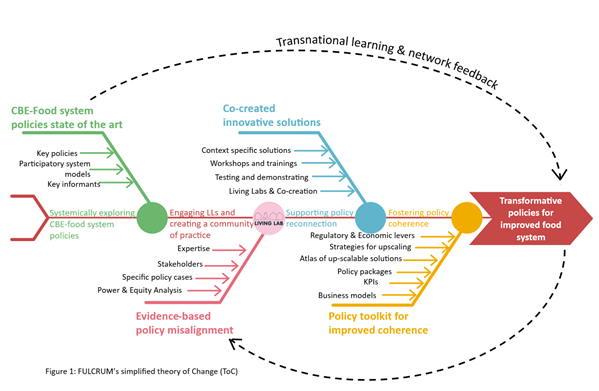
From local experimentation to policy change
Insights generated in the Living Labs will feed directly into FULCRUM’s policy-coherence analysis and the development of a practical Food System Policy Toolkit. Policymakers will be involved throughout the process so that emerging recommendations are grounded in implementation realities and have a stronger potential for uptake.
By connecting local experimentation with cross-regional learning, FULCRUM aims to support policies and business models that reduce waste, use biological resources more effectively, strengthen regional resilience and create fairer opportunities for food-system actors.
Get involved
FULCRUM welcomes the participation of producers, businesses, public authorities, researchers, civil-society organisations and community representatives connected to the five Living Lab regions. Participants can contribute local knowledge, help identify barriers, take part in workshops and experiments, and shape solutions and policy recommendations for more circular, resilient and equitable food systems.
Do you want to get involved?
Reach out to us at gio@nibio.no or connect with us on LinkedIn.
Contacts
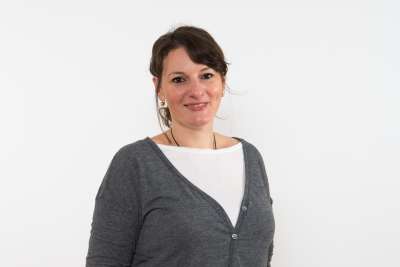
Giovanna Ottaviani Aalmo
Research Scientist
-
Division of Food Production and Society
(+47) 980 30 422 giovanna.ottaviani.aalmo@nibio.no Office Location: Ås O43

Contacts
Giovanna Ottaviani Aalmo
Research Scientist
-
Division of Food Production and Society
(+47) 980 30 422 giovanna.ottaviani.aalmo@nibio.no Office Location: Ås O43