Results from the hair trap project in Karasjok 2025
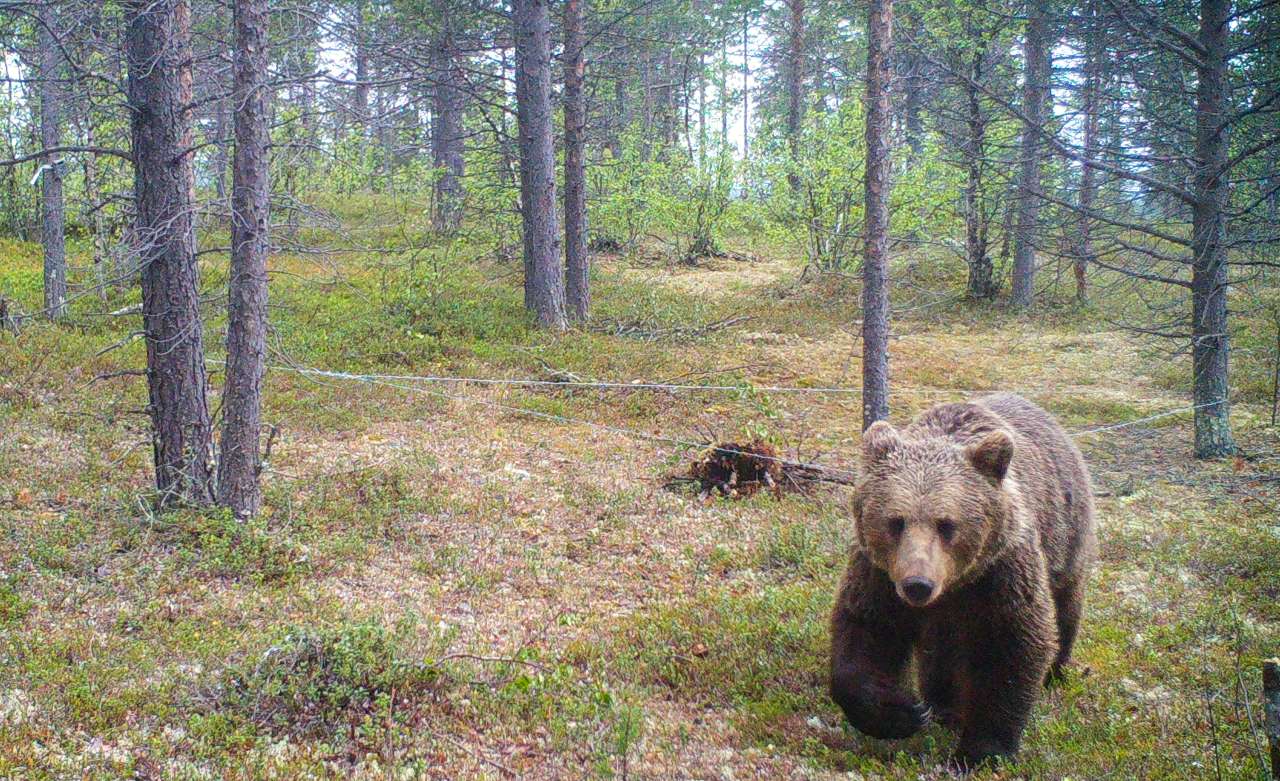
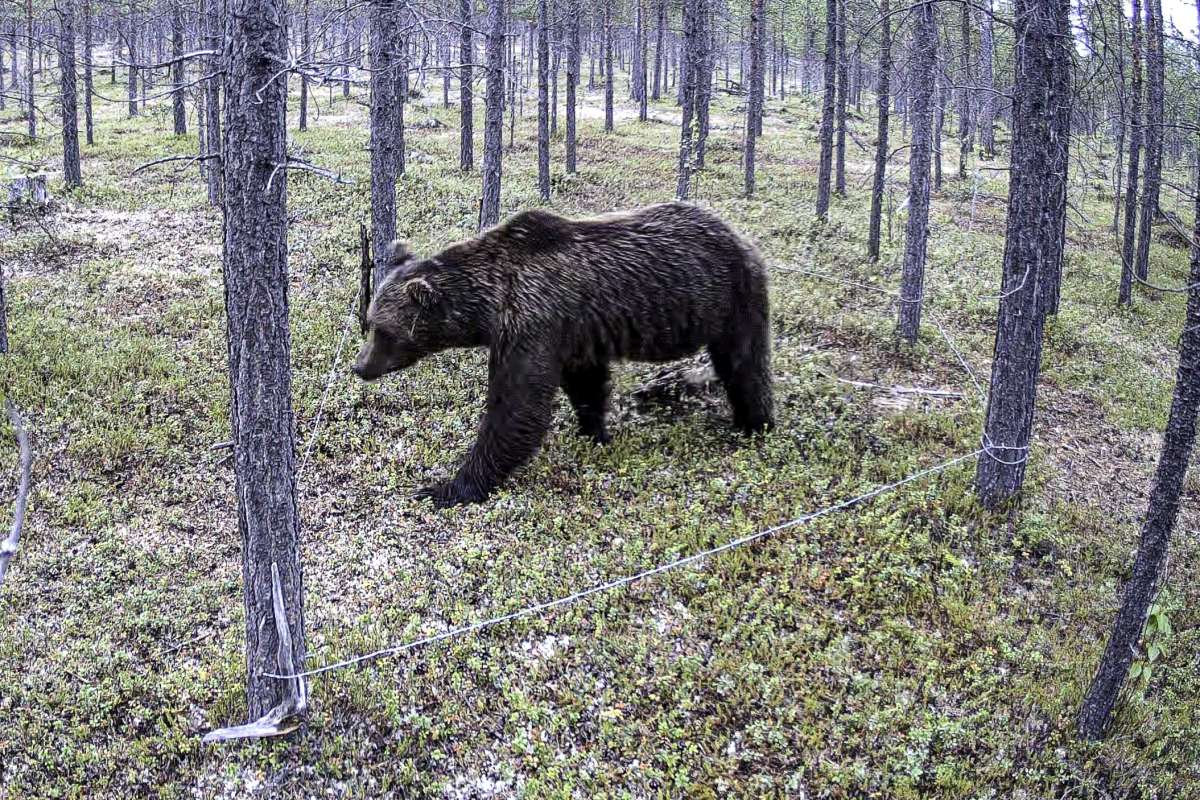
Bear visiting a hair trap in southern Karasjok in the summer of 2025. Photo: Jan Helmer Olsen / NIBIO wildlife camera
In recent years, NIBIO has conducted systematic monitoring of the brown bear population in Karasjok municipality. Using hair traps and wildlife cameras, a total of 16 individual bears were detected in 2025.
Since 2009, NIBIO has used hair traps and DNA analyses to gain more knowledge about the occurrence of brown bears in different parts of Karasjok municipality.
– In total, we have carried out 12 different hair trap projects, says laboratory manager Ida Fløystad at NIBIO Svanhovd.
– Most of the surveys have been conducted in the central and southern parts of the municipality, south of the Karasjohka River. In addition, we have carried out some surveys in the Anárjohka area and in the northern parts of Karasjok, toward the borders with Tana and Porsanger.
Fløystad explains that the overarching goal of the hair trap projects is to obtain more knowledge about the number of bears, their sex, and which individuals are present. In addition, the researchers aim to gather more information about the bears’ movements in the area and possible family relationships between individuals.
A total of 45 hair snares in 2025
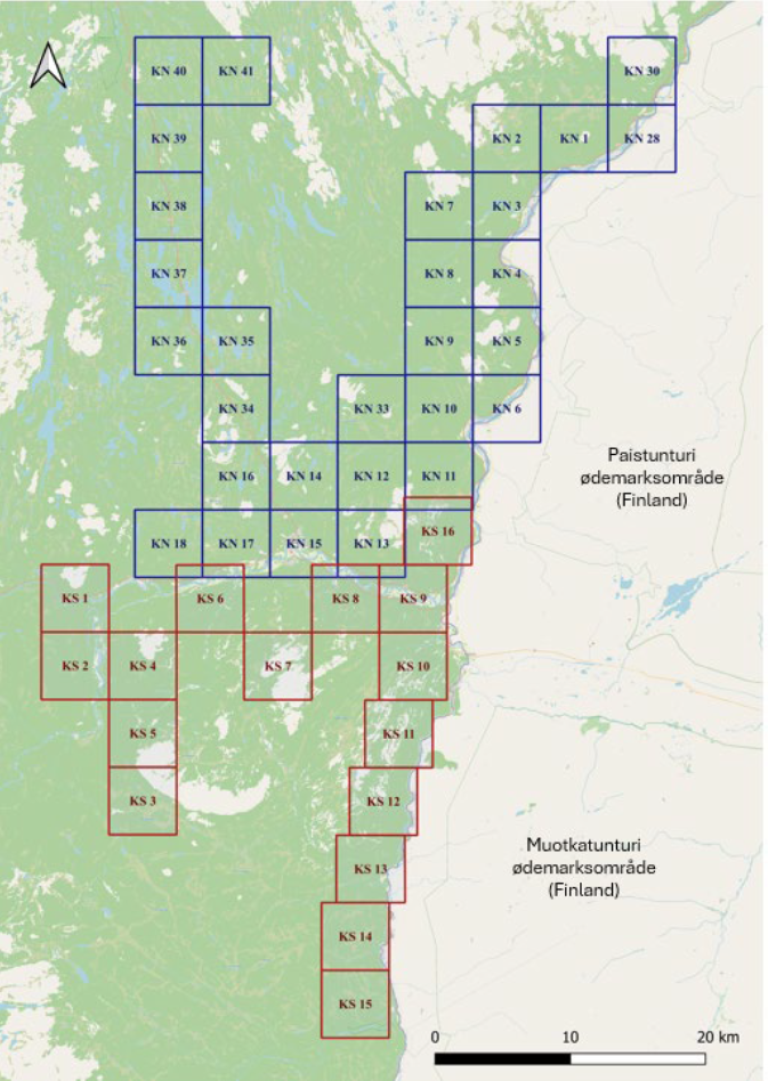
Last year’s study area of 1,100 km² was divided into 45 grid cells measuring 5 × 5 km: 16 cells south of the Karasjohka River (“South Karasjok”) and 29 cells north of the river (“North Karasjok”).
– We have previously conducted hair trap projects in these areas as well, but the results are only partly comparable because the number of grid cells and their placement have varied somewhat from year to year.
Within each grid cell, one hair trap was installed. The traps were active for two months, from mid-June to mid-August, but after one month the snares were moved to another location within the same grid cell.
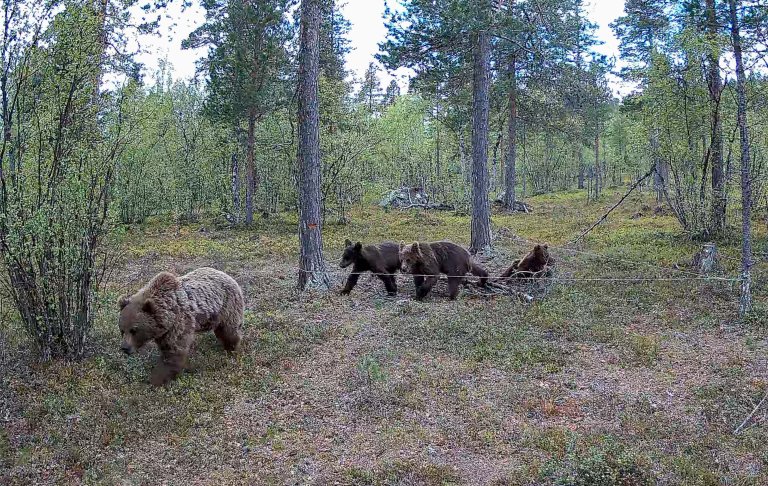
– A new feature this year was that we also deployed wildlife cameras in connection with 17 of the hair traps, Fløystad explains.
Sixteen different brown bears detected in 2025
In total, 248 hair samples and three fecal samples were collected in Karasjok in 2025. DNA analyses showed that these samples originated from 16 different brown bears—seven males and nine females. This corresponds to an estimated bear density of 1.5 bears per 100 km² across the entire study area.
Six of the bears were detected both in South Karasjok and North Karasjok.
Most bears in the south
In South Karasjok, 11 different bears were detected based on 101 hair samples. Bear density here was clearly higher, at 2.8 bears per 100 km². Two of the females were completely new individuals that had not previously been registered in the area.
– When we combine this year’s findings with data from the past six years, we see a clear pattern, Fløystad says.
– Bear density is highest in the southern parts of Karasjok, particularly farthest away from the river. The fewest bears are found near the town centre of Karasjok.
Stable populations in the north
North of the Karasjohka River, 147 hair samples and three fecal samples were collected. These proved to originate from a total of 11 bears, all known individuals from previous years. Bear density in this area was 1.6 bears per 100 km².
– When we look at data from the past four years combined, it is especially the northeastern grid cells in North Karasjok that stand out as areas with high bear activity, Fløystad explains.
Differences between south and north
Fløystad notes that last year’s hair trap projects showed consistent differences in bear density and sex ratio between South Karasjok and North Karasjok.
– South Karasjok has higher density and more female bears, which is beneficial for reproduction and long-term population stability. North Karasjok has lower density and more male bears.
– Most of the detected bears are previously registered individuals, which suggests that the bear population in Karasjok is local and relatively site-faithful. One of the detected bears, FI258, had previously been registered in Sør-Varanger municipality.
By combining genetic analyses with images from wildlife cameras, the researchers have gained better insight into the bears’ family life. The project has identified female bears with cubs, sibling pairs, possible fathers, and new individuals that have appeared both in new areas and at new times.
Important knowledge for management
This type of systematic monitoring provides valuable knowledge about the distribution and population development of the brown bear. The method makes it possible to follow individual animals over time without disturbing them and provides a solid foundation for the continued management of one of Norway’s most iconic predator species.
Contacts

Ida Marie Luna Fløystad
Lead Engineer
-
Division of Environment and Natural Resources
(+47) 476 47 103 ida.floystad@nibio.no Office Location: Svanhovd
HAIR TRAPS
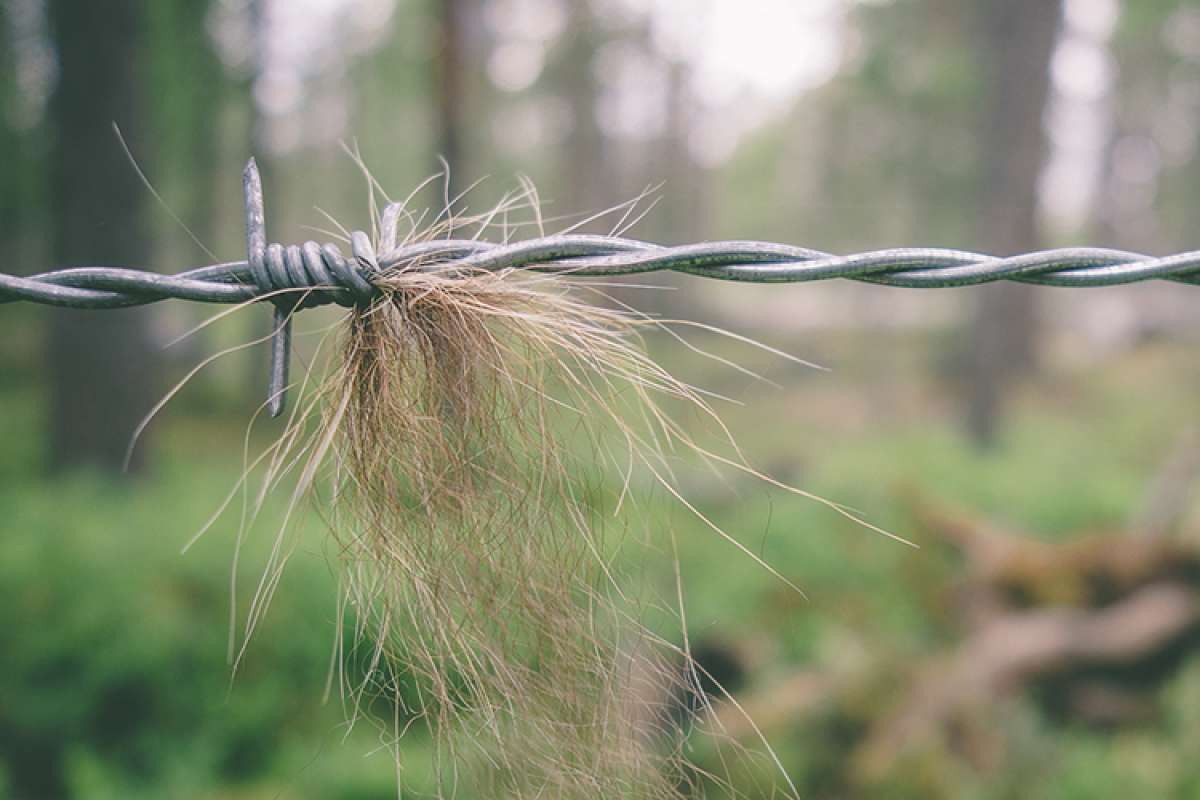
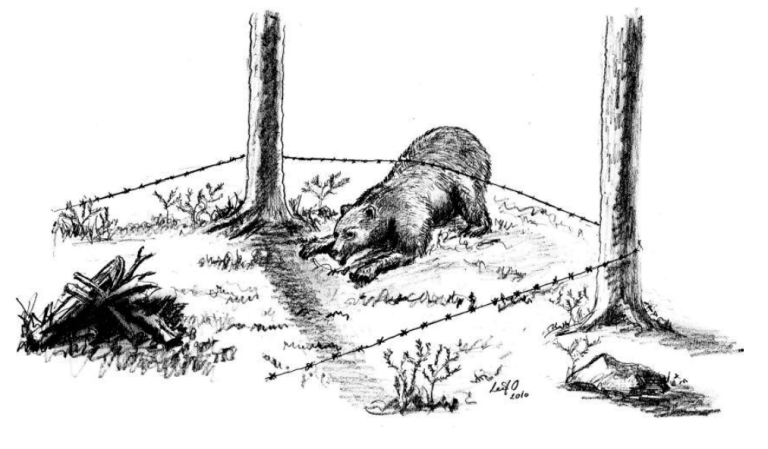
The hair traps are made of barbed wire stretched tightly between four or more trees, approximately 40 cm above the ground, creating a square area of about 5 x 5 m (25-30m2). The idea is that bears will leave hair on the barbed wire as they crawl under or over it to investigate the fantastic 'perfume' placed in the middle.
In the center of the fenced area (the hair trap), a small mound of peat, moss, twigs, branches, and roots is created. The mound is covered with a strongly scented lure made of fermented fish waste mixed with blood from cattle. These two components are allowed to develop for several months before being strained into a thin liquid and mixed. The mixture is used only as a scent lure, not as bait.
Video: Jan Helmer Olsen / Wildlife camera
Contacts
Ida Marie Luna Fløystad
Lead Engineer
-
Division of Environment and Natural Resources
(+47) 476 47 103 ida.floystad@nibio.no Office Location: Svanhovd
Publications
Authors
Ida Marie Luna Fløystad David Kniha Per John Aslaksen Anti Jan Helmer Olsen Mahtte Ailu Utsi Gaup Ann Maret Eira Johan Ante Andersen Eira Ingrid Søvik Oda Rustad Paul Eric Aspholm Snorre Hagen Hans Geir EikenAbstract
Systematiske undersøkelser av forekomsten av brunbjørn i et definert geografisk område kan utføres med luktstoff og hårfeller. I løpet av juni til august 2025 ble det samlet inn hår fra brunbjørn i 45 hårfeller med luktstoff i et 1100 km2 stort område i Karasjok kommune, 16 feller (400km2) sør for elva Karasjohka («Karasjok sør») og 29 feller (700 km2) nord for Karasjohka («Karasjok nord»). Det ble brukt et 5 x 5 km rutesystem med én hårfelle i hver rute, og der fellene ble flyttet etter én måned til en annen lokalitet innenfor samme rute. Hårrøttene ble analysert med 8 genetiske markører for individbestemmelse, i tillegg til en kjønnsspesifikk markør. Totalt ble det samlet inn 248 hårprøver og 3 ekskrementprøver i studieområdet i Karasjok i 2025, som påviste 16 ulike brunbjørner (7 hanner og 9 hunner) med tidsmessig informasjon innenfor et 1100 km2 stort område da med en bjørnetettheten på 1,5 bjørn/100 km2. I Karasjok sør ble det samlet inn 101 hårprøver som påviste 11 ulike individer (4 hanner, 7 hunner), og 2 av disse var nye hunnbjørner som ikke tidligere var registrerte. Bjørnetettheten var 2,8 bjørn/100 km2, og ved å kombinere resultatene fra de siste 6 årene ser vi at forekomsten av bjørn er størst i rutene i sørlige deler av Karasjok lengst borte fra elva og færrest nær Karasjok sentrum med unntak av den nordøstligste ruta.