
Healthy soils matter for climate, food and human health
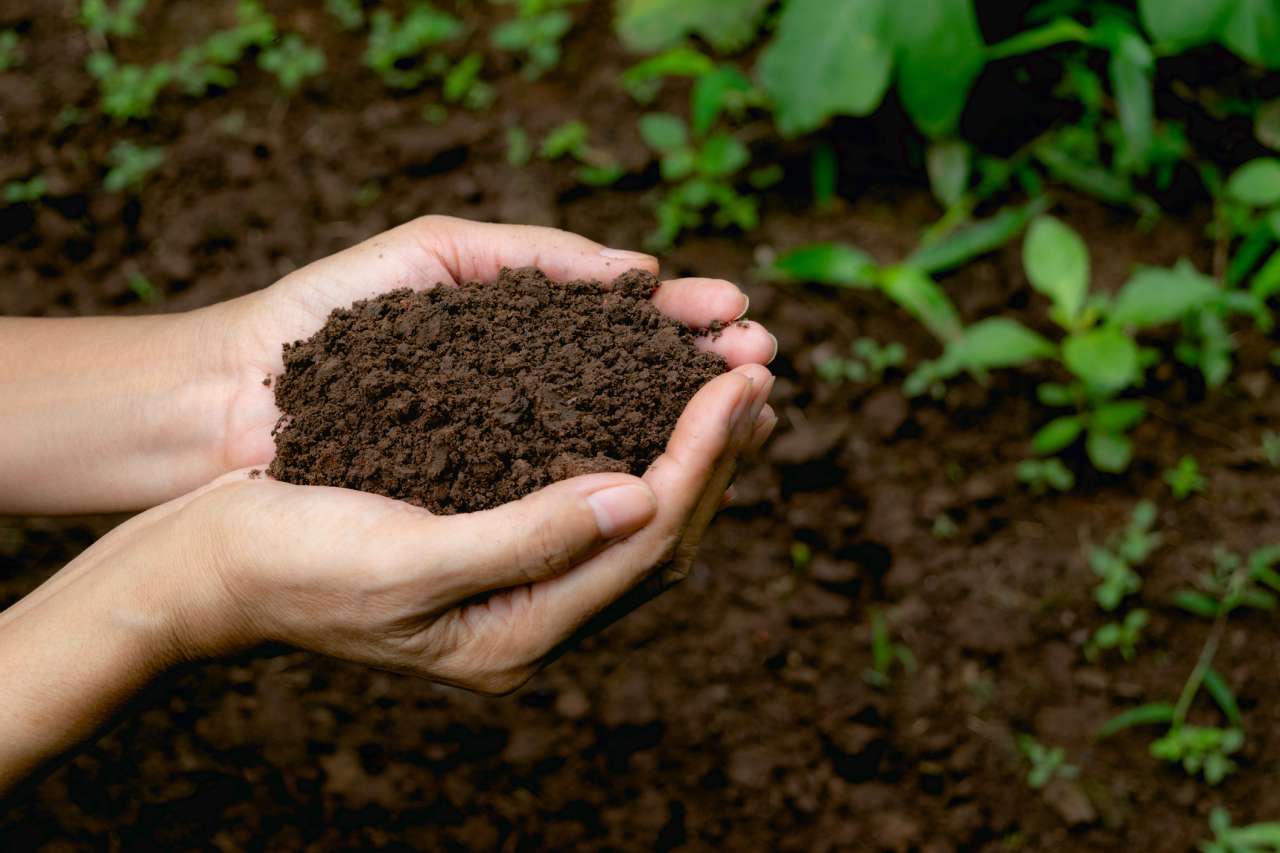
Today, we have much better methods for studying soil and water, including processes such as carbon sequestration. This gives us new opportunities to understand soil health in ways that were not possible 20 years ago. Photo: Mintr / iStock
Soil is much more than the ground beneath our feet. It plays a role in climate mitigation, food production, environmental contamination and human health. These connections brought researchers from Norway, China and beyond together at a NIBIO symposium in Oslo.
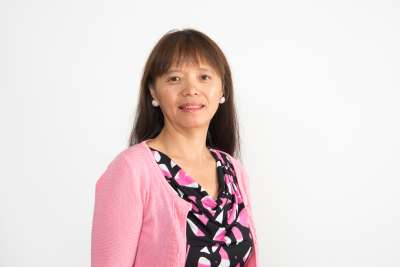
“Soil and water are the foundation of health. Much of the work we do at NIBIO is closely connected to how microorganisms in the soil can affect human health,” says Jihong Liu Clarke, Research Professor and leader of NIBIO’s Coordinator for China Relations.
Clarke wanted to bring together researchers from different fields and countries to explore soil in the context of climate change mitigation and One Health, recognising that the health of soils, ecosystems, animals and people are all closely interconnected.
“Healthy soil is also essential for food safety. If the soil is contaminated, it can ultimately affect our health.”
Clarke points to major advances in research methods as one reason why scientists are now able to understand these connections better.
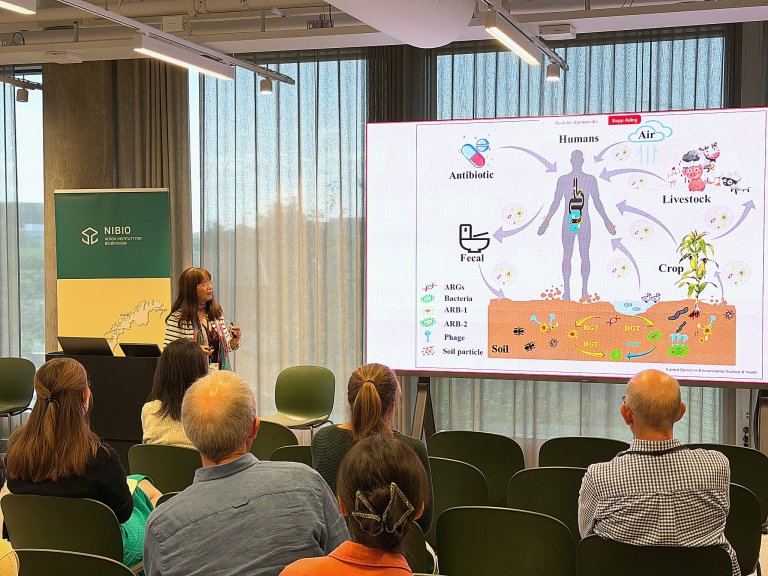
“For a long time, we have had good methods for studying what happens above ground, but studying the soil itself has been more challenging. Today, we have much better methods for studying soil and water, including processes such as carbon sequestration. This gives us new opportunities to understand soil health in ways that were not possible 20 years ago,” she explains.
At the same time, researchers are learning more about the role of microorganisms in addressing climate change. Nitrous oxide (N₂O), in particular, is a powerful greenhouse gas that needs to be reduced.
“There is enormous potential in the many beneficial bacteria found in soil, but we still have a lot to learn about them,” Clarke says.
Researchers in China have, for example, isolated bacteria that can reduce N₂O emissions, building on research in the same direction as work by Norwegian scientist Lars Bakken.
For Clarke, these developments highlight why collaboration across disciplines and national borders is becoming increasingly important.
“We now understand much more about the connections between soil health, climate change and human health. We have better methods and more knowledge, but we also need to bring researchers from different disciplines and countries together to share knowledge and develop new solutions.”
“That is really the reason for this symposium — to look at healthy soils not only from a soil perspective, but also in relation to climate change and One Health.”
Facing complex challenges
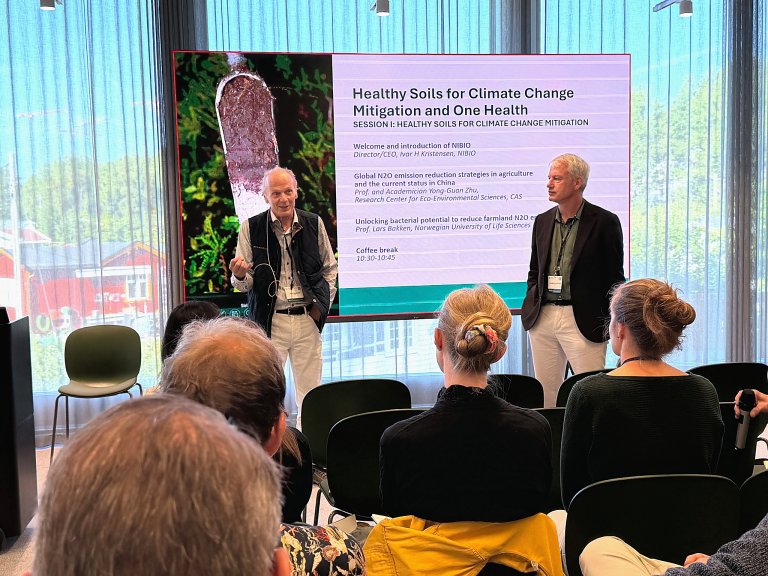
Opening the symposium, NIBIO Director General Ivar H. Kristensen pointed to a world facing increasingly complex challenges, from climate change and population growth to mounting pressure on natural resources. Against this backdrop, he emphasised the need to use resources more sustainably to secure good lives, sufficient food and healthy communities for generations to come.
Kristensen also underlined the importance of a One Health approach – recognising that soil, animals, people and the wider environment are deeply interconnected.
“If you only solve the soil problem, you need to see the animal, you need to see the people,” he said, highlighting the importance of looking beyond individual challenges and understanding the connections between them.
From climate mitigation to soil health
The morning session focused on one of the most pressing climate challenges facing agriculture: reducing greenhouse gas emissions.
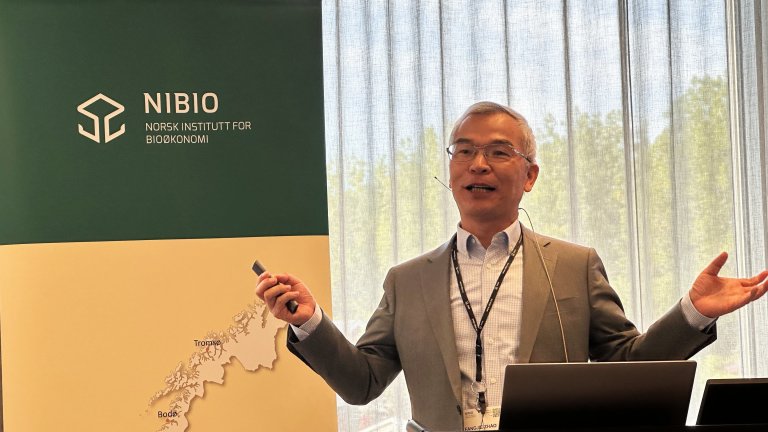
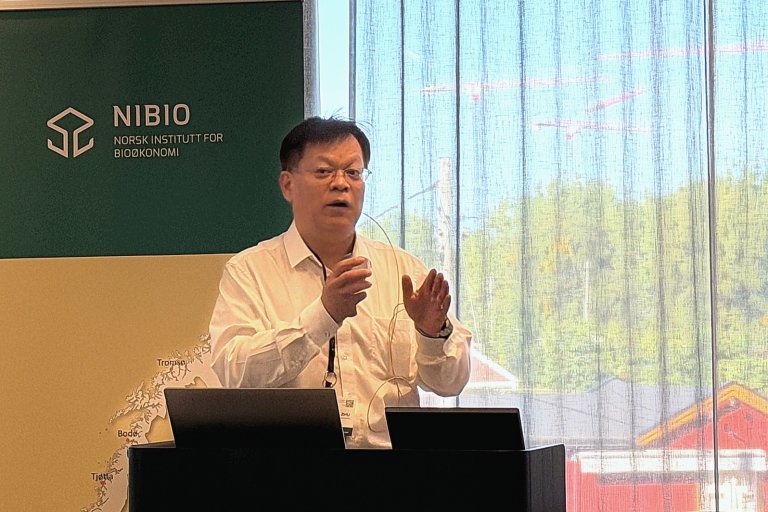
Prof. and Academician Yong-Guan Zhu of the Chinese Academy of Sciences opened the scientific programme with an overview of strategies for reducing nitrous oxide emissions from agriculture, including the current situation in China.
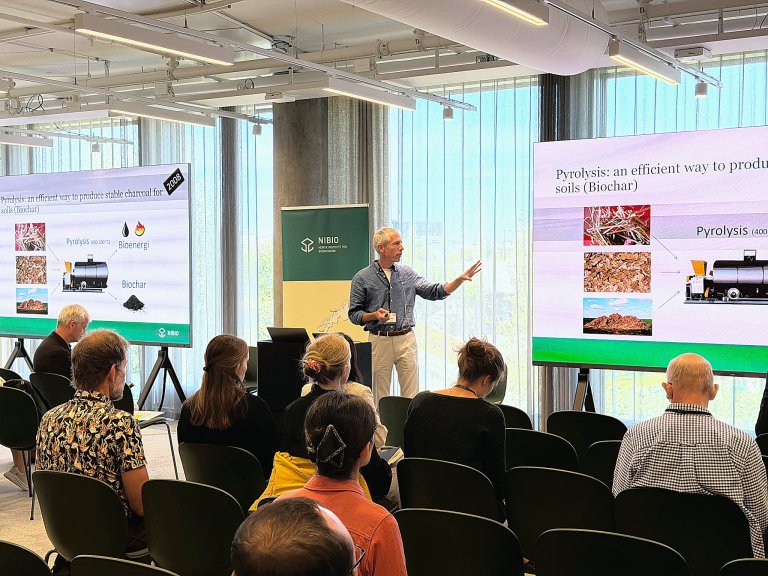
Prof. Lars Bakken of the Norwegian University of Life Sciences (NMBU) then explored the potential of soil bacteria to reduce emissions from farmland. The discussion continued with NIBIO’s Prof. Daniel Rasse, who highlighted the potential of biochar both as a climate mitigation tool and as a way to make more efficient use of organic resources.
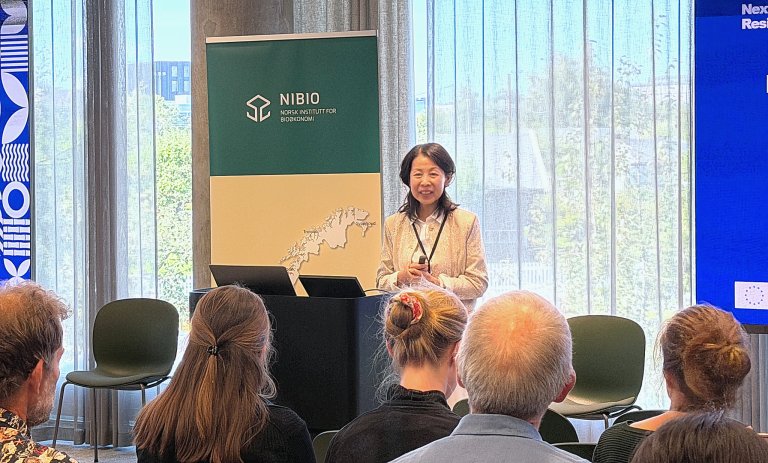
The human dimension of sustainable land management was also brought into focus. Yutong Qiu of Wageningen University & Research presented the EU-China Horizon Europe NEXRUR project, which aims to strengthen rural resilience and support communities in Europe and China.
Connecting soil, environment and health
In the afternoon, the discussion broadened from climate mitigation to the wider connections between soil, environmental health and human health under the One Health approach.
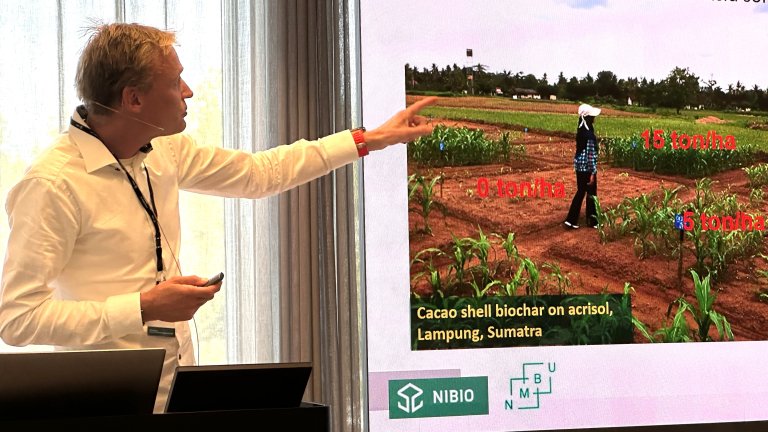
Prof. Gerard Cornelissen of NIBIO and NMBU examined how biochar can help control contaminants and support soil health in tropical regions. Prof. Yong-Guan Zhu returned to the theme of soil microorganisms, exploring the potential of the soil microbiome to contribute to One Health.
Antimicrobial resistance added another important dimension to the discussion. Prof. Fangjie Zhao of Nanjing Agricultural University presented research into how beneficial soil bacteria could help reduce the transfer of antimicrobial resistance genes from soil to plants.
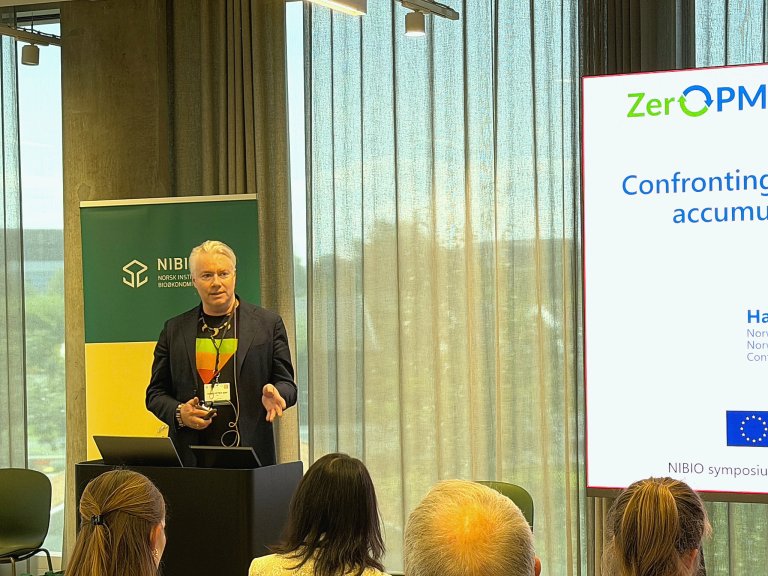
The focus then shifted to persistent environmental contaminants. Prof. Hans Peter Arp of the Norwegian Geotechnical Institute addressed the growing challenge posed by substances including TFA, PFAS and plastics, highlighting their persistence and accumulation in the environment.
The programme concluded with Research Professor Jihong Liu Clarke of NIBIO presenting the SiNorAMR Norway-China collaboration on antimicrobial resistance.
Looking ahead
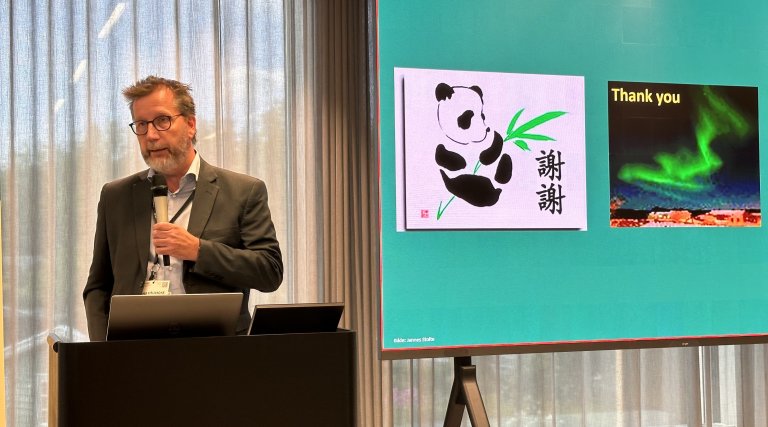
For NIBIO Research Director Per Stålnacke, the symposium demonstrated the value of bringing different perspectives together around shared challenges.
“It has been a very fruitful day. All of these research results projects that was shown today have a huge societal and policy impact, and ultimately, we are trying to find practical solutions to some very complex problems,” Stålnacke said.
He was particularly struck by the diversity of backgrounds represented among the participants.
“When I looked at the people who had registered, I saw many different scientific backgrounds. Creating this kind of transdisciplinary arena increases the likelihood that we can contribute to solving societal and global problems,” he said.
For Stålnacke, collaboration – both across disciplines and across national borders – will be essential going forward.
“People are very willing to share. Sharing knowledge across disciplines is the way forward. You may think that you only are working in one specific field, but your contribution can have a much wider impact. One Health is a leading principle here, and I think the solution is that we will need to collaborate even more in the future, especially across nations.”
He also pointed to the need to strengthen the One Health perspective in future research and funding.
“We need to work harder to promote the One Health concept. The European Commission has recognised this, as we have seen through some of the initiatives Jihong has presented.”
At the same time, Stålnacke acknowledged that turning the One Health approach into practical research opportunities is not always straightforward, particularly when it comes to funding.
“It is not always easy to promote this kind of approach or turn it into practical action through research funding sources. But we already see opportunities ahead, including next year’s focus on plant health and soil, which could open the door for further collaboration,” he concluded.
Contacts
(+47) 404 50 609 jihong.liu-clarke@nibio.no Office Location: Ås H7
Contacts
(+47) 404 50 609 jihong.liu-clarke@nibio.no Office Location: Ås H7