Biochar has limited effect on potato yields – but may improve soil and climate
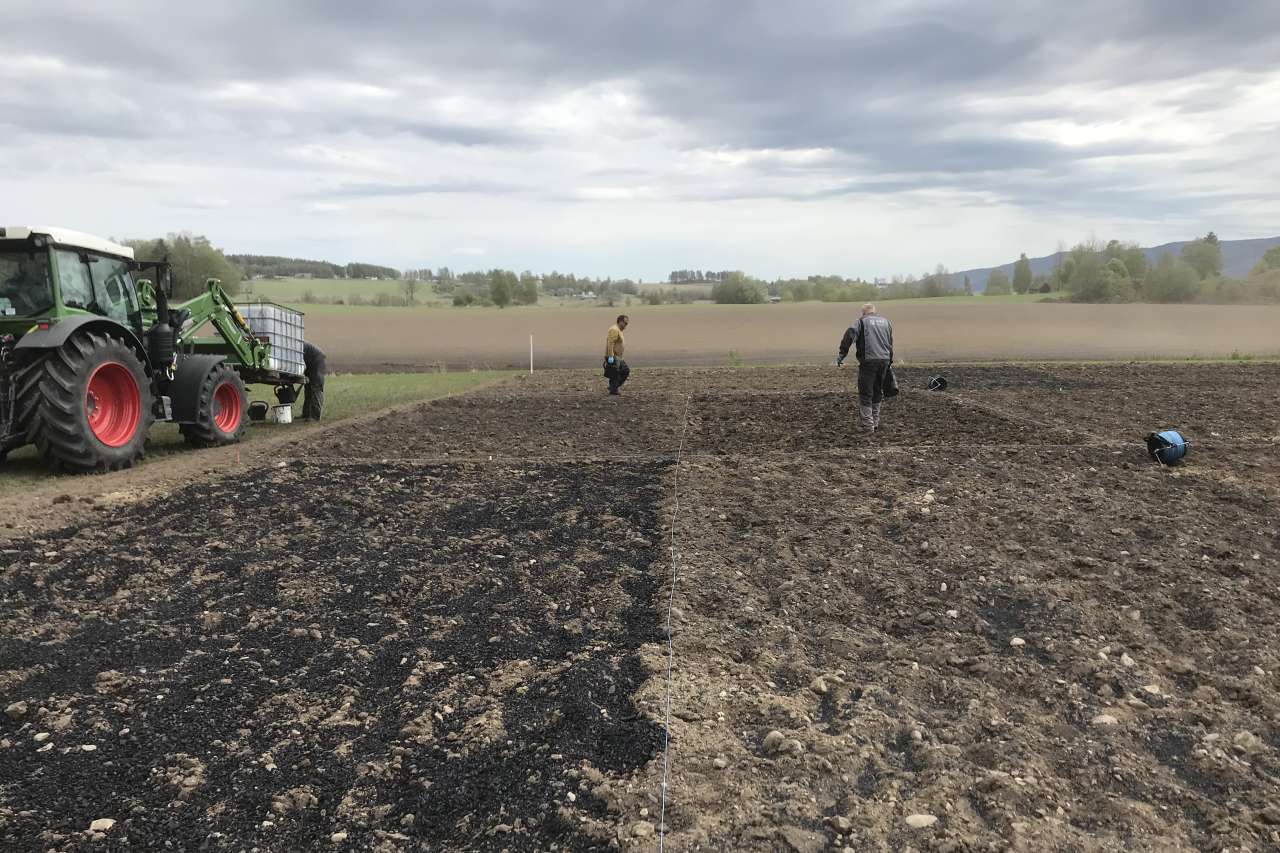
Manual distribution of biochar on the experimental plots. Photo: Eldrid Lein Molteberg, NIBIO
Biochar has little effect on increasing potato yields under Norwegian conditions. Nevertheless, it may contribute to better soil health and a lower climate footprint over time, according to a new report from NIBIO.
In a three-year project, researchers at NIBIO have tested how biochar affects potato yields and soil quality under Norwegian conditions. The results show that biochar has little effect on yield, but that it may offer other benefits.
“We found no significant yield differences between fields with and without biochar in most of the trials,” says project leader and NIBIO Research Scientist Eldrid Lein Molteberg.
“The exception was one large-scale trial in Romedal (Innlandet County) in 2022, where biochar led to a moderate yield increase. Otherwise, the effects were small or uncertain – also in subsequent years with cereals.”
The researchers tested different amounts of biochar, both alone and in combination with organic and mineral fertilizers. Neither higher doses nor specially treated biochar enriched with clay minerals (bentonite) produced better results than standard biochar.
Soil quality and climate impact
Although the yield effect was limited, some measurements suggest that biochar may improve soil properties over time. Soil samples showed an increased level of active carbon – an important indicator of biological activity in the soil.
“Biochar appears to stabilize the soil,” says Lein Molteberg.
“It may contribute to better water retention and less erosion, especially in sandy soils.”
May contribute to lower emissions
Biochar may also have a climate benefit. The material is produced by heating organic matter without oxygen, binding carbon in the soil instead of releasing it as CO₂.
When used at scale, this can help reduce agriculture’s climate footprint.
Depends on soil and growing conditions
The researchers emphasize that the effect depends on where and how biochar is used.
In this project, the trials were carried out on fertile soil in good agricultural condition, where growing conditions were already favorable. The effect may be greater in poorer soils or under drier conditions.
“Our results are consistent with other Norwegian studies, which also do not find large yield gains,” says Lein Molteberg.
More knowledge needed
Even without a clear yield effect, the researchers believe biochar may be relevant for farmers who want to improve soil health or reduce emissions.
“We need more knowledge about long-term effects, and about how biochar affects different crops and soil types,” concludes Lein Molteberg.
Contacts
Eldrid Lein Molteberg
Research Scientist
-
Division of Food Production and Society
(+47) 404 82 799 eldrid.lein.molteberg@nibio.no Office Location: Apelsvoll
Biochar
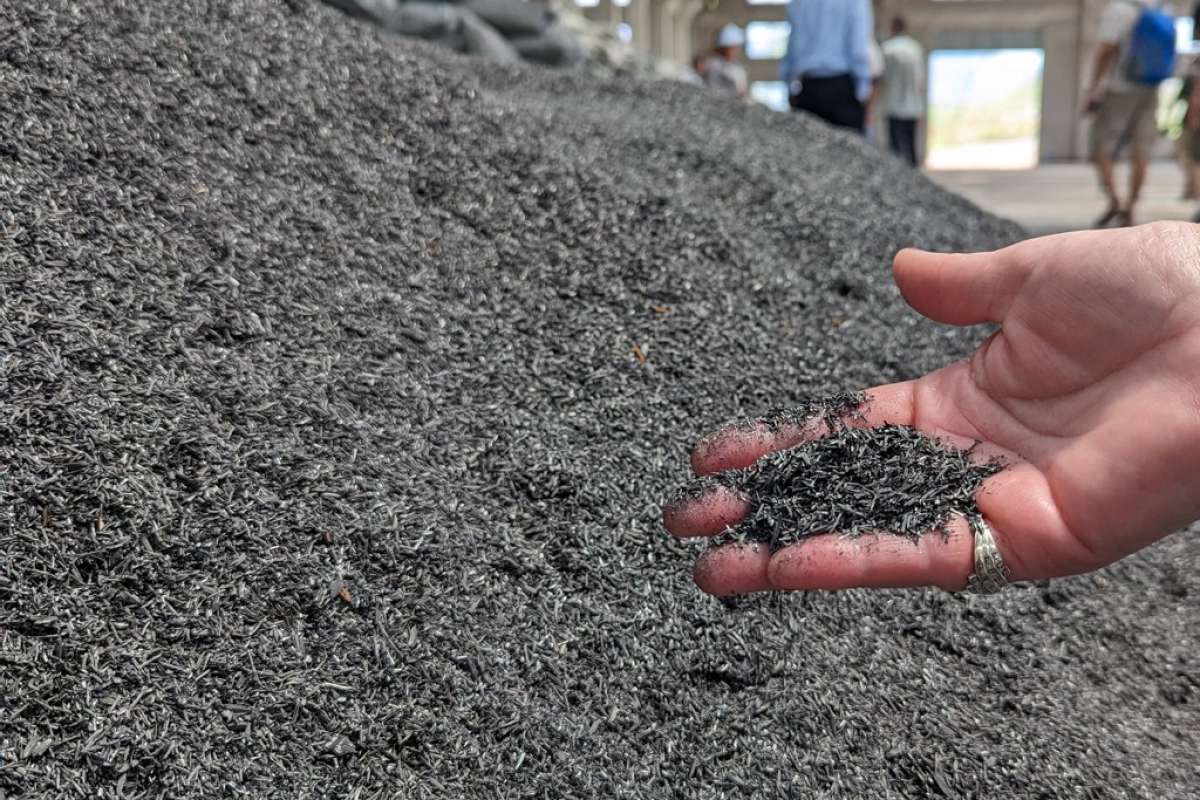
Biochar is a porous material produced by heating organic matter without oxygen (pyrolysis).
It is mixed into soil to improve structure, water retention, and nutrient content. Once in the soil, the carbon is stored instead of being released as carbon dioxide.
The effect of biochar in soil varies depending on soil type, climate, and application rate. Costs can also be a barrier.
Contacts
Eldrid Lein Molteberg
Research Scientist
-
Division of Food Production and Society
(+47) 404 82 799 eldrid.lein.molteberg@nibio.no Office Location: Apelsvoll
Publications
Authors
Eldrid Lein MoltebergAbstract
Målet med prosjektet har vært å legge til rette for økt verdiskaping, bedre jordkvalitet og reduserte klimautslipp i potetproduksjonen gjennom økt kunnskap om bruk av biokull. I prosjektet er effekten av biokull undersøkt over tre år i ett smårutefelt og to storskalafelt. Biokull ble tilført ved oppstart og det ble brukt et vekstskifte med poteter og korn. Prosjektet har undersøkt effekten på avling og kvalitet i vekstene, samt ulike jordkvalitetsparametere. Resultatene viser en tendens til økt potetavling og kvalitet i enkeltforsøk, mens det var vanskelig å påvise forskjeller mellom ulike ledd i andre forsøk. Det ble heller ikke funnet betydelige endringer i jordegenskaper, verken i jordkjemi, jordbiologi eller aggregatstabilitet. Resultatene tyder på at det ikke var særlig vekstbegrensende faktorer der feltene ble plassert, ettersom biokull er vist å virke best ved vann- eller næringsmangel, lavt innhold av organisk materiale eller lav pH. Mengdene biokull var også relativt lav (400 kg/daa) i de fleste forsøkene. I smårutefeltet ga heller ikke 2t/daa, samlagring med bløtgjødsel eller spesialkull med leirmineraler sikre effekter i forsøkene. Selv om det ikke var sikre effekter i disse forsøkene, kan biokull i jord være et godt tiltak for å lagre karbon. Under noen forhold og i enkelte år kan det også bidra til bedre vannlagringskapasitet og/eller utnyttelse av gjødsel.