Agricultural Soil Survey

The Department of Agricultural Soil Survey holds the national responsibility for two national soil programs: soil mapping and soil monitoring. The programs differ in many ways, but both are organized as an information chain consisting of the steps data collection, data management, data processing, and dissemination. All steps in the information chain for both programs consist of processes carried out through close collaboration with the Department of Geomatics. The Department of Agricultural Soil Survey and the Department of Geomatics each have their own areas of responsibility. The Department of Geomatics is responsible for data handling in the form of data management, data processing, and dissemination of results.

Soil Mapping

The purpose of soil mapping is to document and geographically identify the stable properties of the soil. Thematic maps produced through soil mapping provide a basis for informed decisions regarding the use of soil resources, within agronomy, climate adaptation, land-use planning, and risk assessments related to environmental impacts in agriculture.

Data Collection

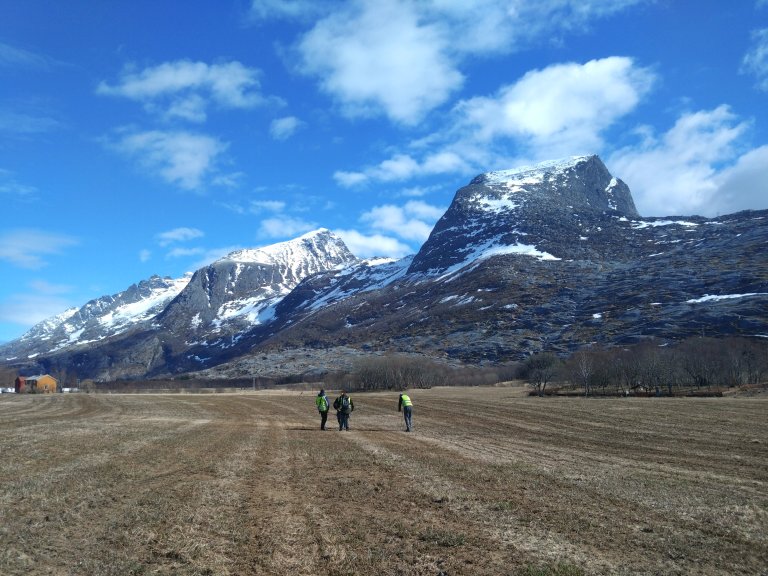
Data collection is field-based and conducted on arable and cultivated land using a standardized method. Approximately 100 km² are mapped annually. In the field, soils are named based on a Norwegian adaptation of an international classification system, and different soil types are delineated. The soil is examined according to specific criteria from the surface down to 1 meter depth. The following assessments are made in the field: the content of sand, silt, clay, organic material, gravel, and stones in the different layers; the soil’s ability to drain excess water; depth to bedrock; soil development; and whether there are signs of human activity beyond drainage measures or ploughing. All assessments are made in situ, without sending soil samples to a laboratory for analysis.

Soil mapping is a one-time mapping effort, and currently 61% of the country’s arable and cultivated land has been mapped.

Data Management

Data management includes all activities involved in managing data as a valuable resource. This includes both technical and administrative tasks. To ensure long-term value and usability across different applications, data must be easily accessible, consolidated, and well documented. Results from the soil mapping are imported into a well-organized and thoroughly documented database. The database is updated once a year with results from the previous year’s fieldwork.

Processing and Analysis

Results from the soil mapping constitute basic data. All services developed based on soil mapping use these basic data as their foundation. The data are used as input in various models to produce maps for a wide range of purposes. The complexity of these models varies. Some use only the basic soil data, while others incorporate additional datasets such as meteorological data, the national elevation model, and crop growth functions. Soil mapping results are also used in research and assessment projects and form the basis for soil resource statistics at both municipal and county levels.

Dissemination

The most important dissemination of soil mapping results occurs through the publication of maps on NIBIO’s map portal Kilden (kilden.nibio.no). The primary users of these maps include farmers, advisors, and public administration across sectors and levels, as well as policymakers. These user groups are supported with information on how to use the results, and informational material is regularly published on the website.




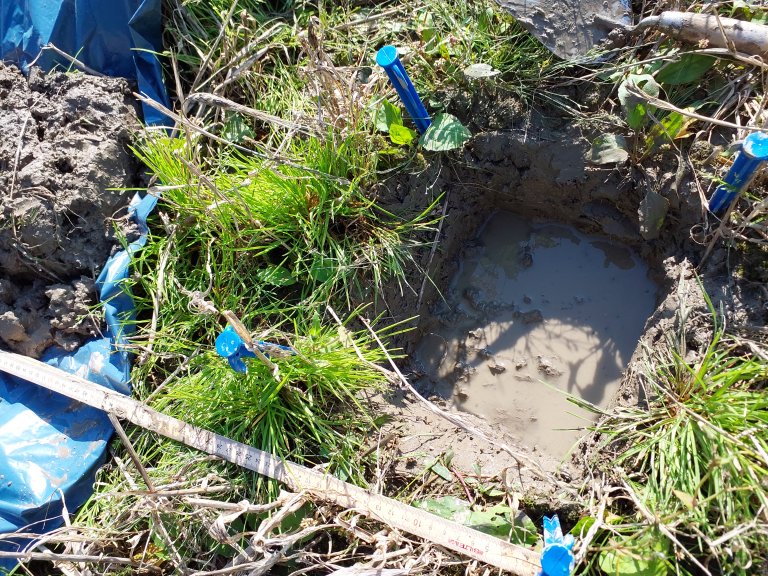
JordVAAK_2__datafangst på ei prøveflate_foto_Teresa_G_Bárcena.jpg
Photo: Teresa G. Bárcena


Soil Monitoring (JordVAAK)

In 2026, a systematic and nationwide monitoring program for agricultural soil, JordVAAK, is launched. This is a sample-based survey designed to provide knowledge about the condition of agricultural soils and how they change over time.

JordVAAK will provide insight into soil health properties such as erosion, compaction, loss of organic matter and nutrients, loss of soil biodiversity, and pollution. The program will enable effective improvement measures if soil properties are found to be suboptimal, benefiting both farmers and national food production.

Data Collection

Data collection is field-based. The program includes 805 sampling plots, selected at random. At each plot, observations will be made and soil samples collected for laboratory analysis. Some plots will be revisited every five years, while most will be included in a ten-year rotation. Data collection follows a standardized protocol and is carried out annually on approximately 10% of the plots.

Data Management

Data management includes all activities involved in managing data as a valuable resource, both technical and administrative. To ensure long-term value and usability, data must be easily accessible, consolidated, and well documented. Results from JordVAAK are imported into a well-organized and thoroughly documented database. Field registrations are uploaded to a secure cloud solution immediately after completion. Other results, such as laboratory analyses, are imported in a standardized manner as soon as they are available. Analysis results from each plot are treated confidentially in accordance with GDPR regulations.

Processing and Analysis

Results from JordVAAK constitute basic data. All services developed based on JordVAAK will use these data as their foundation. The purpose of the analyses is to gain knowledge about the condition of agricultural soils and how they change over time. The first full status assessment of Norwegian agricultural soil will be available after 10 years, which is the duration of one full rotation.

Dissemination

All publicly released results from JordVAAK will be presented at an aggregated level (e.g., national, regional, or by production type). Dissemination will be carried out in a manner suitable for national use and to meet Norway’s obligations for international reporting on soil health in agricultural land.