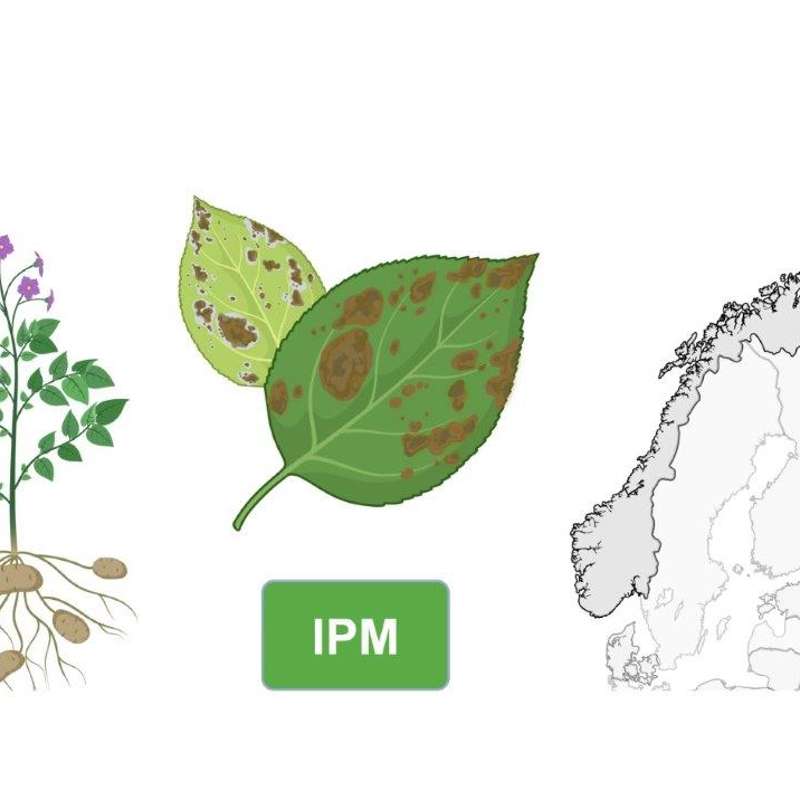
NoBlight. New challenges with old potato diseases: IPM to control early- and late blight
Global potato production is plagued by multiple pathogens, and potato late blight (LB) caused by the oomycete
 Print
NIBIO is a project driven research institute and collects approximately 400 million NOK annually in project funding from both national and international sources. A lot of activity is carried out through EU and EEA-projects and we also participate in research projects in Asia, Africa and Latin America. NIBIO coordinates several large international projects with a particular focus on food security and climate change. The list of projects is not complete.
Global potato production is plagued by multiple pathogens, and potato late blight (LB) caused by the oomycete

SUFFICIENT is a highly innovative and industry driven collaboration project which brings together Norwegian industries from aquaculture (Cermaq), agriculture (Woolero and Terramarine) and biorefinery (Greentech) to develop new circular bioprocess routes, comprising anaerobic digestion, hydrolysis and fungal fermentation, for efficient conversion of selectively processed biowastes into products for fish & animal feed and biostimulant fertilizers.

The purpose of the project is primarily to develop and test a projection tool (FramSkog). This tool will include sophisticated projections of the forest area (e.g., afforestation, reforestation) combined with the development of modules in SiTree for the projection of key indicators for biodiversity, and the implementation of models in SiTree for the prediction of large-scale disturbances in forests.

Broad-leaved dock (Rumex obtusifolius) and curled dock (Rumex crispus) are some of the most problematic weed species in grasslands worldwide; joined, in Norway and the rest of Northern Europe, by the far less studied northern dock (Rumex longifolius).